

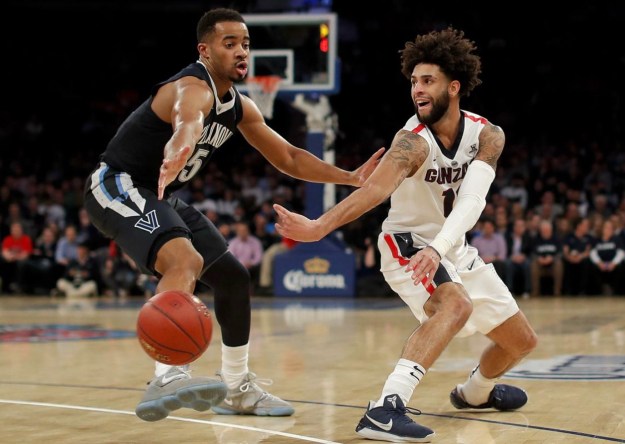
(Kevin Jairaj, USA Today)
One fascinating aspect of one-and-done has always been that, at least in theory, it has no logical basis for existence. Recall that the rule was instituted on July 29, 2005, in part, to give NBA franchises additional and badly needed information on draft prospects. There were to be no more Kwame Browns.
An understandable wish, surely, but one that affords an exceedingly odd occasion for a proscriptive rule. After all, in a world where high school graduates are immediately draft-eligible, why would you need to make this a rule in the first place? If a front office feels insufficiently confident to draft a player right out of high school, they can just pass. No one’s holding a gun to their head and saying they must draft an enigma.
If you’re more confident using a draft pick on a player who’s been in college for one season, fine, draft a freshman. Make one-and-done the “rule” for your franchise. It’s a free country.
Or so it would seem, based on how markets are supposed to work in a classical model. Then again, that’s not how professional basketball functions. Indeed, the NBA tried that very system 20-some years ago, and, eventually, found it wanting. Continue reading




 John Gasaway