Category Archives: hoops

Buddy Hield’s season is impossible

BB

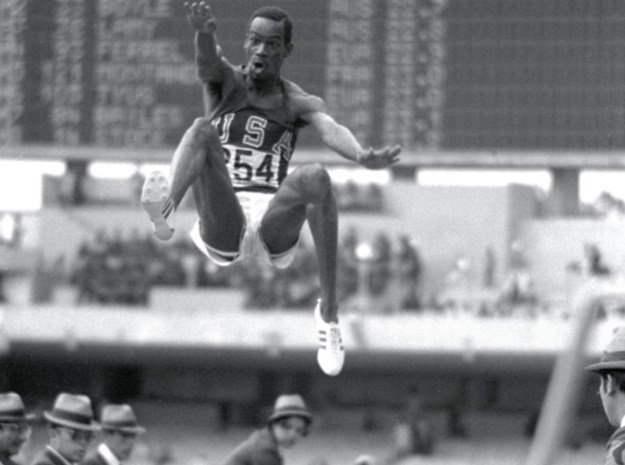
What we’re seeing is Beamon-esque.

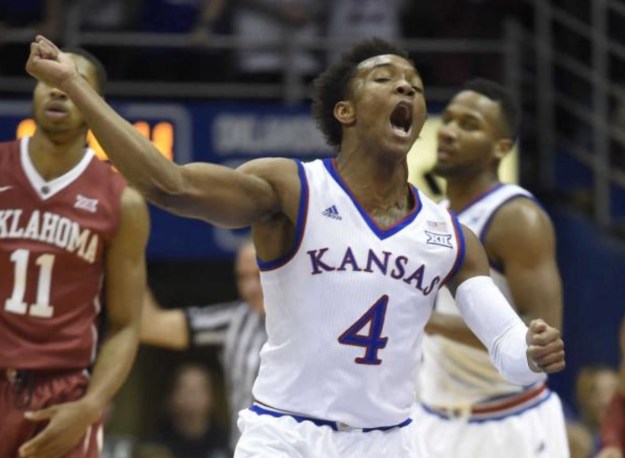
This season I’ve adopted a new morning ritual. I check the previous evening’s scores, glance at the headlines, and then I devote a minute or two exclusively to Buddy Hield.

If by chance Oklahoma has played the previous evening, I’ll watch those highlights. Or if the Sooners are between games, I might find myself gazing upon Hield’s body of numerical work and trying, once again, to take the true measure of what I’m seeing….

It’s good to know my need to try to situate Hield within some kind of rational framework is a shared affliction. Last week I realized that Luke Winn, Kevin Pelton, and I were all simultaneously running Hield-triggered searches on 22 years’ worth of Division I basketball at sports-reference.com. Luke heralded Hield’s membership in the 50-50-90 club. Kevin wants to gently dissuade NBA general managers from thinking this remarkable Hield of Dreams thing can possibly continue at the next level. Continue reading

Tuesday Truths: Caucus edition

Iowa

(Des Moines Register)

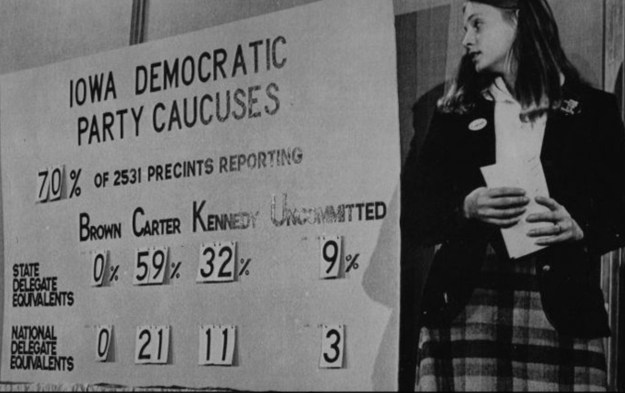
One question I’ve entertained with respect to the NBA concerns whether it’s truly as open to unforeseeable performances as (to adopt a timely benchmark) the Iowa Caucuses. Not that any shortcomings in this direction would be the NBA’s fault, mind you. If you have to blame anyone or anything, blame math.

No other professional sport has such a ridiculously small number of draft picks, yet a tiny pool of 30 first-round guys, augmented annually, constitutes a far larger share of the league (60 percent, give or take) than in baseball or football. These structural imperatives dictate that you’d have to be crazy or supernaturally courageous or both to wander off the stereotype reservation with a first-round pick. You or I would be no different in a GM’s shoes, but a fair portion of lived experience outside of professional sports suggests there has to be a tremendous opportunity cost being incurred here in the area of unforeseeable performance.

My hunch is that if the NBA ran the Iowa Caucuses, last summer the league’s front offices would have had a draft-like barrier to entry up all along the state’s 1,000-mile rectangular border (a beautiful wall, if you will). Candidates like Donald Trump and Bernie Sanders would have been sent away months ago on the grounds of being a mere reality TV star and a socialist, respectively. The NBA experts would have told the two men confidently that there’s no way on earth that they could finish in second place in Iowa come February 2016. After all, neither candidate fits the profile.

Welcome to Tuesday Truths, where I look at how well 55 mid-majors are doing against their league opponents on a per-possession basis.

Major-conference Truths are at ESPN Insider.

A-10: Archie now has defensive bragging rights at Miller get-togethers
Through games of February 1, conference games only
Pace: possessions per 40 minutes
PPP: points per possession
EM: efficiency margin (PPP – Opp. PPP)

                          W-L   Pace    PPP   Opp. PPP    EM
1.  VCU                   8-0   71.5    1.15    0.94    +0.21
2.  Dayton                8-1   66.5    1.09    0.90    +0.19
3.  Saint Joseph's        7-1   70.8    1.08    0.93    +0.15
4.  Rhode Island          4-4   64.3    1.08    1.00    +0.08
5.  St. Bonaventure       5-3   71.1    1.16    1.08    +0.08
6.  George Washington     5-3   66.7    1.09    1.03    +0.06
7.  Davidson              4-4   72.4    1.10    1.10     0.00
8.  Duquesne              5-4   74.5    1.02    1.03    -0.01
9.  Richmond              3-5   67.9    1.12    1.13    -0.01
10. Fordham               3-6   67.0    0.96    1.09    -0.13
11. UMass                 1-7   72.4    0.98    1.12    -0.14
12. George Mason          1-7   69.8    0.99    1.13    -0.14
13. Saint Louis           3-6   71.4    0.96    1.10    -0.14
14. La Salle              1-7   64.6    0.90    1.10    -0.20

AVG.                            69.4    1.05
KenPom rank: 8
% of games played: 46

Continue reading

Why are there so many exceptionally challenged teams in 2016?

PR

“Highlights”?

This week John Beilein was asked about his team’s next opponent, and he came up with a small masterpiece of backhanded complimenting.


Beilein’s brand of faint praise reminded me of how former Illinois coach Lou Henson used to respond in similar situations. When I was a kid my brother and I had a running joke involving Henson’s preferred verbal tic, “super ball club.” We’d take turns inserting the most absurd opponent imaginable and mimicking Henson’s flat New Mexican twang: “Well, Jim, Immaculate Heart of Mary is just a super ball club, and we’re going to have to play our best game to win.”

Still, Beilein’s ringing endorsement of his next opponent’s Division I status weirdly paralleled some thoughts I’ve had regarding exceptionally challenged teams. For starters I’ve often wondered how ECT’s happen at all. It seems like if you squint hard enough and keep things good and abstract, such teams should be all but impossible. Continue reading

Tuesday Truths: “Very old debate” edition

JT

On this date in 1913, Jim Thorpe was forced to relinquish the two gold medals he’d won at the 1912 Olympic Games in Stockholm. Thorpe turned in the medals after it came to light that he’d previously played semipro baseball in North Carolina. It took 70 years, but his medals were returned, posthumously, in 1983, and the Olympics has long since moved past trying to will into existence an artificial line between amateurism and professionalism. Perhaps there’s a lesson there.

Welcome to Tuesday Truths, where I look at how well 55 mid-majors are doing against their league opponents on a per-possession basis.

Major-conference Truths are at ESPN Insider.

A-10: Snowstorms, 30-hour bus rides, and actual basketball too
Through games of January 25, conference games only
Pace: possessions per 40 minutes
PPP: points per possession
EM: efficiency margin (PPP – Opp. PPP)

                          W-L   Pace    PPP   Opp. PPP    EM
1.  VCU                   7-0   70.9    1.16    0.94    +0.22
2.  Saint Joseph's        5-1   69.9    1.11    0.96    +0.15
3.  Dayton                6-1   68.0    1.10    0.96    +0.14
4.  Rhode Island          3-3   62.6    1.13    1.03    +0.10
5.  George Washington     4-2   66.7    1.09    0.99    +0.10
6.  St. Bonaventure       4-3   71.6    1.15    1.09    +0.06
7.  Davidson              4-3   72.0    1.13    1.11    +0.02
8.  Richmond              2-4   68.8    1.12    1.11    +0.01
9.  Duquesne              3-4   74.0    1.01    1.08    -0.07
10. Saint Louis           3-4   70.9    1.03    1.12    -0.09
11. George Mason          1-6   69.7    0.99    1.14    -0.15
12. UMass                 1-5   72.5    1.00    1.15    -0.15
13. Fordham               2-5   66.5    0.95    1.11    -0.16
14. La Salle              1-5   64.7    0.93    1.09    -0.16

AVG.                            69.2    1.06
KenPom rank: 8
% of games played: 37

Continue reading

Continuing coverage from the offensive rebound’s deathbed

Van

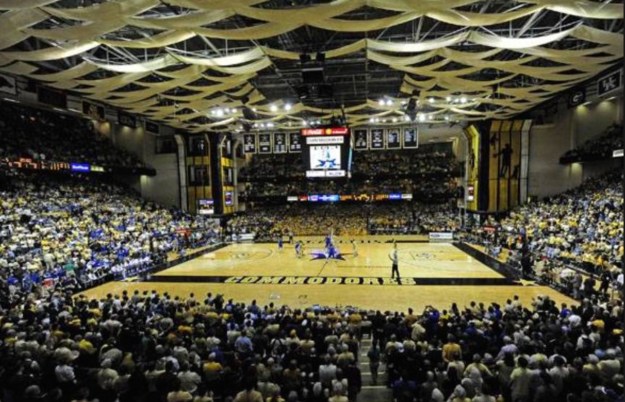
Offensive boards have disappeared at Vanderbilt. Will they ever come back?

It’s no secret that the offensive rebound is dying, both at the professional and collegiate levels. Barring a seismic turnaround, the offensive rebound rate in major-conference play this season will come in under 31 percent for the first time since I started doing things like tracking the offensive rebound rate in major-conference play.

This process has been in motion for years, and “inexorable” is probably not too strong a word to describe it. I’ll restate at the top what regular readers already know: I’m unpersuaded as to the wisdom of giving up on offensive rebounds. Be that as it may, it’s happening and, as the major-conference rate threatens to dip below 30 some season (very) soon, the disappearance of offensive boards is offering up some really interesting  vignettes. Continue reading

Tuesday Truths: Mott the Hoople edition

This “Simpsons” clip from three years ago coincidentally included a cameo from Alan Rickman along with the Bowie-authored “All the Young Dudes.” More recently Daniel Radcliffe’s deft tribute to Rickman ricocheted around social media, which made me remember that time when Radcliffe appeared on BBC Radio 1’s Innuendo Bingo….

If we can copy “The Office” and audition-based contestant reality shows from the Brits, surely we need to nick Innuendo Bingo as well. (The one with Hugh Jackman was also well done.)

Welcome to Tuesday Truths, where I look at how well 55 mid-majors are doing against their league opponents on a per-possession basis.

Major-conference Truths are at ESPN Insider.

A-10: Perceptual lags and Will Wade’s Rams
Through games of January 18, conference games only
Pace: possessions per 40 minutes
PPP: points per possession
EM: efficiency margin (PPP – Opp. PPP)

                          W-L   Pace    PPP   Opp. PPP    EM
1.  VCU                   5-0   70.3    1.14    0.91    +0.23
2.  Dayton                4-1   67.1    1.11    0.97    +0.14
3.  Rhode Island          3-2   62.6    1.17    1.04    +0.13
4.  Saint Joseph's        4-1   71.3    1.12    0.99    +0.13
5.  St. Bonaventure       4-1   70.4    1.19    1.08    +0.11
6.  George Washington     3-2   67.5    1.11    1.01    +0.10
7.  Richmond              2-3   69.3    1.14    1.10    +0.04
8.  Davidson              3-2   72.1    1.12    1.09    +0.03
9.  Duquesne              2-3   74.7    0.97    1.05    -0.08
10. La Salle              1-4   65.1    0.96    1.08    -0.12
11. George Mason          1-4   69.7    0.99    1.13    -0.14
12. UMass                 1-4   71.8    1.00    1.16    -0.16
13. Saint Louis           1-4   68.7    0.96    1.14    -0.18
14. Fordham               1-4   66.8    0.96    1.17    -0.21

AVG.                            69.1    1.07
KenPom rank: 8
% of games played: 28

Continue reading

Welcome to 2016’s egalitarian and accelerated showcase for veterans

JH

The nation’s leading scorer is Howard’s James Daniel, a seasoned junior who plays for a fast-paced team that isn’t great. How emblematic of him.

Today I’m officially removing the disclaimer “It’s early” from my 2015-16 lexicon. It’s not early anymore.

Most of the teams we spend our time talking about have now played 15 or so games, and even the conference seasons are at last well underway. We’ve now seen 20 percent of all the major-conference games we’re going to get in 2016, so forgive me if I feel like I have a pretty good — albeit still adjustable — understanding of where the season’s headed on January 13.

To my eyes these are the four factors (if you will) driving this unique season, in order of importance….

1. No great teams (hereafter NGT)
Kansas, Oklahoma, North Carolina, Michigan State, et al., are all fine teams that nevertheless would be ground into a fine neutral-floor powder by the Duke, Wisconsin, Kentucky, and Arizona teams we saw last season. Last year was unusually strong at the top. This year is unusually weak. I trust this isn’t merely Grandpa Simpson-variety carping on my part; ideally it is instead something I looked into and wondered about before the start of the season. More importantly a diagnosis of no great teams doesn’t have to be a dyspeptic lament. Continue reading

Tuesday Truths: “We can be heroes” edition

DB

“Just for one day.” Not a bad anthem for mid-majordom.

Today marks a first for Tuesday Truths. A branch office of the venerable franchise has been opened in Bristol, and per-possession Truths for the ACC, Big 12, Big East, Big Ten, Pac-12, SEC, and American await you over at ESPN Insider. There you’ll find the same trusty numbers and winningly phrased analysis you’ve come to demand hereabouts, only with a vastly superior layout. Make haste.

Welcome to Tuesday Truths, where I look at how well 55 mid-majors are doing against their league opponents on a per-possession basis.

Major-conference Truths are at ESPN Insider.

Learn how to coach and strategize the A-10 way 
Through games of January 11, conference games only
Pace: possessions per 40 minutes
PPP: points per possession Opp. PPP: opponent PPP
EM: efficiency margin (PPP – Opp. PPP)

                          W-L   Pace    PPP   Opp. PPP    EM
1.  VCU                   3-0   70.9    1.07    0.87    +0.20
2.  St. Bonaventure       3-0   70.7    1.23    1.04    +0.19
3.  Rhode Island          2-1   64.3    1.19    1.01    +0.18
4.  Dayton                2-1   66.8    1.08    0.91    +0.17
5.  George Washington     2-1   66.3    1.12    0.97    +0.15
6.  Saint Joseph's        2-1   71.5    1.08    1.05    +0.03
7.  Davidson              2-1   73.9    1.11    1.09    +0.02
8.  Richmond              1-2   67.8    1.14    1.16    -0.02
9.  La Salle              1-2   66.9    0.94    0.98    -0.04
10. Fordham               1-2   68.0    1.03    1.09    -0.06
11. UMass                 1-2   71.1    1.00    1.16    -0.16
12. Saint Louis           1-2   61.4    0.93    1.14    -0.21
13. Duquesne              0-3   71.7    0.87    1.09    -0.22
14. George Mason          0-3   67.6    0.89    1.13    -0.24

AVG.                            68.6    1.05
KenPom rank: 8
% of games played: 17

Continue reading

The new clock’s making conference games faster and therefore higher-scoring

KU.jpg

A triple-overtime game with 102 possessions and 215 total points? That’ll do. (Mike Gunnoe, Topeka Capital-Journal)

In the offseason the NCAA introduced a whole host of rule changes and/or “no, this time we really mean it” reemphases. Most prominent among the new measures was the 30-second shot clock, and coming into the season it was natural to think of the clock as purely a tempo-reform measure while pretty much everything else was either efficiency- or justice-related.

As always with such offseason discussions, the potential impact of the new rules and new clock were considered at length because it was hot outside and we had no games to talk about. Then, once the season started, we properly moved on to more pressing concerns such as who’s going to win the national title. As chance would have it I’m still interested in who’s going to win the national championship, but today I want to pause briefly to consider how the major conferences are faring in terms of tempo, efficiency, and scoring.

I realize that on January 6 it may seem rather early to look at the shot clock’s effect on conference play. Well, it is early. Still, 69 major-conference games have already been played, and that’s 10.2 percent of the eventual total right there. Think of it as the same number of games that, say, the Big 12 or Big East will have played in-conference by late February.  Continue reading

Why Bo Ryan was the most influential coach of his era

Ryan

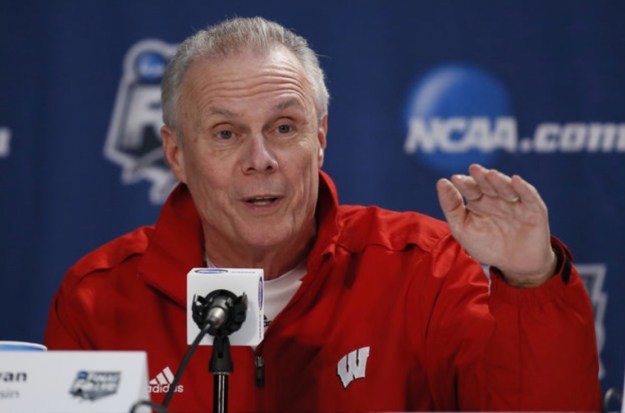
Ryan addresses the media at the 2015 Final Four. (Reuters)

In the spring of 2001 when Pat Richter placed a call to Wisconsin Milwaukee head coach Bo Ryan, the Wisconsin athletic director had been through a challenging few months. Fresh off a surprising run to the 2000 Final Four as a No. 8 seed, the Badgers lost their coach when Dick Bennett decided to retire just two games into the 2000-01 season. Brad Soderberg coached the team the rest of the way that year, but it was widely assumed in basketball circles that the man that Richter — and the entire state of Wisconsin — really wanted for the job was Utah head coach Rick Majerus.

Only now, as Richter made his call to Ryan, the Utes’ coach had pulled his name from consideration for the post in Madison. The Badgers needed a Plan B immediately, and Richter had just one question for the man on the other end of the line:

“Bo, are you ready?”

“Pat, I’ve been ready.” Continue reading