
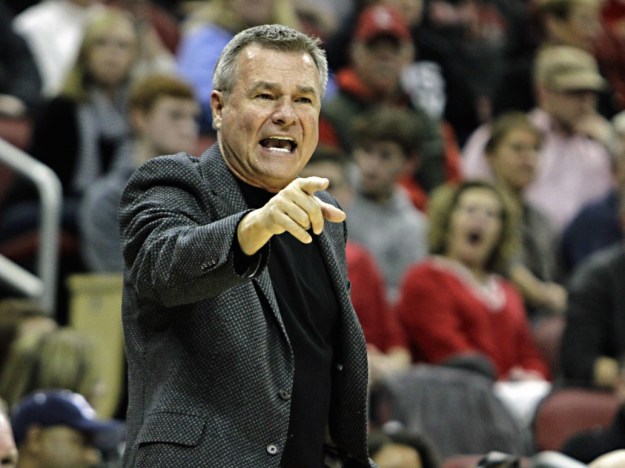
Dan D’Antoni may be on to something. (AP/Garry Jones)
Scoring is up this season, thanks in part to what can only be termed a sophomore-breakout season from the 30-second shot clock. Surely that clock will remain a fixture for the foreseeable future, and it’s therefore reasonable to assume that the scoring boost it has provided may well plateau. By next season, after all, players with a working memory of the previous clock will already be a decided minority.
So what happens to scoring now? Glad you asked….
Teams in Division I are making about 49 percent of their twos and 35 percent of their threes, meaning 100 attempts of each type of shot will net you, on average, 98 and 105 points, respectively. This seven-point margin perhaps holds the allure of a green light from the hoops gods.
All the usual caveats apply, naturally, and in particular Josh Pastner and Kim Anderson are hereby given permission to tackle any of their players that are about to attempt a trey. Not to mention the math here can be boosted in favor of our old friend the two-pointer through the simple expedient of shooting fewer jumpers inside the arc and getting more chances at the tin.
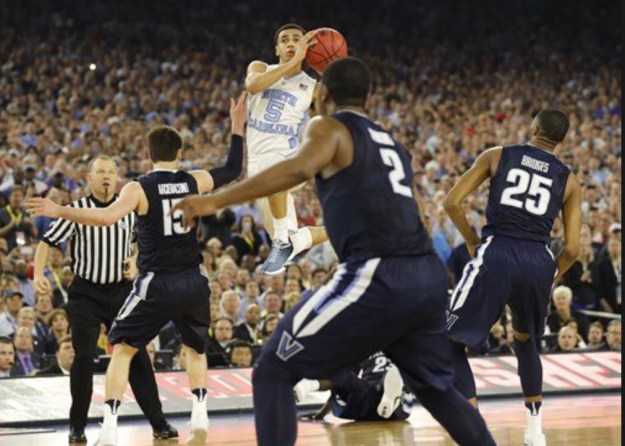
North Carolina has never shot threes, never will, and will always be hegemonic at basketball anyway. And, whether you’re speaking of D-I, a conference, a team, or a player, more three-point attempts can mean less accuracy. There are complexities intrinsic to this question, to be sure, and what follows is pitched at the level of the whole beach and not the grains of sand. Continue reading


 John Gasaway