Category Archives: in many ways the work of a critic is easy

A selection at war with itself

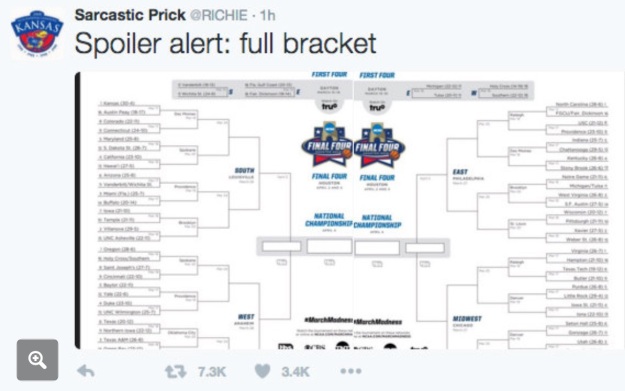
spoiler

Every year a bracket comes out, and every year there’s plenty of yelling and screaming to the effect that this is the worst bracket in history and lovable mid-major X that just missed the cut has been traduced in a way no other team ever has been before. That’s what Sunday night and Monday morning are for. Then we promptly forget about the yelling and screaming and we savor the actual games.

The same sequence will play out in 2016, and that’s fine. In this brief, fleeting moment when there are no games, however, I want to hold on to this feeling of dissatisfaction for just a second and suggest that it’s the product of a selection process that’s undergoing an arduous and unavoidably public transition. If I’m right, many of the same bracket objections will be filed by we the people next year even if the committee doesn’t pull a Tulsa.

In effect the selection process is navigating three transitions at once. All three changes are difficult to navigate (or at least the NCAA’s making it look that way), and last night we saw the stormy petulance of an adolescent raging at its fate. Continue reading

How to watch Selection Sunday 2016

lounge

This is where the selection magic will happen today. (Photo: Nicole Auerbach.)

I’m hearing a good deal of talk to the effect that this is the closest or toughest selection ever. One possibility is that this sentiment is a backhanded acknowledgment that basketball-specific metrics are gaining greater acceptance in the committee room by default if not by rule. (Four years ago I dreamily envisioned such a day. Well, it’s likely here.) When you have accurate information at your elbow, you can see how excruciatingly complex that bubble you’ve been assaulting with a blunt instrument for decades really has been all that time.

Bubble
If UConn beats Memphis in the inconveniently late American title game this afternoon, what you will have is effectively eight teams chasing four bids. For the moment let’s just stick with this scenario. Here are your eight bubble aspirants, listed in rough order of Lunardi-Palm bullishness.

Just four will dance (the “UConn wins today” scenario)
Temple
Monmouth
South Carolina
San Diego State
Michigan
Syracuse
Saint Mary’s
Vanderbilt

Continue reading

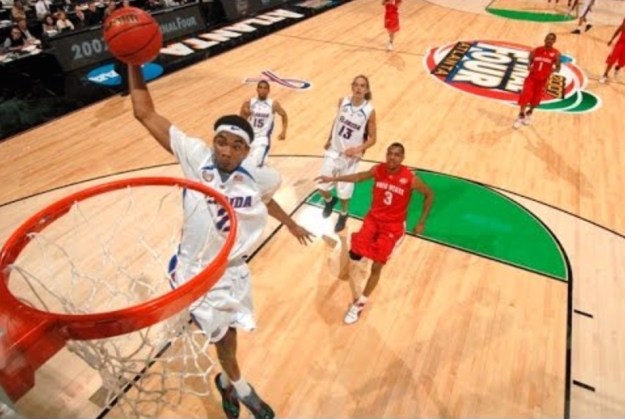
Final Four teams are way better at taking shots than they are at making them

Zoubek

The mystery of Duke 2010 — solved!

Last season I was struck by how some of the most incredible performances we saw from teams on offense were not necessarily all that incredible in terms of shooting. I realize this was a long time ago, but think back, for example, to the 82-50 win that Frank Kaminsky-era Wisconsin recorded at home against Iowa. That day the Badgers committed just one turnover and scored an absurd 1.52 points per possession while making 54 percent of their twos and 41 percent of their threes.

Obviously the shooting displayed by Bo Ryan’s guys against the Hawkeyes was excellent, but it’s at least possible for the very best offenses to achieve that roughly that same level of accuracy over an entire season. (Indeed that’s about how well Iowa State just shot in Big 12 play.) Conversely no offense in the history of the game has ever or will ever come anywhere close to scoring a point-and-a-half per trip for any appreciable multi-game length of time.

Mindful of this fact, I made a mental note to look into this whole matter of launching shots in mass quantities. (I vaguely remember thinking I’d use a picture of Phil Spector and tackle the subject under a “Wall of Shots” headline.) Then I got busy and did other things. Continue reading

Are the committee’s selections slowly getting better or just easier to predict?

2007

The 65-team field was statistically puzzling in 2007. Things have been more predictable lately, though the courts are less distinctive visually.

One way to think of the NCAA tournament is as the most popular nightclub in town. The men’s basketball committee is the bouncer, of course, stationed outside the club and working the rope line. There are 351 teams queued up hoping to get in, and the bouncer gives familiar and knowing nods to the first 20 or so teams as they breeze in. It’s pretty much the same group every year.

Next, after the usual teams have been waved through, there is always the same number of unfamiliar and oddly attired out-of-towners who show up. Once they explain that they’ve won the conference tournaments in their one-bid leagues, however, these teams are also let in.

Lastly, there are the toughest decisions of all. These are the final at-larges, and up until a few years ago the best way to get in was to engage in some form of the following conversation. For example this particular discussion took place in 2012:

SOUTHERN MISS: Uh, hi, I’m Southern Miss. I think I’m on your list for 2012.

BOUNCER (suspicious, checks clipboard). Nope, sorry, pal. Don’t see you. Wait behind the rope, please.

SOUTHERN MISS: I think there must be some mistake. I’m pretty sure I’m supposed to be on the list. My RPI is 21.

BOUNCER: Right this way.

Continue reading

Louisville, path dependence, and punditry

BMH

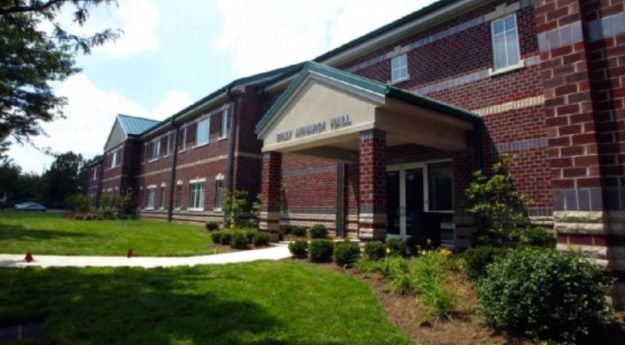
Billy Minardi Hall.

Last Friday Louisville announced that its investigation of its strippers-and-escorts scandal had led it to self-impose a postseason ban on the men’s basketball team for this season. This means Damion Lee and Trey Lewis, who transferred into the program this season as seniors and thus had no connection to the events described in Katina Powell’s book, will not play in an NCAA tournament where otherwise the Cardinals were most assuredly going to land a really nice seed.

I’m obviously late to this particular topical party (Mondays and Tuesdays are hectic around here), and, anyway, my first order of business is a simple amen. It really is awful that the postseason dreams of Lee and Lewis have been sacrificed on the altar of post-facto justice, and I dare say they’ve carried themselves far better than I would have at age 23. Please file what follows not under “Yes, but,” much less “On the contrary!” This is more of a “Yes, and,” exercise.

Once strippers and escorts were paid to be at Billy Minardi Hall, everything else — even any correct decision taken subsequently — was going to be a footnote
Louisville’s decision to forego the 2016 NCAA tournament has its fair share of critics in February, but back in October there was no lack of published speculation that the Cardinals would in fact do precisely what they’ve just done. What has changed over the last four months is nothing more complex or material than the fact that Rick Pitino has turned out to have a much better team than we thought he would have. This fact makes the postseason ban all the more painful for Lee and Lewis, surely, but, speaking now as a punditry, is this really how we wish to codify our theory of moral sentiments? That postseason bans are fine (hello, Missouri) as long as you’re not going to make the tournament anyway?
Continue reading

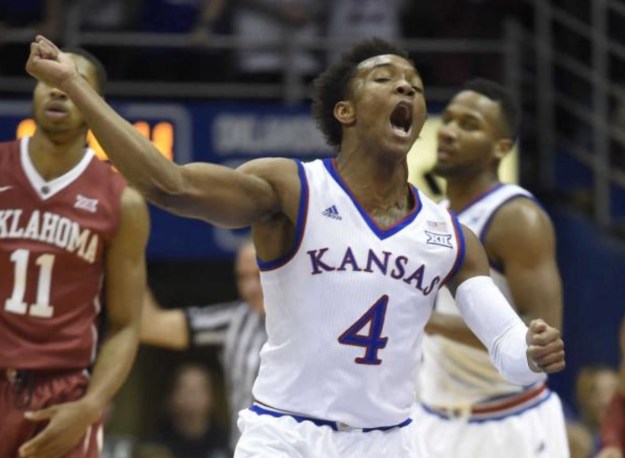
Buddy Hield’s season is impossible

BB

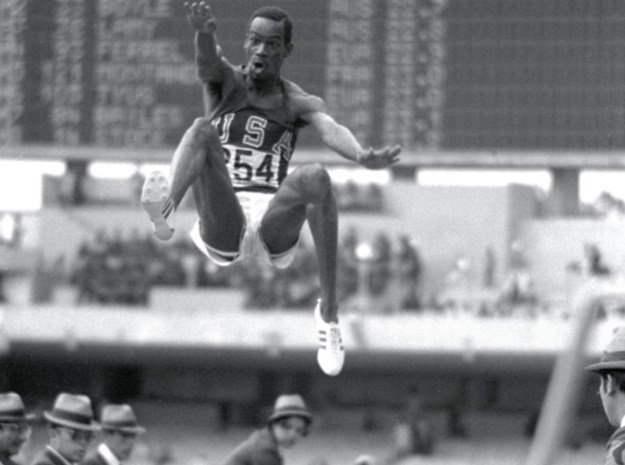
What we’re seeing is Beamon-esque.

This season I’ve adopted a new morning ritual. I check the previous evening’s scores, glance at the headlines, and then I devote a minute or two exclusively to Buddy Hield.

If by chance Oklahoma has played the previous evening, I’ll watch those highlights. Or if the Sooners are between games, I might find myself gazing upon Hield’s body of numerical work and trying, once again, to take the true measure of what I’m seeing….

It’s good to know my need to try to situate Hield within some kind of rational framework is a shared affliction. Last week I realized that Luke Winn, Kevin Pelton, and I were all simultaneously running Hield-triggered searches on 22 years’ worth of Division I basketball at sports-reference.com. Luke heralded Hield’s membership in the 50-50-90 club. Kevin wants to gently dissuade NBA general managers from thinking this remarkable Hield of Dreams thing can possibly continue at the next level. Continue reading

Continuing coverage from the offensive rebound’s deathbed

Van

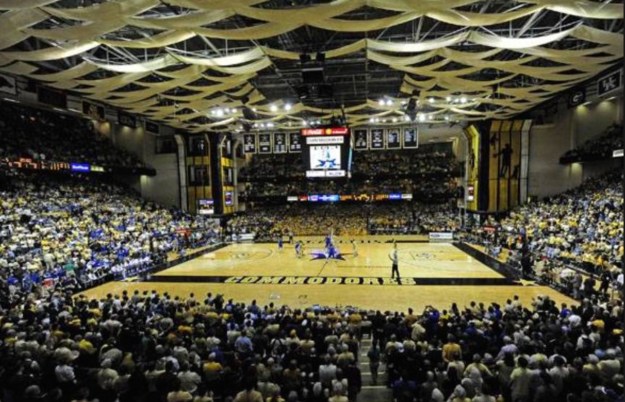
Offensive boards have disappeared at Vanderbilt. Will they ever come back?

It’s no secret that the offensive rebound is dying, both at the professional and collegiate levels. Barring a seismic turnaround, the offensive rebound rate in major-conference play this season will come in under 31 percent for the first time since I started doing things like tracking the offensive rebound rate in major-conference play.

This process has been in motion for years, and “inexorable” is probably not too strong a word to describe it. I’ll restate at the top what regular readers already know: I’m unpersuaded as to the wisdom of giving up on offensive rebounds. Be that as it may, it’s happening and, as the major-conference rate threatens to dip below 30 some season (very) soon, the disappearance of offensive boards is offering up some really interesting  vignettes. Continue reading

Welcome to 2016’s egalitarian and accelerated showcase for veterans

JH

The nation’s leading scorer is Howard’s James Daniel, a seasoned junior who plays for a fast-paced team that isn’t great. How emblematic of him.

Today I’m officially removing the disclaimer “It’s early” from my 2015-16 lexicon. It’s not early anymore.

Most of the teams we spend our time talking about have now played 15 or so games, and even the conference seasons are at last well underway. We’ve now seen 20 percent of all the major-conference games we’re going to get in 2016, so forgive me if I feel like I have a pretty good — albeit still adjustable — understanding of where the season’s headed on January 13.

To my eyes these are the four factors (if you will) driving this unique season, in order of importance….

1. No great teams (hereafter NGT)
Kansas, Oklahoma, North Carolina, Michigan State, et al., are all fine teams that nevertheless would be ground into a fine neutral-floor powder by the Duke, Wisconsin, Kentucky, and Arizona teams we saw last season. Last year was unusually strong at the top. This year is unusually weak. I trust this isn’t merely Grandpa Simpson-variety carping on my part; ideally it is instead something I looked into and wondered about before the start of the season. More importantly a diagnosis of no great teams doesn’t have to be a dyspeptic lament. Continue reading

The new clock’s making conference games faster and therefore higher-scoring

KU.jpg

A triple-overtime game with 102 possessions and 215 total points? That’ll do. (Mike Gunnoe, Topeka Capital-Journal)

In the offseason the NCAA introduced a whole host of rule changes and/or “no, this time we really mean it” reemphases. Most prominent among the new measures was the 30-second shot clock, and coming into the season it was natural to think of the clock as purely a tempo-reform measure while pretty much everything else was either efficiency- or justice-related.

As always with such offseason discussions, the potential impact of the new rules and new clock were considered at length because it was hot outside and we had no games to talk about. Then, once the season started, we properly moved on to more pressing concerns such as who’s going to win the national title. As chance would have it I’m still interested in who’s going to win the national championship, but today I want to pause briefly to consider how the major conferences are faring in terms of tempo, efficiency, and scoring.

I realize that on January 6 it may seem rather early to look at the shot clock’s effect on conference play. Well, it is early. Still, 69 major-conference games have already been played, and that’s 10.2 percent of the eventual total right there. Think of it as the same number of games that, say, the Big 12 or Big East will have played in-conference by late February.  Continue reading

Why Bo Ryan was the most influential coach of his era

Ryan

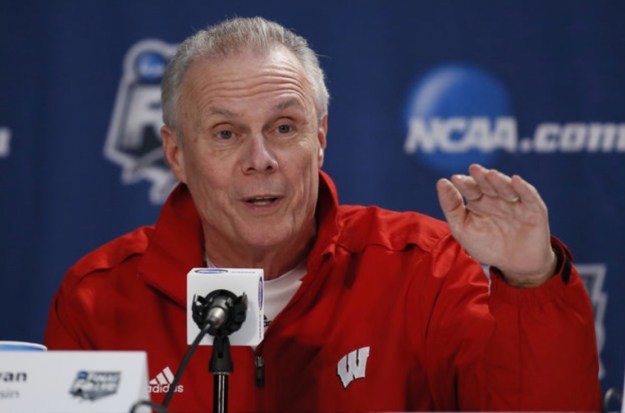
Ryan addresses the media at the 2015 Final Four. (Reuters)

In the spring of 2001 when Pat Richter placed a call to Wisconsin Milwaukee head coach Bo Ryan, the Wisconsin athletic director had been through a challenging few months. Fresh off a surprising run to the 2000 Final Four as a No. 8 seed, the Badgers lost their coach when Dick Bennett decided to retire just two games into the 2000-01 season. Brad Soderberg coached the team the rest of the way that year, but it was widely assumed in basketball circles that the man that Richter — and the entire state of Wisconsin — really wanted for the job was Utah head coach Rick Majerus.

Only now, as Richter made his call to Ryan, the Utes’ coach had pulled his name from consideration for the post in Madison. The Badgers needed a Plan B immediately, and Richter had just one question for the man on the other end of the line:

“Bo, are you ready?”

“Pat, I’ve been ready.” Continue reading