Category Archives: florid historical references

Putting Syracuse’s historically atrocious three-point shooting into context

He's been far and away Syracuse's most accurate three-point shooter. He's shooting 28 percent.

He’s been far and away Syracuse’s most accurate three-point shooter. He’s shooting 28 percent. (syracuse.com)

If the Unannounced Audit Panel of the US Basketball Writers Association shows up at my door later today, I think I’ll be in pretty good shape. I’ll steer them toward my pre- and early-season wariness of a North Carolina team that at the time was being ranked in the top 10 or even in the top five. I’ll trot out my hearty approval of Tony Bennett’s decision to embrace offensive rebounding last season. (Now look. The guy’s practically Tom Izzo Jr.) And I may even call attention to my canny (if entirely risk-free) decision to leave an analytic light on just in case an NJIT team returning six members from a seven-man rotation should decide to win one of its four tries against major-conference competition — despite the fact that the Highlanders entered the season 0-22 lifetime on that score.

All in all I feel like the audit will go pretty well. But then the diligent and tireless auditors will ask me about Syracuse, and that’s where things could get a little awkward. What was that I said again about the Orange being “underrated”? Just what exactly did I mean when I said “the laws of statistical gravity suggest an offense powered collectively by Trevor Cooney and players to be named later can shoot just as well as if not better than the one that last season was focused with surprising insistence on C.J. Fair”?

Since those statements were so confidently asserted Syracuse has started the season 5-3, losing two of those games by double-digit margins to unranked opponents. Furthermore Jim Boeheim’s men have reached mid-December shooting 20.8 percent on their threes. So, yeah, at that point in the audit I’ll have two options — flee or explain. And since I’ve already given the USBWA my home address, I guess I’ll have to opt for the latter.  Continue reading
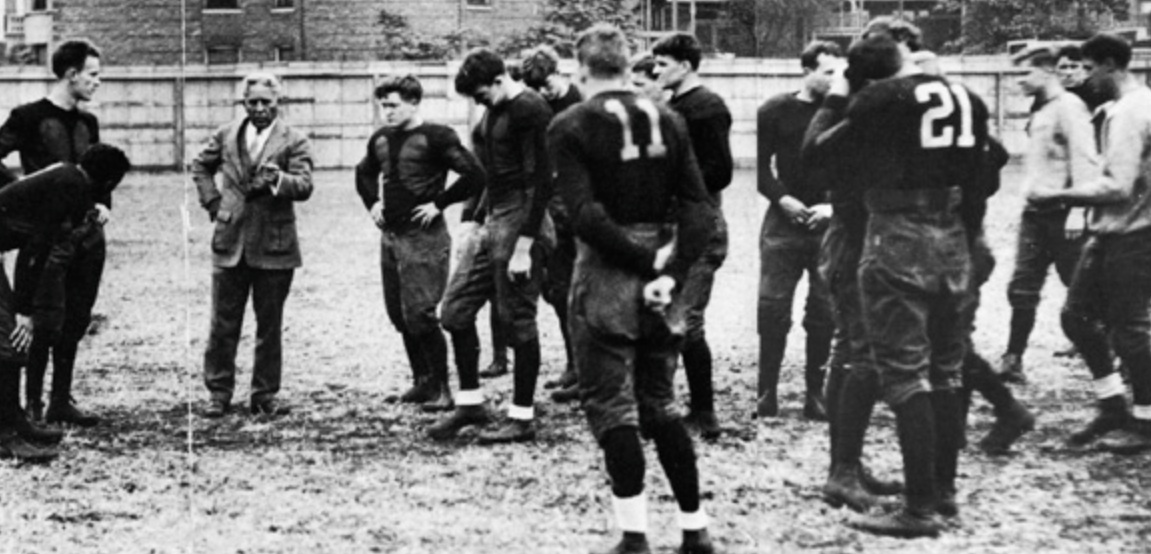
Before UAB: When schools say no to football

Amos Alonzo Stagg coaching the University of Chicago Maroons.

Amos Alonzo Stagg coaching the University of Chicago Maroons.

“We agree with you that the first purpose of an educational institution is to educate, with football of secondary importance. We, the players, are proud of you and the University of Chicago.”
Letter to president Robert Maynard Hutchins from a freshman football player after the University of Chicago discontinued the program in 1939

It’s rare for an institution to face a situation where the benefits of retreating from football at its highest level are perceived as outweighing the disadvantages. Nevertheless, those situations do arise, and — notwithstanding the University of Pacific’s decision to drop football in 1995 — such instances tend to occur in clusters at times when the nature of participation in major college sports is changing dramatically.

December 2014 may be one such time. Cost-of-attendance scholarships are rapidly becoming commonplace, and UAB says it would have cost the school $49 million over the next five years to try to put a competitive football team on the field in Conference USA.

This is not the first such era, however. In the years preceding and following the Second World War, colleges and universities were forced by unfolding events (including but not limited to a 1930s-era college sports reform movement triggered in part by the Carnegie Report of 1929, postwar increases in student enrollments, and the infancy of televised college football) to weigh the costs and benefits of pursuing fame and glory through sports.  Continue reading

Conference strength is somewhat related to results in the Iowa Caucuses of hoops

Kaminsky vs. this guy -- should be a pretty good game in Madison. (newsobserver.com)

Kaminsky vs. this guy. That should be fun. (newsobserver.com)

Tonight the ACC-Big Ten Challenge will tip off, with Florida State hosting Nebraska and Clemson playing at home against Rutgers. This will be the 16th time the conferences have squared off in this event, meaning if there had been a Lamar Hunt figure at the founding we would be referring to this as Challenge XVI.

The ACC holds a 10-3 advantage since 1999, though in truth John Swofford’s league hasn’t won the event outright since December 2008. The last two Challenges have ended in 6-6 ties. This will be the first year that 14 games are played — the ACC chose to leave Boston College at home for this one.

If the ACC leads the Challenge 10-3 all-time, that must mean it’s been the better conference over the past 15 years, right? Well, sort of. Continue reading

I rushed to finish this judgment of our rush to judge a rush to judgment

When historically bad sports-transcending actions transpire in your program, your peer institutions may take note. That's unobjectionable, unless of course the peer institutions call themselves the NCAA.

When historically diabolical sports-transcending actions transpire in your program, your peer institutions may object. That’s unobjectionable — unless of course the peer institutions call themselves the NCAA.

If tomorrow it emerges that a staff member at a blue-chip college basketball program has for decades used his position of power and prominence to secretly carry out terrible criminal actions of unimaginable scope and magnitude, I will have no problem whatsoever with the other revenue-sports-playing universities in the vicinity collectively considering — at the conference or national level — whether some form of censure and redress, subordinate to and cognizant of criminal proceedings, might be appropriate.

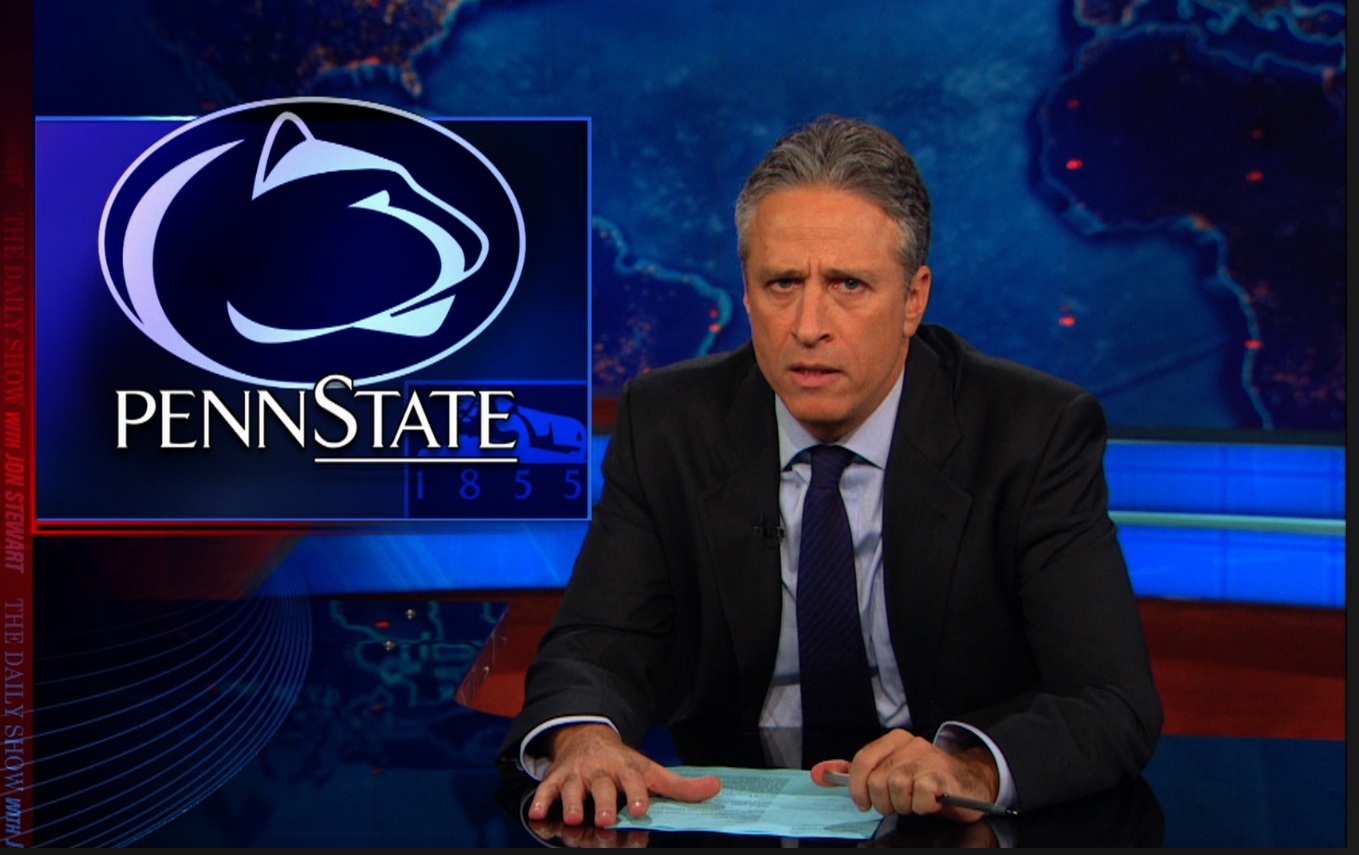
Apparently I’m in the minority. Today the conventional wisdom is that those universities rushed to judgment in 2012 when they reacted to Jerry Sandusky’s crimes by fining Penn State, imposing a postseason ban, taking away some football scholarships, and vacating 14 years’ worth of Joe Paterno’s wins. Reasonable people can differ over whether that was the best blend of sanctions, but what’s being asserted now is the far more sweeping claim that any action at all undertaken by the universities was categorically unwarranted. That strikes me as a novel contention, to say the least.  Continue reading

Seven teams account for 25 percent of all tournament wins since 2000

Two coaches, four titles.

Life is good at the top of Division I. (USA Today)

Counting NCAA tournament wins since 2000 is little more than a blinkered exercise in setting arbitrary and subjective quantitative goalposts. Much like a good portion of real life. Let’s do this.

                     NCAA tournament         National
                     wins since 2000     titles since 2000
1.   Kansas                38                    1
2.   Michigan State        36                    1
3.   Duke                  34                    2
     North Carolina        34                    2
5.   Florida               33                    2
6.   Connecticut           32                    3 (4 since 1999!)
     Kentucky              32                    1

After Connecticut and Kentucky there’s a big drop — equivalent to one national championship run — before you get down to plucky underdogs like Arizona, Louisville, Syracuse, and Wisconsin. No other program has won more than 25 games. (Full team list at the bottom of this post. Limber up your scrolling finger.)  Continue reading

On the irredeemably doomed nature of (most) preseason conference hype

BP

This man is excited about the SEC’s future.

The SEC held its spring meetings last week, and the most noteworthy product of this year’s conclave was arguably the solemn and earnest talk of a potential Division IV in college athletics. Nevertheless, there was also, of course, the requisite chatter promising that the conference will henceforth be good at basketball. This time the SEC means it. Truly.

“This is as focused as I’ve seen this league and these coaches and the programs and the ADs in how do we move this ball forward,” Kentucky coach John Calipari said. “We had three teams in the Elite Eight, two teams in the Final Four, a team in the national championship game and still … come on now. Our goal is let’s get half of our teams in within the next three years and two of us playing for a national championship.”

I share Calipari’s preferred measure of conference strength. How many teams you put into the NCAA tournament and, more specifically, where those members are seeded is to my mind the best gauge of just how good your league really is.  Continue reading

If and when amateurism ends, the work will just be starting

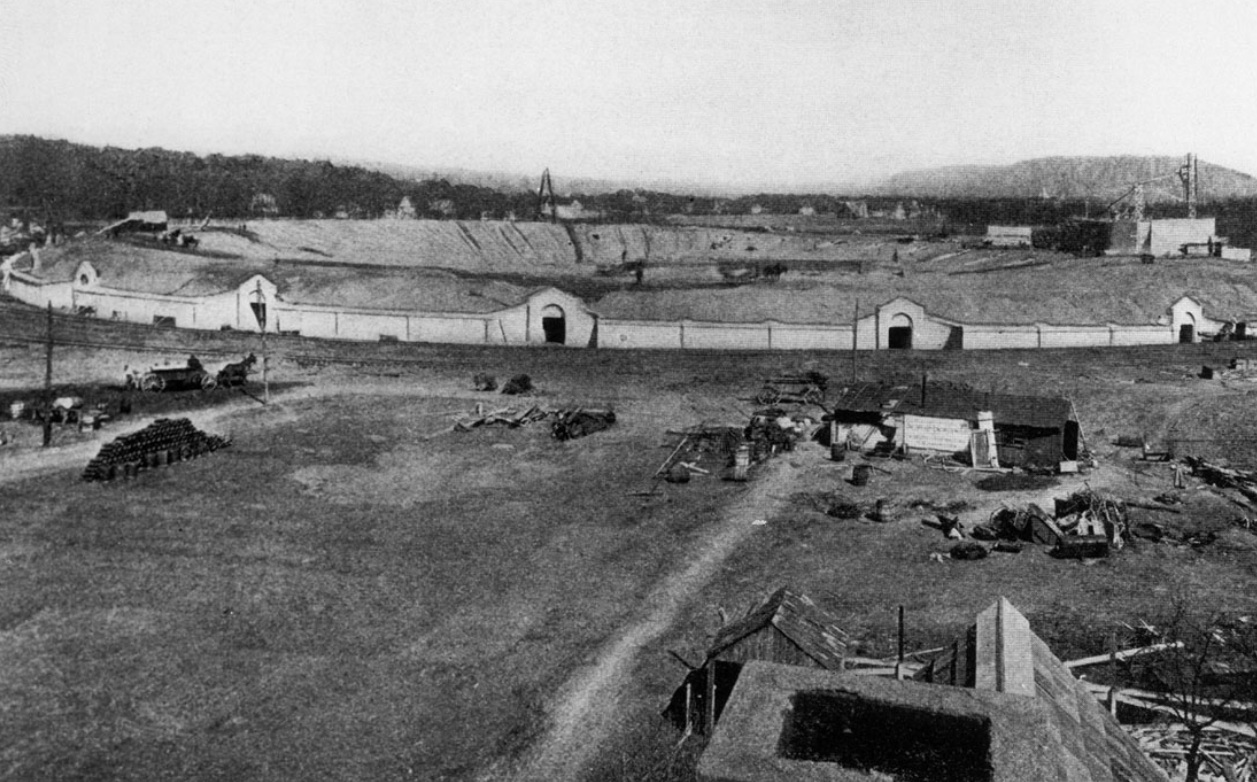
Yale Bowl construction, 1913. And here our troubles began.

Construction of the Yale Bowl, 1913. And here our troubles began.

Last week there was an NLRB ruling that you may have heard about concerning the Northwestern football team, and there is also a collegiate sporting event this weekend that is fairly well publicized in its own right. This has meant a deluge of polemic on the subject of what is to be done with college sports. I believe the deluge is a positive development, and, even if it weren’t, I’m a good host. So:

Welcome, reformers. We’ve been hoping you’d arrive. I too have my torch and pitchfork, and I trust we can all agree there’s more than one tweak to be made when it comes to revenue sports.

I’m proud to announce I’ve discovered an “ideal of the amateur coach.” Compared to the thin and meager history behind that wobbly and dubious model of the amateur athlete, I can footnote my exciting new ideal something fierce, citing precedents dating back to Socrates. Henceforth coaches will receive no outside compensation, no endorsement deals, no fees from speaking engagements, nothing. Schools can pay for a coach’s room and board and a few other incidental expenses, but that’s it. After all, college sports are not about the coaches. How many people do you think would come out to see John Calipari coach a bunch of D-League players?

Continue reading

The strange case of the disappearing No. 1 seeds

This is the coach of a top-seeded team cutting down the nets after a regional final.  A rare sight indeed.

The coach of a No. 1 seed cuts down the nets after a regional final. A rare sight indeed.

Florida is a heavy favorite to win the national championship, and if the Gators pull it off they’ll be the third consecutive No. 1 overall seed to do so, following in the footsteps of Anthony Davis-era Kentucky in 2012 and Siva-Dieng-Russdiculous-era Louisville in 2013.

Then again even if UF is bounced out of the bracket by Connecticut, Wisconsin, or Kentucky, you’re still looking at a pretty good run for No. 1 seeds over the last decade or so. Teams seeded on the top line have already won seven of the last nine tournaments. (Florida in 2006 and UConn in 2011, take a bow.) Life is good at the very, very top of the college hoops pyramid.

Which begs the question: If No. 1 seeds are so big and scary and dominant, how come taken as a group top seeds keep losing before they get to the Final Four?  Continue reading

Is a post-McBuckets Big East still “a major”?

He will be missed.

He will be missed.

You think I’m going to pick on the Big East because it received four bids but didn’t put any teams into the Sweet 16. You think I’m going to pick on the league because it alone among the major conferences will be unrepresented at the regional semifinals.

I’m certainly not above grabbing a handy news peg like that, but for now you can keep your “small sample size” and “single-elimination tournament randomness” powder dry. If anything I’m more interested in Buzz Williams leaving a program that has won 13 NCAA tournament games this century to take the head coaching job at a program that (with apologies to my friend Ken) has won one tournament game in the 2000s. Williams voted with his feet, and, as my colleague Jeff Goodman has pointed out, the coach made quite the statement.  Continue reading

Perception and Josh Pastner

JP

Today at Insider I’ve written about Memphis and why I think the Tigers will be a force to be reckoned with in this year’s American race. And by “force to be reckoned with,” I mean “about as good as if not better than any other team that we think will still be in the league next season.”

Having zeroed in on this season’s team, I want to take a step back and consider Josh Pastner’s career and specifically what his example may be able to tell us about how college basketball is customarily narrated. (Something like a person facing backward on a train and describing the terrain as it goes by with feigned “I knew this was coming” omniscience. But I’m getting ahead of myself.)  Continue reading