Category Archives: in many ways the work of a critic is easy

You won’t be disappointed

(Getty/Andy Lyons)

(Getty/Andy Lyons)

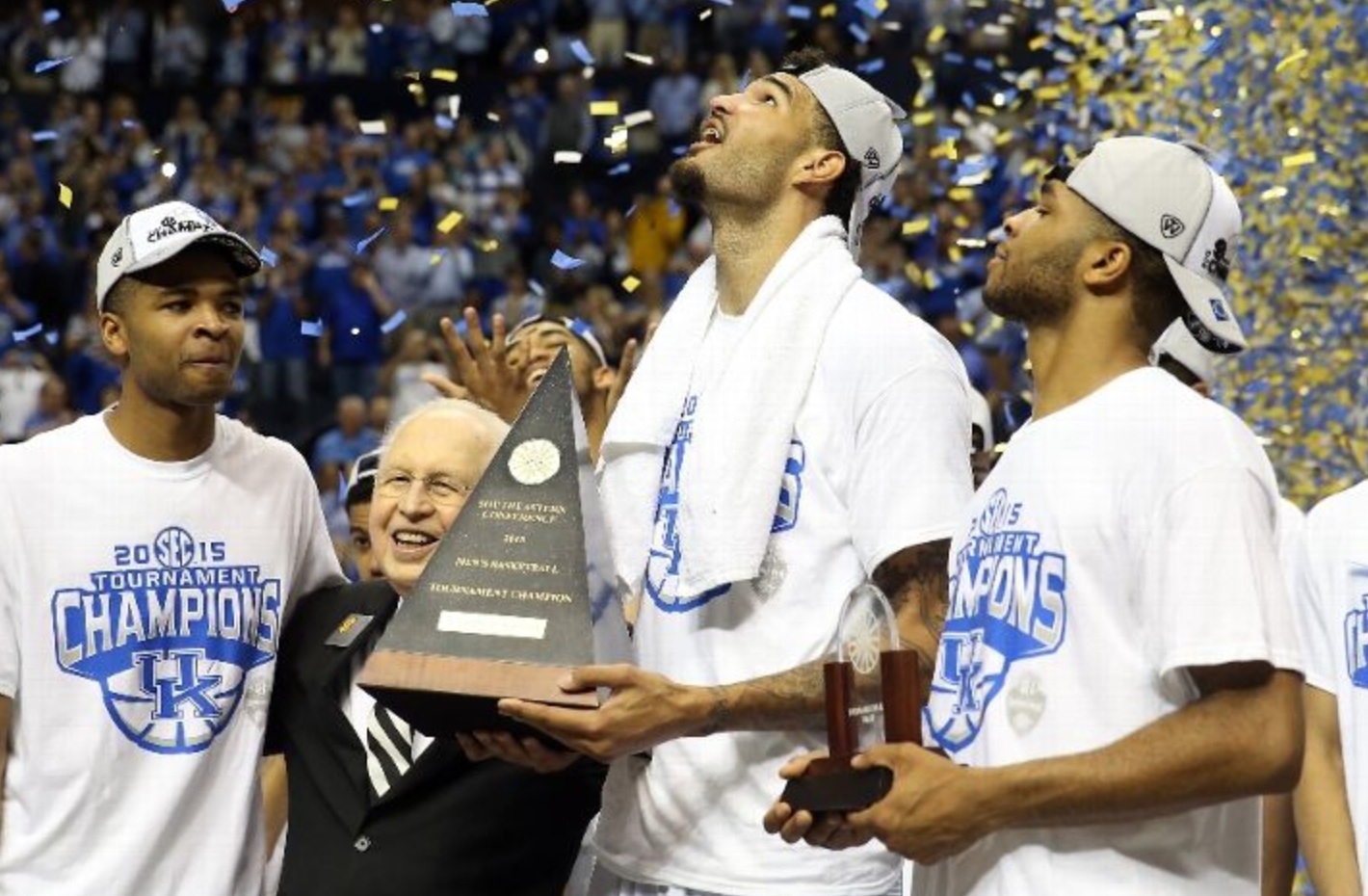
The NCAA tournament is shockingly close to perfect because fairness is sacrificed so ruthlessly and deliberately at the altar of drama.

In a playoff that exalted fairness above all else, Kentucky would have better than a 34 (Ken) or 41 (Nate) percent chance of winning it all. But this is the business we’ve chosen. It’s a single-elimination tournament with 68 teams. The inherent structure of the event means the answer to “Kentucky or the field?” is the field. The answer to “Incredibly Great Team X or the field?” is very nearly always going to be the field. The NCAA tournament is shockingly close to perfect because death is always just 40 minutes away, even for Kentucky.

If we wanted to pick a “fair” or “real” champion we could shrink the field and kill the single-elimination format. But that’s the NBA’s shtick, isn’t it? If you want larger sample sizes and smoother win probability curves, the next level has you covered. At the next level it’s axiomatic that game seven always pulls in the best ratings. Well, the NCAA tournament is 67 game sevens. Continue reading
Why I’m declaring for the draft

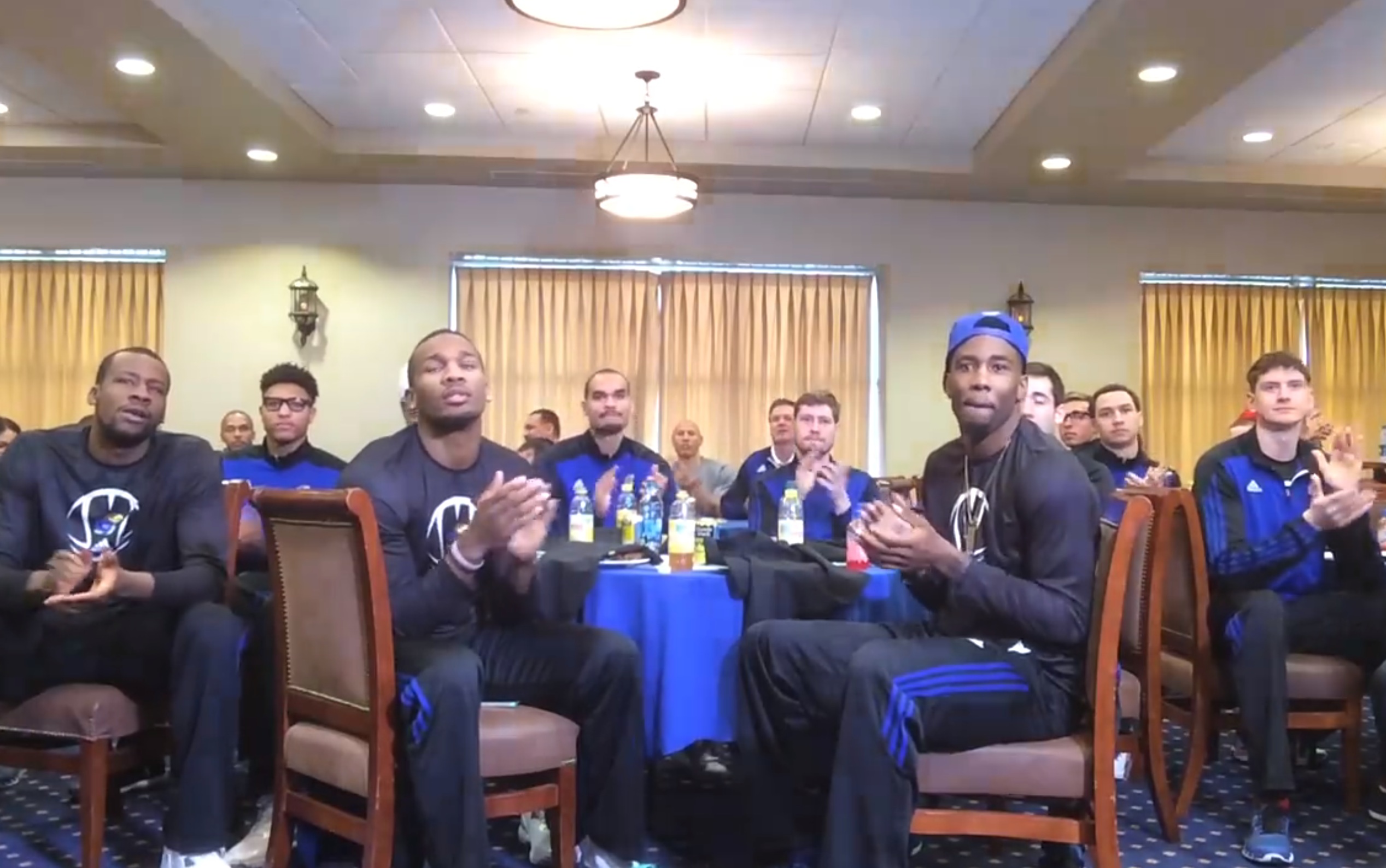
What if instead of just taking the bracket the NCAA gives them, Bill Self and his guys could choose their spot? (Photo: Kansas Men's Basketball)

What if instead of just taking the bracket the NCAA gives them, Bill Self and his guys could choose their spot? (Photo: Kansas Men’s Basketball)

The idea of turning the bracket into a draft has been a hardy perennial on Twitter for a while now thanks in large part to the efforts of the indefatigable Andy Glockner. Then last week the notion was given an excellent boost by my colleague Jordan Brenner. The idea is that the NCAA would continue to select which 68 teams get in and indeed would keep ranking teams from 1 through 68 (what is currently known as the true seed list), but after that the good men and women in Indianapolis would simply get out of the way. As Jordan puts it well:

Certain coaches surely would choose a tougher Elite Eight opponent if it meant playing 500 miles closer to home. But not all would. So why is the committee deciding for them? Because, as we’ve established, that’s what the NCAA does.

Naturally there would have to be restrictions on what slot a coach or AD can pick for his or her team, and certainly you’d have to offset the relative knowledge disadvantage that would come from a top seed watching as its entire bracket is subsequently built underneath the top line. (Glockner has proposed giving each top seed or perhaps a few high seeds one veto.) But the animating impulse here is not only sound but obvious to the point of being banal. Continue reading

How to watch Selection Sunday

Why, that's my colleague Jeff Goodman interviewing the Pac-12 champion Arizona Wildcats. Sean Miller's team is about to named the strongest No. 2 seed in a very long time. (AP/John Locher)

Why, that’s my colleague Jeff Goodman interviewing the Pac-12 champion Arizona Wildcats. Sean Miller’s team is about to be named the strongest No. 2 seed in a very long time. (AP/John Locher)

This year Selection Sunday’s a little different: Kentucky will have our full attention in the SEC title game even though the Wildcats have already sewn up the No. 1 overall seed. UK’s unique historical circumstance has the potential to lend some drama to what in the past has been a somewhat dilatory and anticlimactic Sunday of hoops. Typically the very fact of the impending bracket announcement looms so large it overshadows the basketball being played. (Which is one more thing I love about the idea of a bracket draft — it would create the ideal conditions for at long last killing Sunday hoops for good.)

Once the Wildcats’ quest for perfection has either been extended or denied, Selection Sunday will come down to what it always comes down to — top seeds and bubble teams. Continue reading

I rushed to finish this judgment of our rush to judge a rush to judgment

When historically bad sports-transcending actions transpire in your program, your peer institutions may take note. That's unobjectionable, unless of course the peer institutions call themselves the NCAA.

When historically diabolical sports-transcending actions transpire in your program, your peer institutions may object. That’s unobjectionable — unless of course the peer institutions call themselves the NCAA.

If tomorrow it emerges that a staff member at a blue-chip college basketball program has for decades used his position of power and prominence to secretly carry out terrible criminal actions of unimaginable scope and magnitude, I will have no problem whatsoever with the other revenue-sports-playing universities in the vicinity collectively considering — at the conference or national level — whether some form of censure and redress, subordinate to and cognizant of criminal proceedings, might be appropriate.

Apparently I’m in the minority. Today the conventional wisdom is that those universities rushed to judgment in 2012 when they reacted to Jerry Sandusky’s crimes by fining Penn State, imposing a postseason ban, taking away some football scholarships, and vacating 14 years’ worth of Joe Paterno’s wins. Reasonable people can differ over whether that was the best blend of sanctions, but what’s being asserted now is the far more sweeping claim that any action at all undertaken by the universities was categorically unwarranted. That strikes me as a novel contention, to say the least.  Continue reading

Why be bad at part of a sport you’re trying to be good at?

Alex Olah seems somewhat skeptical of his coach's ban on offensive boards. (Chicago Tribune photo.)

Alex Olah is very excited about his coach’s decision to forego offensive rebounds. But has a team ever succeeded because of bad offensive rebounding and not merely in spite of it? (Chicago Tribune)

Offensive rebounding is one of the few antecedents of scoring in sports that a significant minority of coaches consciously and indeed insistently tries to do very badly.

That fact alone doesn’t mean those coaches are wrong — sometimes the smart play is to miss a free throw or let the opponent score — but it sure is interesting. This season a handful of coaches with realistic chances at an NCAA tournament bid will seek to win that reward, in part, by avoiding offensive rebounds.

Stats will be brought into this discussion momentarily, don’t you fret, but at the outset I trust plain old words can do justice to a rather remarkable state of affairs. First let us note that there’s nothing intrinsically special or magical about offensive rebounds — or, conversely, about transition defense. Continue reading

Academic life after UNC

It appears some of these guys weren't subjected to particularly rigorous challenges in the classroom. It appears in some instances there was no classroom.

It appears some of these guys weren’t subjected to particularly rigorous academic challenges. What’s far more surprising, however, is that neither were some of their fellow students in the stands. (Grantland)

After reading Kenneth Wainstein’s report on the University of North Carolina’s academic misdeeds between 1993 and 2011, it occurred to me that if I were a graduate of UNC the really galling thing would be that my highly prestigious alma mater was so badly outperformed in this one respect by Auburn.

Eight years ago more or less the exact same transgression that has now been documented so thoroughly in Chapel Hill also came to light at Auburn. In both cases a faculty member was found to be offering an inordinately high number of “independent studies classes.” In both cases the grades that athletes received in their independent studies were far higher than their overall grade point averages. Continue reading

The O’Bannon ruling is on the side of the very clumsy angels

Sugar beet farmers, 1948. The parallel between them and Jahlil Okafor is obvious. To our legal system.

Sugar beet farmers, 1948. The parallel between them and Jahlil Okafor is obvious. To the legal system.

The fact that the question raised by Ed O’Bannon landed on the docket of U.S. District Judge Claudia Wilken is solely and ineluctably the NCAA’s fault. It should never have come to this. The NCAA never offered a common-sense justification for not compensating O’Bannon for the use of his name, image, and likeness. Then again logic, fairness, and common practice all unite in saying there can be no such justification, so don’t blame the NCAA’s lawyers for the weakness of their argument. Blame the NCAA for taking this to court in the first place.

With any organization that operated without the debilitating procedural inertia of several hundred otherwise distracted voting members (otherwise known as Division I), this matter would have been settled outside the courtroom. Such a resolution would have had two cardinal virtues: 1) It would have been the collaborative product of the parties involved; and 2) It would, one assumes, have been tailored to to the very different needs and characteristics of the two revenue sports, football and basketball.

Now we have a resolution to the dispute that sides with O’Bannon, but does not possess either of these two virtues. In other words, we have a court decision, and more’s the pity.  Continue reading

Let them play

He likes reviews.

He likes reviews.

Perfecting what is already the best sport in the world will require addressing a rather ticklish situation that has arisen between the generations. At the risk of offending the age cohort to which I myself belong, college basketball is suffering from an infestation of adults.

The adults are the ones who insist on calling timeout over and over again in the game’s final minute. The adults are the ones who take way too long to review every call, particularly if it involves elbows being swung this way and that. The adults are the ones who whistle more fouls with each passing year.  Continue reading

If and when amateurism ends, the work will just be starting

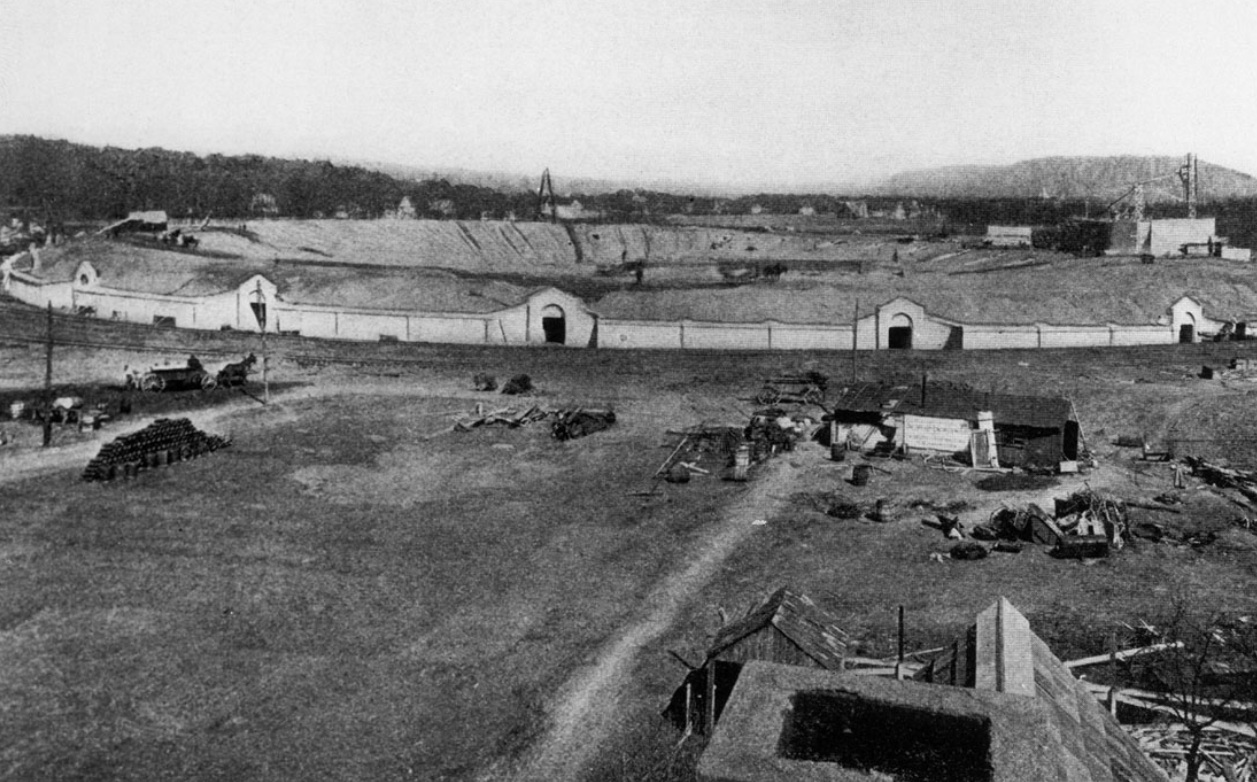
Yale Bowl construction, 1913. And here our troubles began.

Construction of the Yale Bowl, 1913. And here our troubles began.

Last week there was an NLRB ruling that you may have heard about concerning the Northwestern football team, and there is also a collegiate sporting event this weekend that is fairly well publicized in its own right. This has meant a deluge of polemic on the subject of what is to be done with college sports. I believe the deluge is a positive development, and, even if it weren’t, I’m a good host. So:

Welcome, reformers. We’ve been hoping you’d arrive. I too have my torch and pitchfork, and I trust we can all agree there’s more than one tweak to be made when it comes to revenue sports.

I’m proud to announce I’ve discovered an “ideal of the amateur coach.” Compared to the thin and meager history behind that wobbly and dubious model of the amateur athlete, I can footnote my exciting new ideal something fierce, citing precedents dating back to Socrates. Henceforth coaches will receive no outside compensation, no endorsement deals, no fees from speaking engagements, nothing. Schools can pay for a coach’s room and board and a few other incidental expenses, but that’s it. After all, college sports are not about the coaches. How many people do you think would come out to see John Calipari coach a bunch of D-League players?

Continue reading

What we talk about when we talk about building brackets

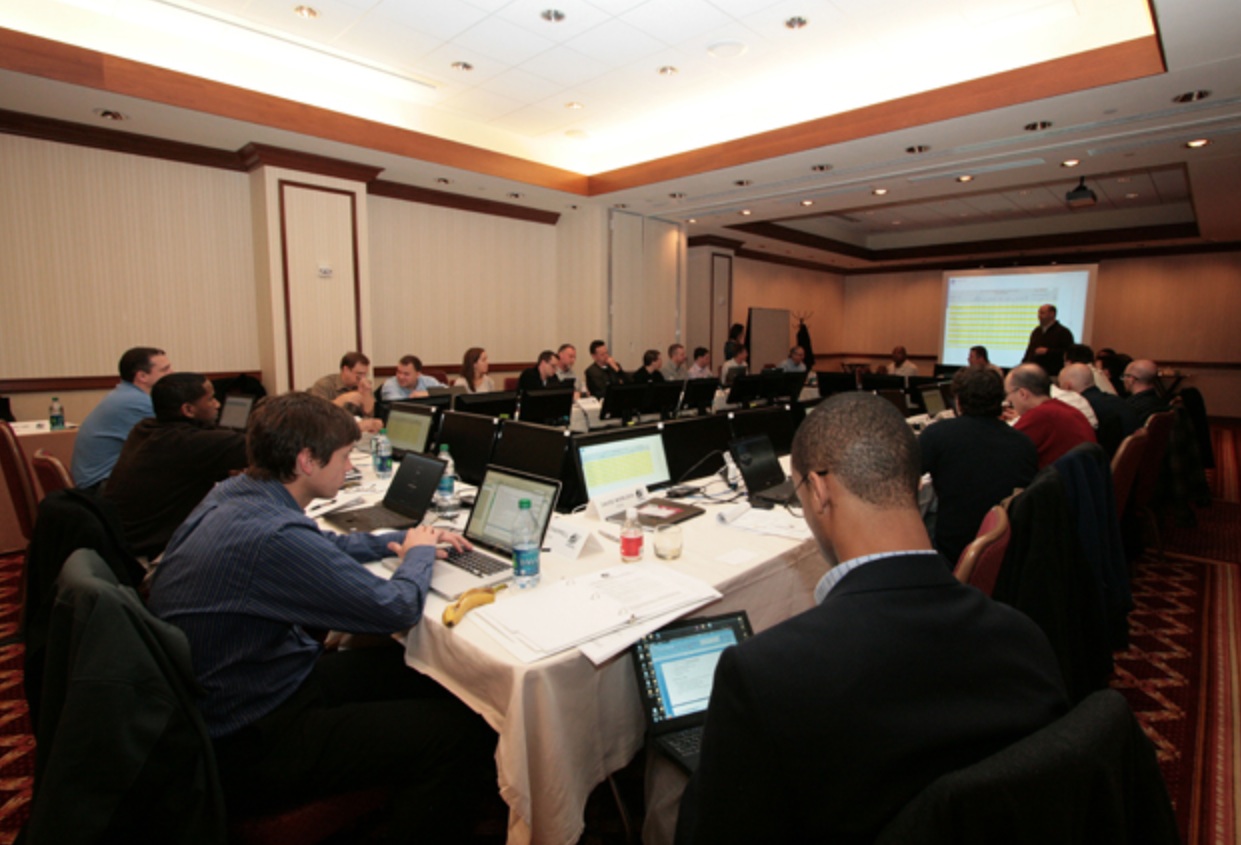
That's me, eighth from left, at the 2012 mock selection. My portrayal of Ron Wellman was termed "Brando-esque."

That’s me, ninth from left, at the 2012 mock selection. My portrayal of Ron Wellman was termed “Daniel Day Lewis-esque.”

The NCAA men’s basketball committee has done its work, and the bracket is now set. Before critiquing the committee’s handiwork, let it be said that any ideal bracketing system we would design would of course duplicate the overwhelming majority of what the NCAA just did. Our Perfect Bracketing Machine would have given No. 1 seeds to Florida, Arizona and Wichita State, would have had teams like Nebraska just barely making the cut, and would have buried the nondescript likes of Memphis and Kansas State in 8-9 games. The NCAA gets things mostly correct annually.  Continue reading