Category Archives: hoops

The 30-second clock’s a long-overdue solution to a problem we may not have

The last time any adjustment was made to the shot clock, Glenn Robinson was the reigning player of the year. It's been a long time coming.

The last time an adjustment was made to the shot clock was in 1994, when Glenn Robinson was the reigning player of the year. It’s been a while.

Last week the NCAA’s rules committee exceeded my loftiest expectations. Not only did the group recommend the adoption of a 30-second shot clock, it also:

  • Eliminated one second-half timeout
  • Enlarged the restricted area under the basket
  • Made any bench timeout called in close proximity to a scheduled media stoppage the “media timeout” all by itself (no more “bench timeout, four seconds of action, media timeout” sequences)
  • Gave officials the authority to review potential shot-clock violations on made field goals throughout the game
  • Prohibited coaches from calling live-ball timeouts
  • Enabled refs to call personals on players who on replay are found to have faked fouls
  • Reduced the penalty for class B technical fouls (e.g., hanging on the rim) to just one free throw
  • Ended the prohibition on dunking in pregame warmups.

That sound you heard on Friday was Twitter laboring mightily to wield its surgically implanted torches and pitchforks in the face what by any reasonable measure was a rather disconcerting overabundance of wish fulfillment. (How the NCAA can broadcast so much common sense in the span of but a few minutes while also keeping the RPI hooked to life support into a fourth decade is surely a quandary worthy of our finest organizational anthropologists.)  Continue reading

Leaving early can be more rational than you think

Olivier Hanlan is a major-conference player leaving school after his junior season. That may not turn out well. Leaving after his senior season may not have either.

Olivier Hanlan is a major-conference player leaving school after his junior season. That may not turn out well. Leaving after his senior season may not have either. (USA Today)

Each spring when a national champion is crowned, we who follow college basketball reliably turn our collective endeavors toward scolding every non-lottery-track player that announces his intention to leave school early. Comments like “Is there a third round now?” and “Get your passport ready” pop up regularly on Twitter each April.

Basically if I’m a basketball writer and you’re an underclassman who’s not projected to go in the lottery, I’m supposed to tell you to stay in school. The instinct behind that piece of advice is reflexive and genuine. It is also largely unexamined and — in one specific, admittedly qualified and most certainly narrow sense — incorrect.

Continue reading

The four structural hazards of any coaching search

This March the hot young coach generating all the buzz is 52.

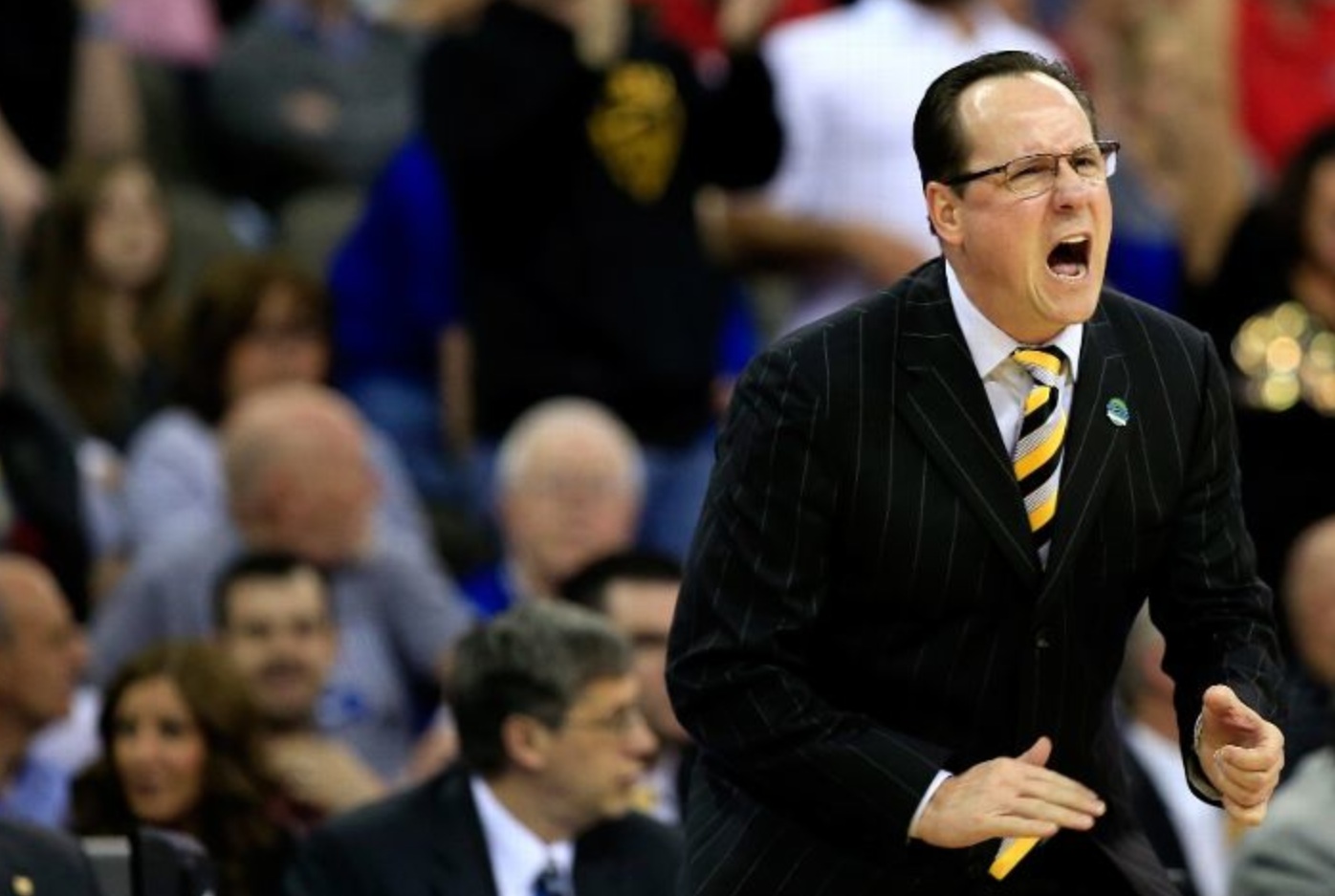
This March the hot young coach generating all the buzz is 52. (Getty/Jamie Squire)

The coaching carousel is turning rather slowly this March, with major-conference openings currently available at Alabama, Arizona State and DePaul and nowhere else. Perhaps there’s another shoe or even two that will drop on this front, but for now the salient characteristic of this season’s job market is not only the small number of openings but also the fact that none of these vacancies were created by voluntary coach exits. To really get the carousel going you need a series of guys jumping by choice to greener pastures.

Still, even in a slow year for hirings we will likely see all the traditional characteristics that make hiring a college basketball coach a uniquely challenging endeavor. To my eye these are the four structural hazards in any coaching search:

Tournament warp
Great coaches tend to do well in the NCAA tournament, eventually, but not every team that does well in the NCAA tournament necessarily has a great coach. Not to mention “doing well” in the tournament is by custom defined as making the Sweet 16, but most of the coaches who make the second weekend in any given year aren’t looking to change jobs. Continue reading

You won’t be disappointed

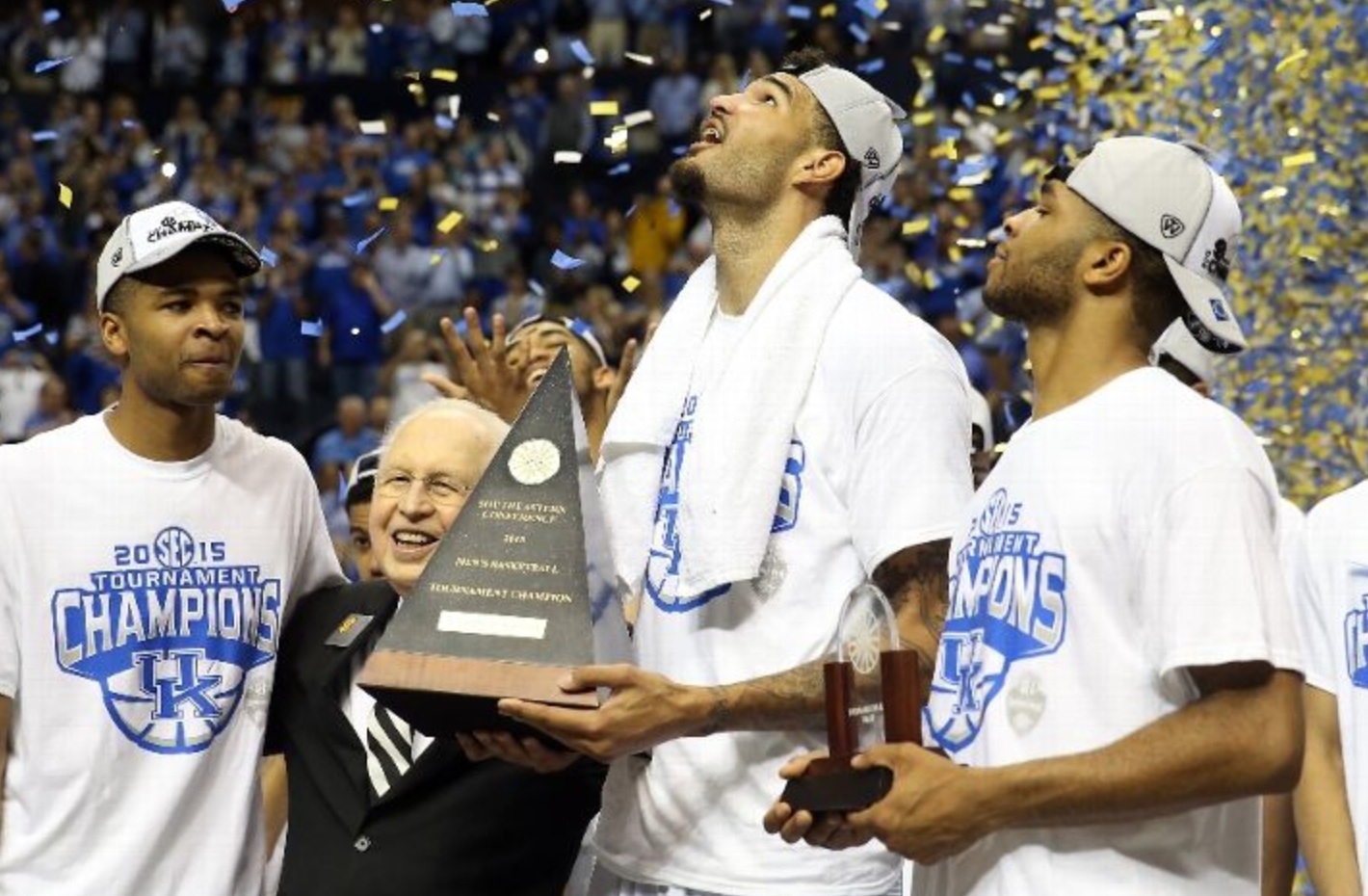
(Getty/Andy Lyons)

(Getty/Andy Lyons)

The NCAA tournament is shockingly close to perfect because fairness is sacrificed so ruthlessly and deliberately at the altar of drama.

In a playoff that exalted fairness above all else, Kentucky would have better than a 34 (Ken) or 41 (Nate) percent chance of winning it all. But this is the business we’ve chosen. It’s a single-elimination tournament with 68 teams. The inherent structure of the event means the answer to “Kentucky or the field?” is the field. The answer to “Incredibly Great Team X or the field?” is very nearly always going to be the field. The NCAA tournament is shockingly close to perfect because death is always just 40 minutes away, even for Kentucky.

If we wanted to pick a “fair” or “real” champion we could shrink the field and kill the single-elimination format. But that’s the NBA’s shtick, isn’t it? If you want larger sample sizes and smoother win probability curves, the next level has you covered. At the next level it’s axiomatic that game seven always pulls in the best ratings. Well, the NCAA tournament is 67 game sevens. Continue reading

Why I’m declaring for the draft

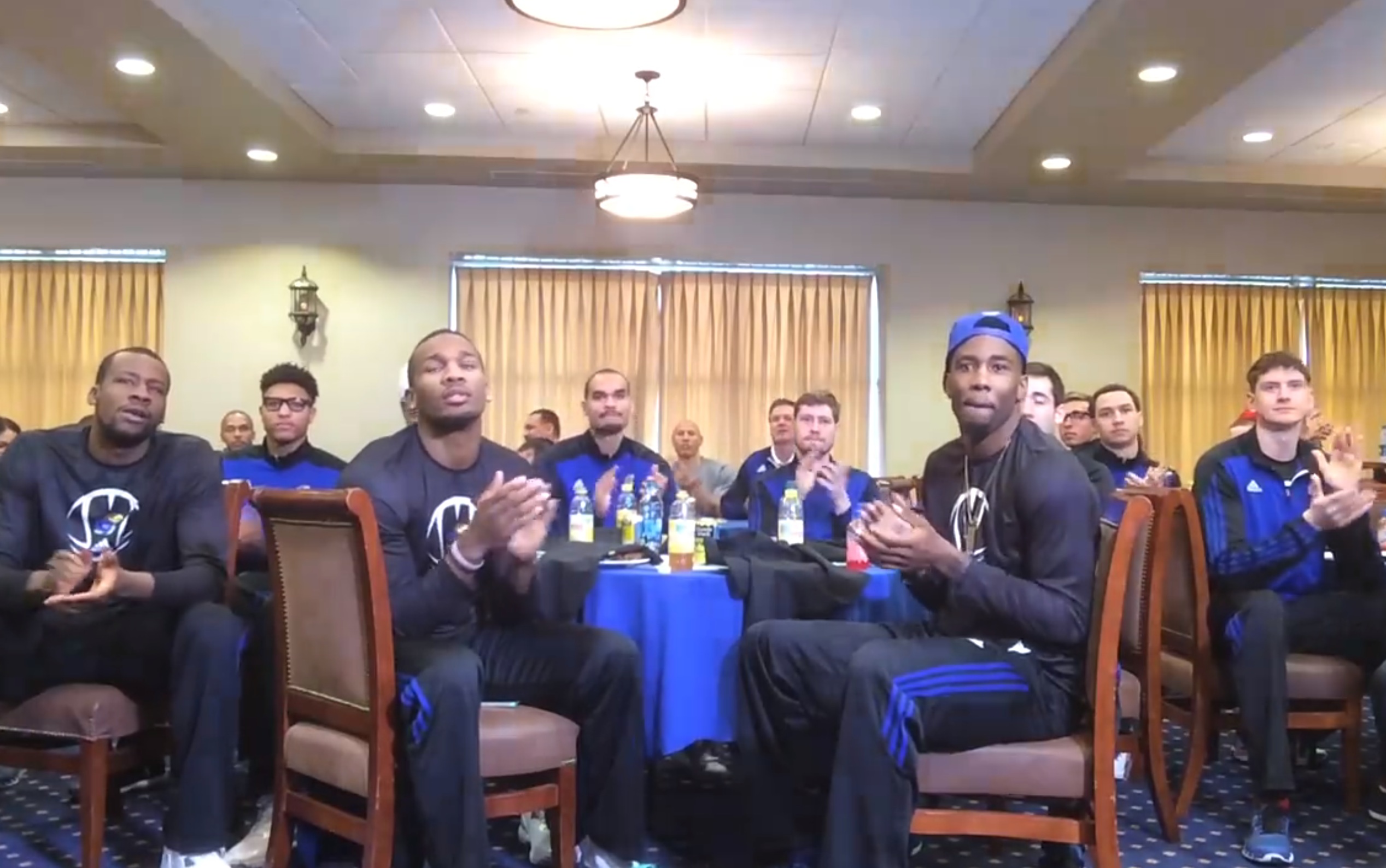
What if instead of just taking the bracket the NCAA gives them, Bill Self and his guys could choose their spot? (Photo: Kansas Men's Basketball)

What if instead of just taking the bracket the NCAA gives them, Bill Self and his guys could choose their spot? (Photo: Kansas Men’s Basketball)

The idea of turning the bracket into a draft has been a hardy perennial on Twitter for a while now thanks in large part to the efforts of the indefatigable Andy Glockner. Then last week the notion was given an excellent boost by my colleague Jordan Brenner. The idea is that the NCAA would continue to select which 68 teams get in and indeed would keep ranking teams from 1 through 68 (what is currently known as the true seed list), but after that the good men and women in Indianapolis would simply get out of the way. As Jordan puts it well:

Certain coaches surely would choose a tougher Elite Eight opponent if it meant playing 500 miles closer to home. But not all would. So why is the committee deciding for them? Because, as we’ve established, that’s what the NCAA does.

Naturally there would have to be restrictions on what slot a coach or AD can pick for his or her team, and certainly you’d have to offset the relative knowledge disadvantage that would come from a top seed watching as its entire bracket is subsequently built underneath the top line. (Glockner has proposed giving each top seed or perhaps a few high seeds one veto.) But the animating impulse here is not only sound but obvious to the point of being banal. Continue reading

How to watch Selection Sunday

Why, that's my colleague Jeff Goodman interviewing the Pac-12 champion Arizona Wildcats. Sean Miller's team is about to named the strongest No. 2 seed in a very long time. (AP/John Locher)

Why, that’s my colleague Jeff Goodman interviewing the Pac-12 champion Arizona Wildcats. Sean Miller’s team is about to be named the strongest No. 2 seed in a very long time. (AP/John Locher)

This year Selection Sunday’s a little different: Kentucky will have our full attention in the SEC title game even though the Wildcats have already sewn up the No. 1 overall seed. UK’s unique historical circumstance has the potential to lend some drama to what in the past has been a somewhat dilatory and anticlimactic Sunday of hoops. Typically the very fact of the impending bracket announcement looms so large it overshadows the basketball being played. (Which is one more thing I love about the idea of a bracket draft — it would create the ideal conditions for at long last killing Sunday hoops for good.)

Once the Wildcats’ quest for perfection has either been extended or denied, Selection Sunday will come down to what it always comes down to — top seeds and bubble teams. Continue reading

Tuesday Truths: “Final reality” edition

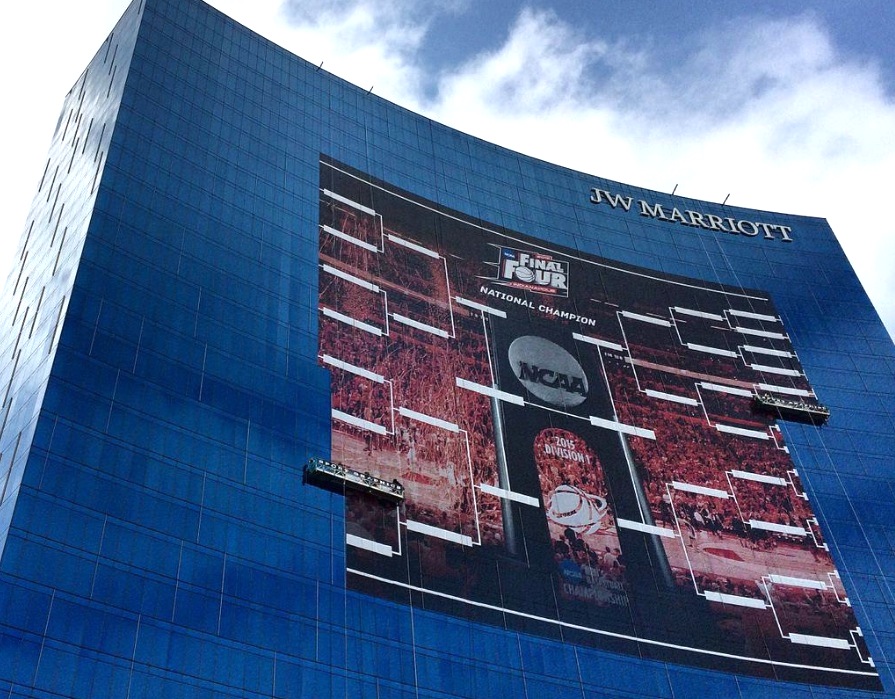
They're getting ready in Indy.

They’re getting ready in Indy.

There are at least two problems with focusing on who does and does not get a No. 1 seed. The first problem is that 13 of the last 16 No. 1 seeds have failed to make the Final Four.

The second problem is that this year in particular there will be no meaningful distinction to be drawn on the S-curve between the last No. 1 seed and the first team seeded on the 2-line. In fact in 2015 the number of interest appears to be six, not four. And I’ll go to war with these six: Kentucky, Arizona, Villanova, healthy-Anderson-version Virginia, Wisconsin, and surging Duke.

Sure, other things being equal, it’s best to be a fellow No. 1 seed alongside UK so that you don’t have to face John Calipari’s team until you get to Indy. But this piece of conventional wisdom — trusty enough in its essentials — somewhat overstates the difference between Kentucky and the other five teams named above while also (and we do this one every year) vastly overrating the actual likelihood of a region’s top two seeds meeting up in the Elite Eight.

The probability of a 1 vs. 2 collision in a regional final is 29.3 percent, and while we’re on the topic it’s not terribly clear who should be afraid of whom in such instances. Top seeds are a mere 17-17 in such games. My recommendation is to look past the question of who receives the four No. 1 seeds. Keep your eye on the Big Six instead.

Continue reading

Tuesday Truths: “Lessons of history” edition

IU1976

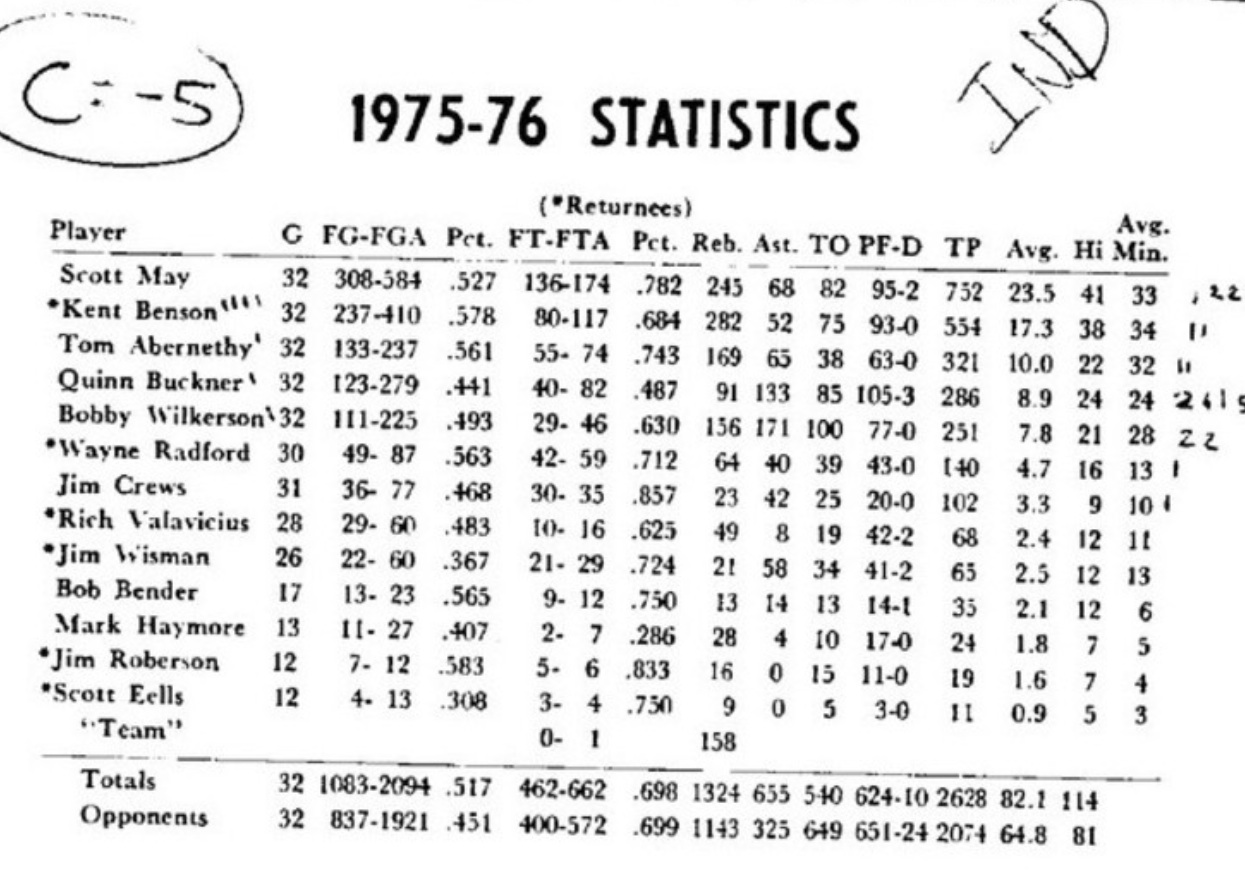
Jahlil Okafor says Kent Benson’s two-point percentage is too low.

Kentucky is trying to do something that hasn’t occurred in 39 years, and assuming UK continues to progress toward that goal (starting with tonight’s road test at Georgia) we will be treated to some good comparisons to that 1976 Indiana team. For instance the Hoosiers that season outscored opponents by 17.3 points a game. As for the Wildcats this season that number is currently 21.8.

That’s not apples-to-apples, of course. We’re viewing IU’s scoring margin after Bob Knight’s men completed a successful trip through the NCAA tournament against some of the best teams in the country. Nevertheless, in early March of 2015 it’s fair to say that John Calipari and his team are giving history a good run for its money. So far.

Continue reading

Tuesday Truths: “Yet another 2 x 2 matrix” edition

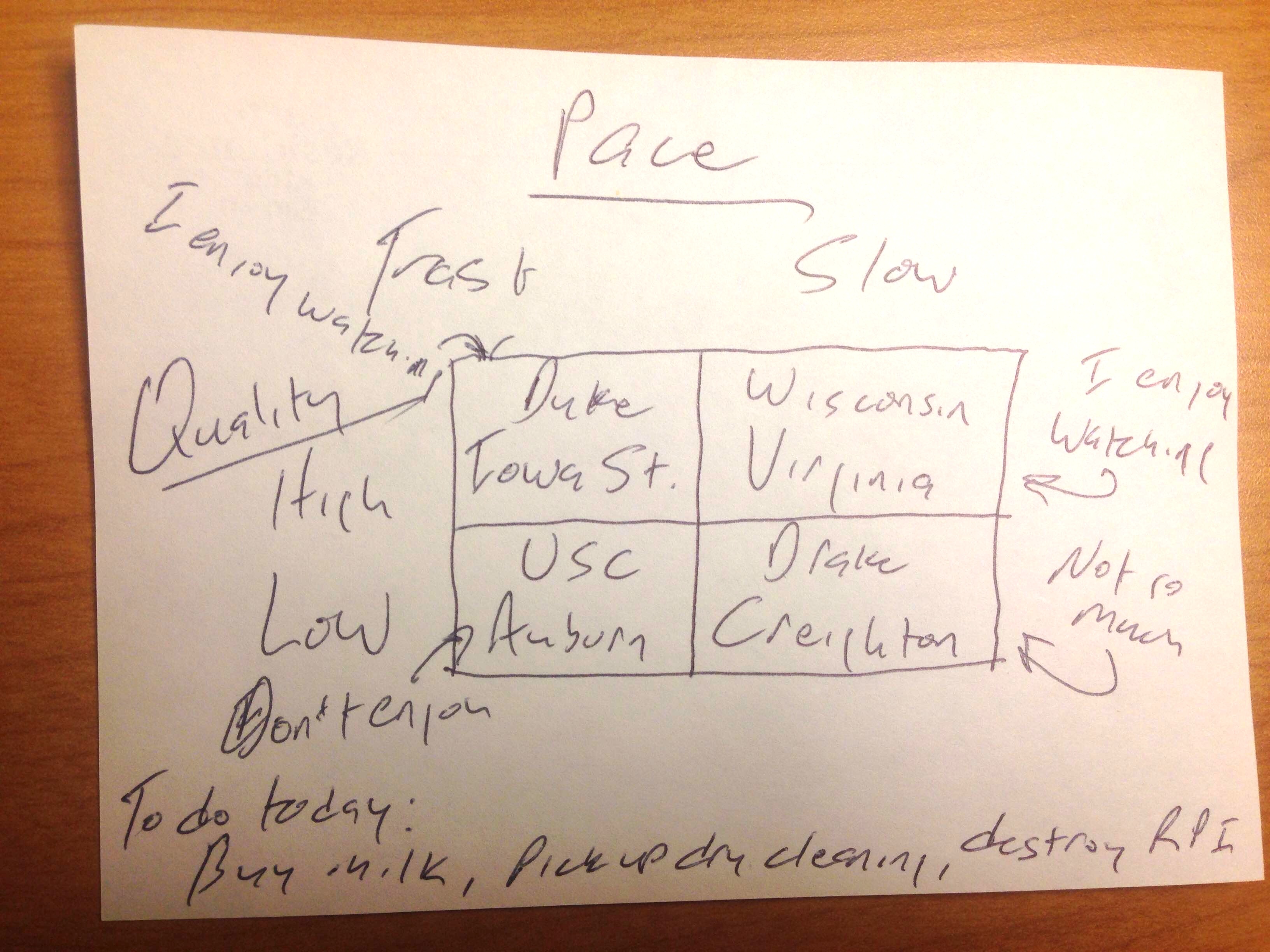
I for one don’t fret about successful slow-paced teams like Wisconsin or Virginia causing other teams to go slow. If other coaches do indeed choose to decelerate, my happiness in watching their games will be a function primarily not of pace but of quality. Basically I like good hoops at any speed.

matrix

The contours of this discussion are durable across the years. There’s always room for a perceptive and through first-person disavowal of a particular team’s style. If a team really does displease your eyeballs, your senses are sovereign in the matter. A problem arises only when this distaste is elevated — as it always is — into somehow being a matter of civic hoops concern.

Good luck with that, but my tastes are incorrigibly catholic. Good hoops arrives in many styles.

Continue reading

Tuesday Truths: “Give it to the big man” edition

LA

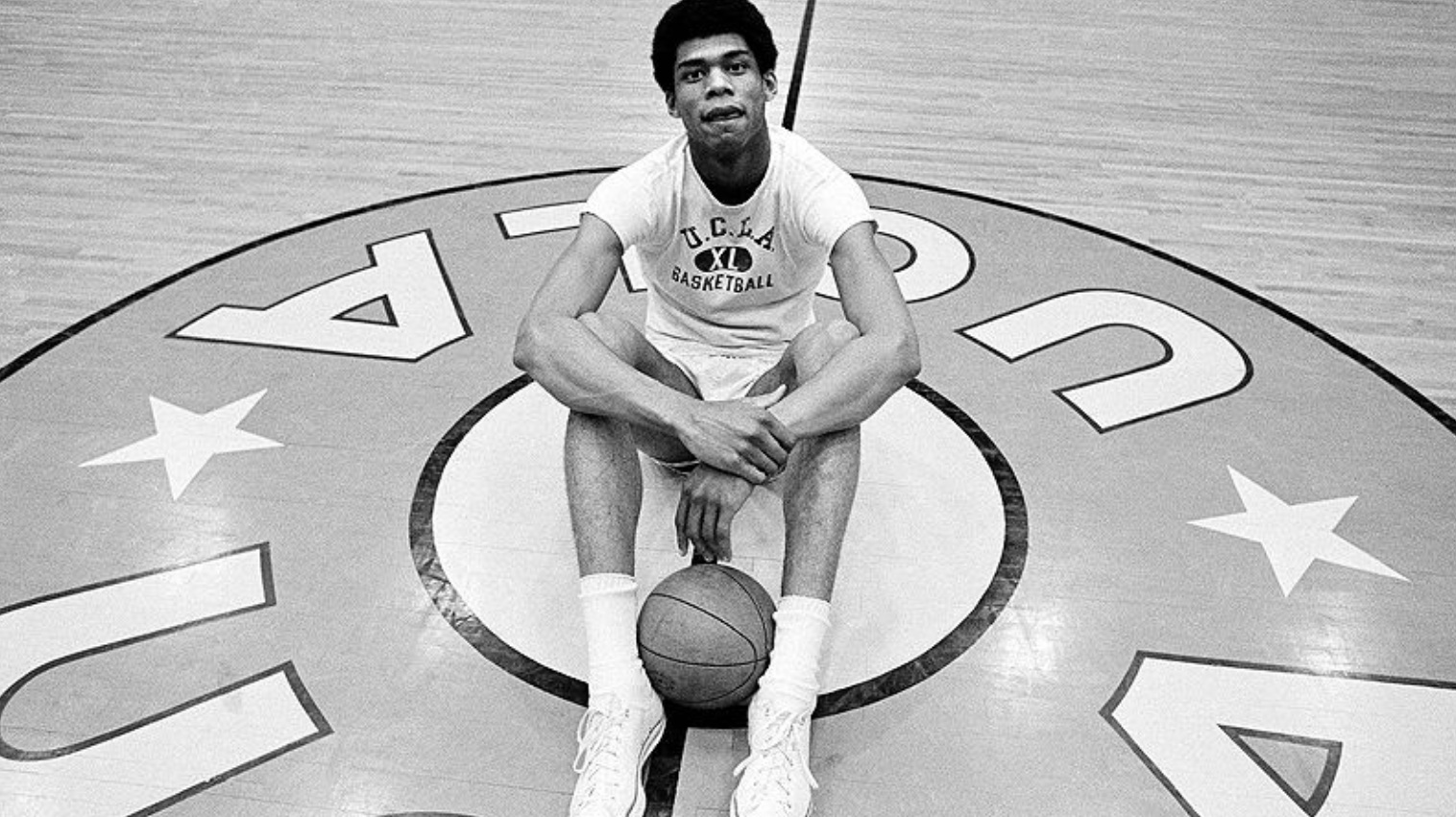
This week 15 honorees were named for a first-ever Kareem Abdul-Jabbar Award watch list. The award, which will be given in April to the player named as the nation’s most outstanding center, is one of four companion honors being introduced this year by the Naismith Hall of Fame — one for each position on the floor other than point guard (which already has the Cousy Award).

Dominant big men became markedly less dominant with the introduction of the three-point shot, but in their arc-less day they could perform feats we can’t even begin to wrap our 2015 heads around.  Take the guy this new award’s named after….

In the first game ever played at the then brand new Pauley Pavilion, the award’s namesake led his UCLA freshman team against a Bruin varsity squad that was the defending national champion and ranked No. 1 in the nation in the preseason. The freshmen won 75-60. Their center recorded a 31-21 double-double with seven blocks.

Continue reading