Category Archives: counting things

Meet two historically great tournament offenses

Houston

One thing that struck me about the build-up to this national championship game was that initially there seemed to be a fair degree of reticence on the question of how to talk about this national championship game.

North Carolina is favored over Villanova, but only slightly. There’s a decent chance no player in this game will be selected in the first round of the NBA draft this summer, so there’s no obvious “We must stop player X” narrative urging itself upon our consideration. (UNC’s Brice Johnson is currently showing up somewhere between the high 20s and low 30s on the mocks.)

Obviously the Tar Heels have size on their side, while the Wildcats have been shooting stupefyingly well. But with the opposing teams in question being very good but by no means legendary with respect to speed and defense, respectively, it’s tough to spin strength-on-strength yarns.

Frankly it wasn’t until I started finding incredible player stats from the past five games that I realized something very weird has been afoot here all along. With only a minor exception here and there, basically every single player in this national championship game is having a phenomenal tournament on offense. You don’t see that every year on Monday night. In fact I can’t recall ever seeing it. Continue reading

Advance scouting an extreme Final Four

Boeheim

Is this man a defensive mastermind? Lucky that so few teams use his defense? A little of both? (USAT)

In keeping with my decade-old tradition of very late Final Four previews, here are some thoughts I’ve been mulling this week.

Is the Syracuse zone’s effectiveness scheme-blind and a simple matter of novelty? 
The funny thing about the Syracuse reign of defensive terror in this bracket is that — unlike a similar episode in 2013 — this season the Orange defense wasn’t very good.

During the regular season the ACC made 52 percent of its 2s against this D. In the tournament, however, this number has dropped all the way down to a rather ridiculous 36 percent. Are tournament opponents (ACC member Virginia notwithstanding) failing against this defense because it’s so strange and alien to them? Hard to say, but the history here is pretty interesting.

As it happens this season’s 16-percentage-point improvement in interior defense is by far the most extreme manifestation of what was nevertheless a preexisting historical pattern. Starting with Carmelo Anthony’s national championship team of 2003 and running through Sunday evening, the Syracuse defense has been exactly four percentage points better at forcing missed twos in the tournament than it’s been in conference play. (To keep the “novelty” hypothesis clean and tidy I threw out this weekend’s tournament win against league foe UVA, as well as the tournament loss against league foe Marquette in 2011.) That’s a big difference, and the sample sizes here are comforting: Syracuse has played 32 tournament games over that span.

I’ve never really looked at tournament vs. regular-season two-point defense over a decade-plus before, so just to be sure Syracuse really is weird I ran the same numbers for four other national champions of the period: Duke, North Carolina, Kansas and UConn. It turns out Syracuse really is weird. The Blue Devils have also played better interior D in the tournament than they have against the ACC, but the difference is smaller (two percentage points) and, anyway, Duke’s played weaker teams in its NCAA brackets than what it’s seen in conference play. Syracuse, on the other hand, has faced an almost identical strength of schedule both in the tournament and in conference play. Continue reading

An accelerated and higher-scoring version of Madness

Caruso

Are you not entertained? (Ronald Martinez/Getty)

Maybe it’s just me, but it seemed like this March there was a marked drop in the number of more-in-sorrow-than-in-anger pre-mortems for college basketball. True, there was one such foray that I know of, and, to be sure, there could be more to come. The week before the Final Four’s a five-day blank canvass for eager coroners of the sport. Perhaps I’m a little too eager to be the coroner of coroners. We’ll see.

Still, it’s possible that the sudden downturn in doomsaying so far can be traced to a realization that is both quantitative and rooted in that proverbial gut we’re always consulting so assiduously. Even back in the bad old days of the Scoring Crisis and a 35-second clock, the NCAA tournament was still rather entertaining. Now the event is a faster-paced and higher-scoring version of its usual rollicking self. That plus a charitably selective memory (we’ll look past Wisconsin-Pitt and remember Wisconsin-Xavier) makes for a media property worth billions.

Continue reading

Final Four teams are way better at taking shots than they are at making them

Zoubek

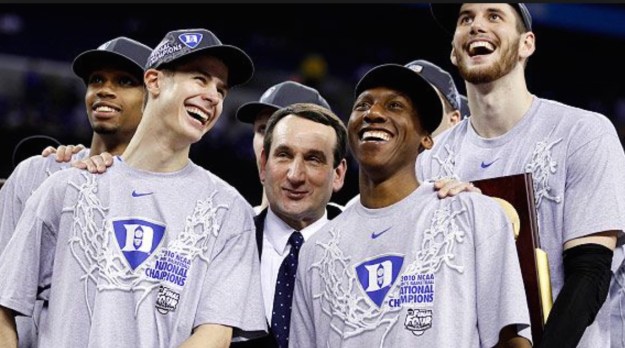
The mystery of Duke 2010 — solved!

Last season I was struck by how some of the most incredible performances we saw from teams on offense were not necessarily all that incredible in terms of shooting. I realize this was a long time ago, but think back, for example, to the 82-50 win that Frank Kaminsky-era Wisconsin recorded at home against Iowa. That day the Badgers committed just one turnover and scored an absurd 1.52 points per possession while making 54 percent of their twos and 41 percent of their threes.

Obviously the shooting displayed by Bo Ryan’s guys against the Hawkeyes was excellent, but it’s at least possible for the very best offenses to achieve that roughly that same level of accuracy over an entire season. (Indeed that’s about how well Iowa State just shot in Big 12 play.) Conversely no offense in the history of the game has ever or will ever come anywhere close to scoring a point-and-a-half per trip for any appreciable multi-game length of time.

Mindful of this fact, I made a mental note to look into this whole matter of launching shots in mass quantities. (I vaguely remember thinking I’d use a picture of Phil Spector and tackle the subject under a “Wall of Shots” headline.) Then I got busy and did other things. Continue reading

Tuesday Truths: Final Reality

Marshall

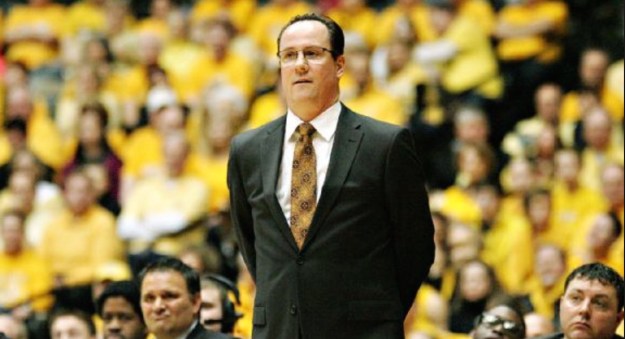
He looks like you look when you’re trying to look relaxed.

Events move fast this time of year. Seven days ago I was patiently building an airtight and irrefutable case for why I would not pick likely No. 8 or 9 seed Wichita State in a round of 32 game against a No. 1 seed. Now the Shockers are said to be in danger of falling out of the field entirely. It’s like I’ve been preparing to defend Aqaba, but now the invaders have come from the land instead of the sea.

The plight faced by Gregg Marshall’s team will rightly be discussed from now until Sunday. Here are three more thoughts to toss into that mix.

The mock bracket confusion triggered by Wichita State is extreme but not unprecedented
It’s true that some name-brand bracketologists have the Shockers out of the field entirely, while others have them as a No. 7 seed. That’s unusual, to say the least. Still, it turns out that past mock brackets have disagreed even more sharply on other teams. Continue reading

Are the committee’s selections slowly getting better or just easier to predict?

2007

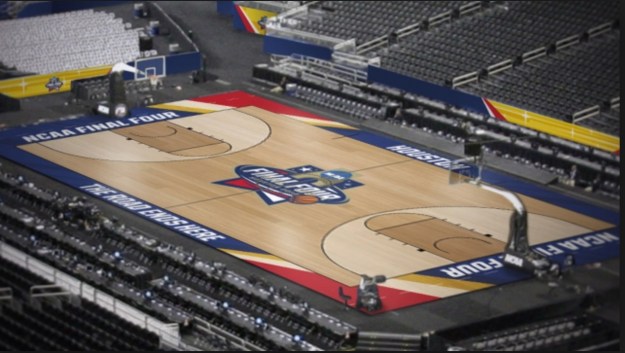
The 65-team field was statistically puzzling in 2007. Things have been more predictable lately, though the courts are less distinctive visually.

One way to think of the NCAA tournament is as the most popular nightclub in town. The men’s basketball committee is the bouncer, of course, stationed outside the club and working the rope line. There are 351 teams queued up hoping to get in, and the bouncer gives familiar and knowing nods to the first 20 or so teams as they breeze in. It’s pretty much the same group every year.

Next, after the usual teams have been waved through, there is always the same number of unfamiliar and oddly attired out-of-towners who show up. Once they explain that they’ve won the conference tournaments in their one-bid leagues, however, these teams are also let in.

Lastly, there are the toughest decisions of all. These are the final at-larges, and up until a few years ago the best way to get in was to engage in some form of the following conversation. For example this particular discussion took place in 2012:

SOUTHERN MISS: Uh, hi, I’m Southern Miss. I think I’m on your list for 2012.

BOUNCER (suspicious, checks clipboard). Nope, sorry, pal. Don’t see you. Wait behind the rope, please.

SOUTHERN MISS: I think there must be some mistake. I’m pretty sure I’m supposed to be on the list. My RPI is 21.

BOUNCER: Right this way.

Continue reading

Tuesday Truths: Law of March Twitter edition

Zg.jpg

In? Out? Twitter will know.

Customarily when March arrives a proposal will surface to expand the NCAA tournament to include every team in Division I. I’m not opposed to the idea, I just think that in effect it’s what we already have. The blank-slate pathway to the field of 68 that’s made available to (nearly) every team is the best thing about the first half of the calendar’s best month.

Now that NJIT is safely ensconced in an auto-bid conference, the tournament-eligible population is once again synonymous with the non-banned and non-self-imposed-ban portion of D-I itself. Every eligible team in the nation save eight (sorry, Ivy — but what you have is kind of cool too) gets a court, a ball and 40 minutes in the form of a bid in their conference tournament. Win enough games and you’re dancing.

It may seem self-evident to observe that most teams don’t win their conference tournaments, but every March I’m struck by Twitter’s hard-wired zeal to proclaim that every single losing team beyond only the most obvious blue-chippers has seen their bubble burst. Losing in a conference tournament does indeed decrease your chances of getting into the field of 68, and Twitter understands this point well. Too well, in fact. Thus the Law of March Twitter:

Fandom hath no hurry like the rush to declare every conference tournament loser “out” of the NCAA tournament.

What my feed loses sight of annually, however, is that there’s a countervailing force being exerted on the losers’ behalf in the form of a fixed number of at-large berths. This ratio — 36 at-large bids versus 300-some-odd losing teams in conference tournaments — stays the same every year as one “weakest bubble ever” follows another like clockwork.

When you hear Twitter saying last rites for your team, grieve not. Rather find strength in what remains behind, namely the fact that the committee has to get to 68 somehow.

Welcome to Tuesday Truths, where I look at how well 55 mid-majors are doing against their league opponents on a per-possession basis.

Major-conference Truths are at ESPN Insider.

It’s unclear how many of the A-10’s clear top three will go dancing
Through games of February 29, conference games only
Pace: possessions per 40 minutes
PPP: points per possession
EM: efficiency margin (PPP – Opp. PPP)

                          W-L   Pace    PPP   Opp. PPP    EM
1.  VCU                  13-3   70.1    1.13    0.96    +0.17
2.  Saint Joseph's       13-3   70.3    1.12    0.97    +0.15
3.  Dayton               12-4   67.7    1.06    0.94    +0.12
4.  George Washington    10-6   66.5    1.09    1.02    +0.07
5.  St. Bonaventure      12-4   68.9    1.13    1.06    +0.07
6.  Rhode Island          8-8   64.9    1.06    1.01    +0.05
7.  Davidson              9-7   70.1    1.13    1.11    +0.02
8.  Richmond              7-9   67.5    1.10    1.09    +0.01
9.  Duquesne             5-11   74.0    1.03    1.08    -0.05
10. UMass                5-11   70.8    0.98    1.07    -0.09
11. Fordham              6-10   67.0    0.99    1.08    -0.09
12. George Mason         4-12   69.4    0.99    1.10    -0.11
13. Saint Louis          5-11   70.1    0.92    1.05    -0.13
14. La Salle             3-13   65.5    0.93    1.13    -0.20

AVG.                            68.8    1.05
KenPom rank: 8
% of games played: 89

Continue reading

How to succeed on offense without really making shots

UNC

If you’re waiting for UNC’s love of two-point jumpers to doom its offense, well, keep waiting.

This season North Carolina is rather rudely meddling with the primal forces of analytic nature, ranking near the top of Division I in offensive efficiency at kenpom.com yet doing so by shooting more two-point jumpers than any team in the country. The sport as a whole is moving emphatically toward the threes-and-dunks approach on shot selection, yet here are the Tar Heels still firing away on low-efficiency jumpers inside the arc like it’s 1986.

Then again Roy Williams may not be as antiquarian as that sounds. In recent years Carolina has copped a page from Bo Ryan, and this season the team’s posting its lowest turnover percentage (15.5) ever in ACC play under Williams. That plus garden-variety beastly offensive rebounding — par for the course in Chapel Hill — means the Heels attempt a tremendous number of shots (which, indeed, tend to be of the two-point jumper variety). Continue reading

Tuesday Truths: Justice can wait edition

It’s been two weeks now since the Farce at Fort Collins, time enough to sift the rubble, digest the lessons learned, and make recommendations for the future.

If there’s one thing we’ve learned it’s that requiring officials to huddle around a monitor is no guarantor of justice. Indeed it appears that requiring officials to do so with regard to teams from the state of Colorado in particular is, for some unknown reason, a positive menace.

Reviews drive everyone crazy. They drive me crazy too. Intrusions do detract from the game, and they need to be whittled down to a bare minimum. In a perfect world we would have correct calls every time delivered instantly.

We don’t live in a perfect world. In the old days, of course, we simply lived with the “delivered instantly” part. That did not always go well. Someone needs to write up the cross-sport history of reviews, but my cursory exploration of the subject suggests the 1979 AFC championship game might be a good place to start.

Much closer to temporal home, we may want to think back to the 2011 Big East tournament before we embark on any reforms of the review process. Possibly the only thing worse than seeing refs huddle around a monitor is seeing refs abjectly refuse to huddle around a monitor.

Maybe the next time a Fort Collins situation arises the refs can make sure the replay is running at the correct speed.

Welcome to Tuesday Truths, where I look at how well 55 mid-majors are doing against their league opponents on a per-possession basis.

Major-conference Truths are at ESPN Insider.

A-10: The spelling gods visit their wrath on the “Fayers”
Through games of February 22, conference games only
Pace: possessions per 40 minutes
PPP: points per possession
EM: efficiency margin (PPP – Opp. PPP)

                          W-L   Pace    PPP   Opp. PPP    EM
1.  VCU                  12-2   70.4    1.15    0.95    +0.20
2.  Dayton               11-3   68.0    1.09    0.94    +0.15
3.  Saint Joseph's       11-3   70.3    1.13    0.98    +0.15
4.  George Washington     9-5   66.4    1.10    1.03    +0.07
5.  St. Bonaventure      10-4   68.8    1.12    1.05    +0.07
6.  Rhode Island          7-7   65.0    1.07    1.01    +0.06
7.  Davidson              8-6   70.5    1.13    1.11    +0.02
8.  Richmond              6-8   67.0    1.11    1.11     0.00
9.  Duquesne              5-9   74.4    1.04    1.07    -0.03
10. UMass                 5-9   71.0    0.98    1.06    -0.08
11. Fordham              4-10   67.2    0.97    1.09    -0.12
12. Saint Louis           5-9   70.3    0.94    1.07    -0.13
13. George Mason         3-11   69.1    0.98    1.12    -0.14
14. La Salle             2-12   65.4    0.92    1.15    -0.23

AVG.                            68.8    1.05
KenPom rank: 8
% of games played: 78

Continue reading

Twos are dying

ML

“Let’s dispel once and for all with this fiction that Buddy Hield is the only player who’s making about half his threes while attempting about eight of them a game. I’m Max Landis, and I approved this message. No, not that Max Landis.”

So far in 2015-16, attempts from inside the arc have comprised just 64.8 percent of all shots in Division I. True, 64.8 percent of anything is a fair share. Nevertheless, that figure does represent an all-time low. To quote a movie, at this rate twos will disappear entirely in another 27 years.

It is therefore fair to say that a three-point revolution is at hand. Being the helpful, proactive, and modest sort, I’ve prepared a brief précis to help you safely navigate this bold new era’s tumbrils and barricades. Enjoy.

There’s a reason it may seem like you’re not really seeing a revolution
Strictly speaking threes are at an all-time high across the breadth of D-I, but, as always when the subject is college basketball, this is somewhat misleading. No human being watches all of D-I, and the numbers that emerge from this vast unseen monolith are driven by a bulky majority of programs that even most professional college basketball writers never once glimpse during a given season. For example the most perimeter-oriented leagues in the nation are currently the SoCon, the Big South, and the MAAC. Conversely, the teams that more fans and writers do tend to watch are, rather ironically, the exceptions to the revolutionary rule.
Continue reading