Category Archives: hoops

On the irredeemably doomed nature of (most) preseason conference hype

BP

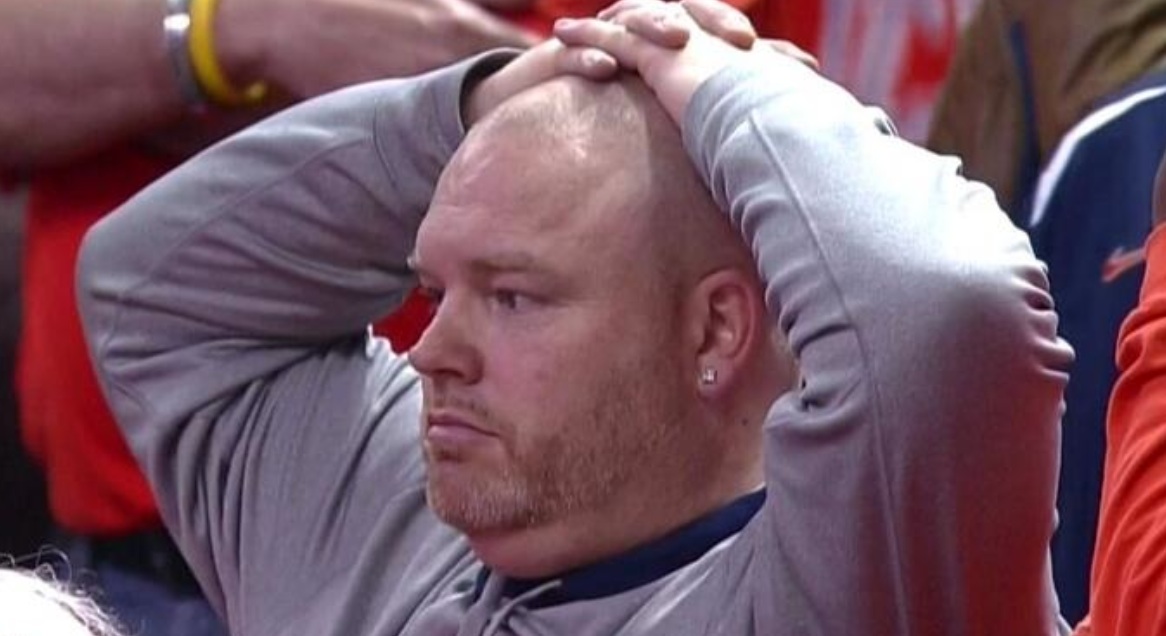
This man is excited about the SEC’s future.

The SEC held its spring meetings last week, and the most noteworthy product of this year’s conclave was arguably the solemn and earnest talk of a potential Division IV in college athletics. Nevertheless, there was also, of course, the requisite chatter promising that the conference will henceforth be good at basketball. This time the SEC means it. Truly.

“This is as focused as I’ve seen this league and these coaches and the programs and the ADs in how do we move this ball forward,” Kentucky coach John Calipari said. “We had three teams in the Elite Eight, two teams in the Final Four, a team in the national championship game and still … come on now. Our goal is let’s get half of our teams in within the next three years and two of us playing for a national championship.”

I share Calipari’s preferred measure of conference strength. How many teams you put into the NCAA tournament and, more specifically, where those members are seeded is to my mind the best gauge of just how good your league really is.  Continue reading

Why Aaron Gordon will never shoot better than 62 percent at the line

It's an open look. Knock it down.

Statistically speaking, this is unlikely to go well.

We typically think of bad free throw shooters as all alike. Either a player makes a normal number of free throws or he falls short of that standard, and we all know that guys in the latter category represent a special case. We sit up and pay attention when they’re at the line, we shake our heads when they miss, and we applaud a little too enthusiastically — like parents at the school play — when they make one.

Basically we define “really bad” as anything under 60 percent because, well, that is really bad. An average shooter will make something closer to 70 percent of his attempts. But in terms of measurable harm to your offense, there’s a significant difference between shooting, say, 58 percent at the line and connecting on just 42 percent of your free throws. And in his one and only season as a college player, Aaron Gordon shot 42.2 percent at the line.  Continue reading

My season’s final four days

OSM

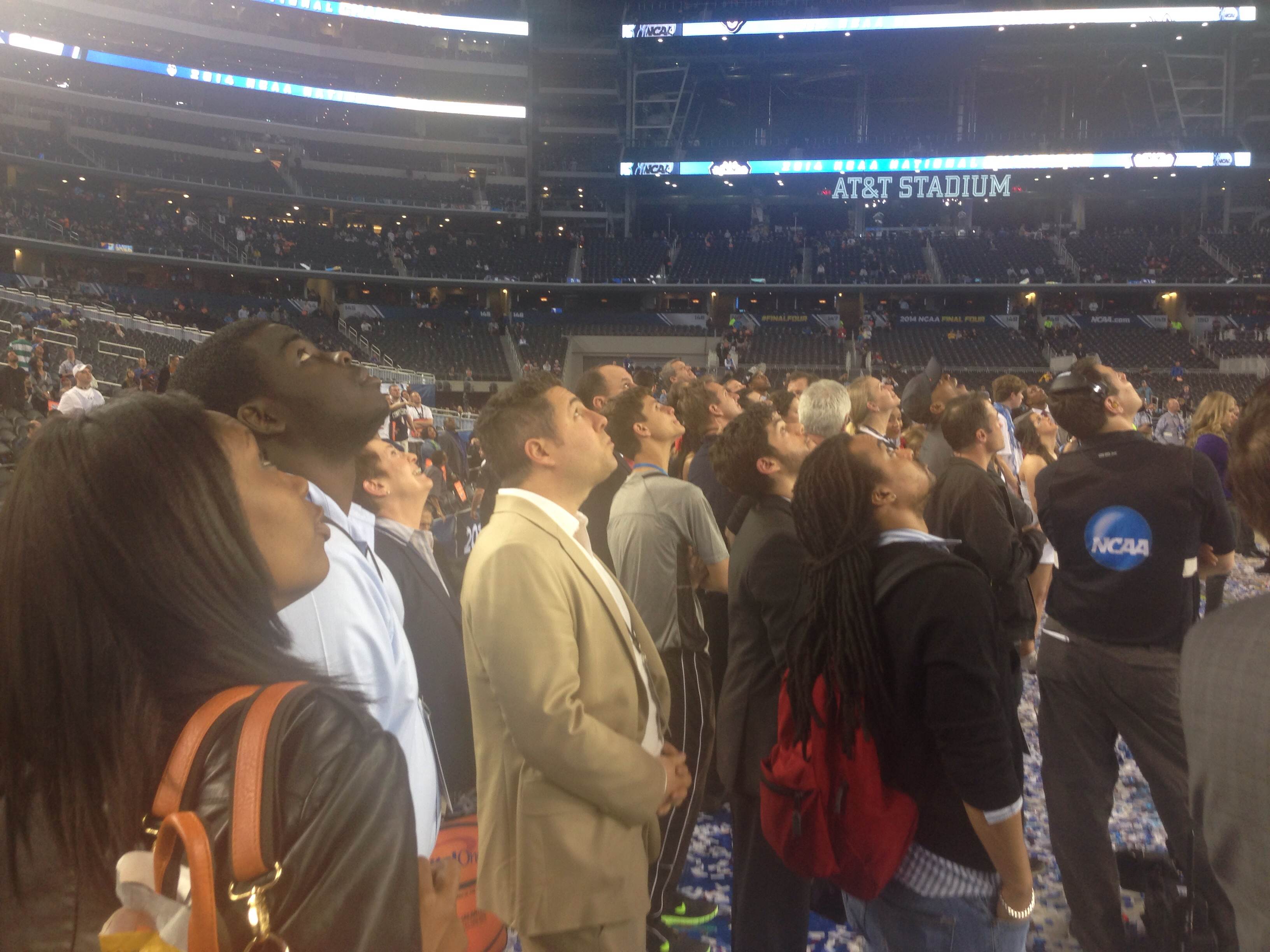
Members of the media watch “One Shining Moment” on the mammoth HD screen above the court at AT&T Stadium after the national championship game.

Friday
It’s Media Day. My plan is to surf the press availabilities at the stadium in Arlington for a few hours and then go back into Dallas to meet up with Ken Pomeroy on his way out of town. After speaking to a room full of coaches on Thursday, Ken’s leaving town on the Friday of Final Four weekend. (“I didn’t realize there were games connected to this thing.”)

AT&T Stadium is a domed football venue 20 miles away from the city where everyone’s staying, and this necessitates a media shuttle. Because I’ve skipped out on Media Day early to meet with Ken, I’m alone on the shuttle with the driver. He lives in Phoenix, and this is his first Final Four.  Continue reading

Let them play

He likes reviews.

He likes reviews.

Perfecting what is already the best sport in the world will require addressing a rather ticklish situation that has arisen between the generations. At the risk of offending the age cohort to which I myself belong, college basketball is suffering from an infestation of adults.

The adults are the ones who insist on calling timeout over and over again in the game’s final minute. The adults are the ones who take way too long to review every call, particularly if it involves elbows being swung this way and that. The adults are the ones who whistle more fouls with each passing year.  Continue reading

The strange case of the disappearing No. 1 seeds

This is the coach of a top-seeded team cutting down the nets after a regional final.  A rare sight indeed.

The coach of a No. 1 seed cuts down the nets after a regional final. A rare sight indeed.

Florida is a heavy favorite to win the national championship, and if the Gators pull it off they’ll be the third consecutive No. 1 overall seed to do so, following in the footsteps of Anthony Davis-era Kentucky in 2012 and Siva-Dieng-Russdiculous-era Louisville in 2013.

Then again even if UF is bounced out of the bracket by Connecticut, Wisconsin, or Kentucky, you’re still looking at a pretty good run for No. 1 seeds over the last decade or so. Teams seeded on the top line have already won seven of the last nine tournaments. (Florida in 2006 and UConn in 2011, take a bow.) Life is good at the very, very top of the college hoops pyramid.

Which begs the question: If No. 1 seeds are so big and scary and dominant, how come taken as a group top seeds keep losing before they get to the Final Four?  Continue reading

The hiring process for coaches is somewhat primitive, and it may not matter all that much

(Thinks to himself: "Wait, did he just call me 'Sean'?")

Thinks to himself: “Wait, did he just call me ‘Sean’?”

Tomorrow night Stanford will play Dayton for a spot in the regional final, meaning either Johnny Dawkins or Archie Miller is about to add “Elite Eight” to his resume. Ironically both coaches have been the subject of the time-honored “This Is a Big [Insert Clock Time Here] for Coach X” constructions that some of my friends in the field love to use, albeit from opposite ends of the employment-cycle spectrum.

When the Cardinal played at Connecticut in December it was said that “This Is a Big [Insert Clock Time Here] for Johnny Dawkins,” meaning if Stanford lost that game maybe at the end of the season the coach would be fired due to a perceived lack of quote-unquote quality wins. And, of course, when the Flyers played Syracuse in the round of 32 it was said that “This is a Big [Insert Clock Time Here] for Archie Miller,” meaning if Dayton won the game the coach would possibly be hired by a major-conference program.

Continue reading

Is a post-McBuckets Big East still “a major”?

He will be missed.

He will be missed.

You think I’m going to pick on the Big East because it received four bids but didn’t put any teams into the Sweet 16. You think I’m going to pick on the league because it alone among the major conferences will be unrepresented at the regional semifinals.

I’m certainly not above grabbing a handy news peg like that, but for now you can keep your “small sample size” and “single-elimination tournament randomness” powder dry. If anything I’m more interested in Buzz Williams leaving a program that has won 13 NCAA tournament games this century to take the head coaching job at a program that (with apologies to my friend Ken) has won one tournament game in the 2000s. Williams voted with his feet, and, as my colleague Jeff Goodman has pointed out, the coach made quite the statement.  Continue reading

What we talk about when we talk about building brackets

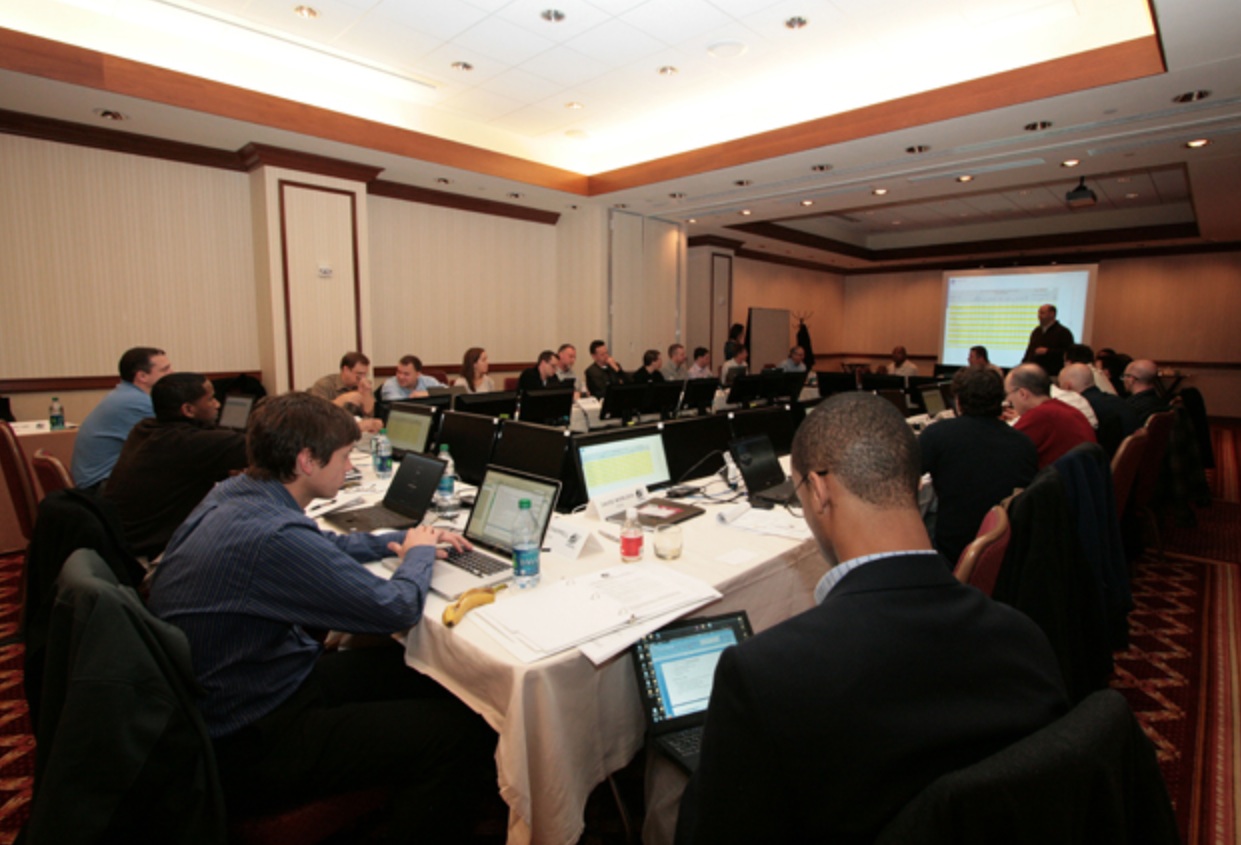
That's me, eighth from left, at the 2012 mock selection. My portrayal of Ron Wellman was termed "Brando-esque."

That’s me, ninth from left, at the 2012 mock selection. My portrayal of Ron Wellman was termed “Daniel Day Lewis-esque.”

The NCAA men’s basketball committee has done its work, and the bracket is now set. Before critiquing the committee’s handiwork, let it be said that any ideal bracketing system we would design would of course duplicate the overwhelming majority of what the NCAA just did. Our Perfect Bracketing Machine would have given No. 1 seeds to Florida, Arizona and Wichita State, would have had teams like Nebraska just barely making the cut, and would have buried the nondescript likes of Memphis and Kansas State in 8-9 games. The NCAA gets things mostly correct annually.  Continue reading

Players may need coaches and colleges less than we think

Correct response of Division I head coaches and the NCAA to this graphic: Uh-oh.

Proper response of Division I head coaches and the NCAA to this graphic: Uh-oh.

The evergreen topic of the NBA’s age limit has popped up again in the news, as it is wont to do every couple of years. Whenever this discussion recurs, it’s informed and to a certain extent framed by two implicit assumptions:

1. Player development is a gift waiting to be bestowed by wise college coaches if only blue-chip Division I programs can get the nation’s best young prospects in-house for a season or, even better, two.

2. College ball and the NBA together comprise a closed-loop pipeline that elite players will always have to navigate, international prospects and the occasional Brandon Jennings notwithstanding.  Continue reading

Tuesday Truths: Final Reality

Welcome to the season’s final installment of Tuesday Truths, where I look at how well 127 teams in the nation’s top 11 conferences did against their league opponents on a per-possession basis. For a tidy little homily on why this stuff is so very awesome, go here.

American: How the upper half played
Through games of March 9, conference games only
Pace: possessions per 40 minutes
PPP: points per possession   Opp. PPP: opponent PPP
EM: efficiency margin (PPP – Opp. PPP)

                      W-L   Pace    PPP   Opp. PPP    EM
1.  Louisville       15-3   68.7    1.16    0.91    +0.25
2.  Cincinnati       15-3   63.2    1.05    0.94    +0.11
3.  Connecticut      12-6   65.8    1.07    0.96    +0.11
4.  SMU              12-6   66.5    1.04    0.95    +0.09
5.  Memphis          12-6   69.3    1.08    1.02    +0.06
6.  Houston          8-10   67.1    1.04    1.13    -0.09
7.  Rutgers          5-13   68.7    1.00    1.11    -0.11
8.  Temple           4-14   67.5    1.02    1.14    -0.12
9.  UCF              4-14   66.6    1.00    1.14    -0.14
10. S. Florida       3-15   65.3    0.95    1.12    -0.17

AVG.                        66.9    1.04

Louisville will be in the ACC next season, and new American members East Carolina, Tulane, and Tulsa will arrive in time for 2014-15. But in its one-season incarnation with these 10 members it can fairly be said that the American had five good teams and five bad ones. So a question naturally arises:

How good is Louisville, really? And, with all due respect to UCF and Rutgers, how did the five good teams fare purely against each other?  Continue reading