Monthly Archives: February 2022

How the entire season will benefit from bringing selection out of the dark ages

(NCAA.com)

The selection process for the NCAA tournament predates the shot clock and the three-point line. While the members of the NCAA men’s basketball committee are conscientious and, happily, they now have a wealth of insightful data at their fingertips, selection still comes down to 12 people going into a room and making a bracket.

It’s remarkable that we still do it this way. Someday we’ll look back on the committee era and marvel that a 1960s-vintage process survived as long as it did.

Instead of creating a bracket in March, the men’s basketball committee should convene in May or June or July and make a completely team-blind determination of how the tournament field will be selected and seeded. The committee will then sit back and let the season select its own postseason field.

Whether the committee chooses to select and seed the field according to this set of metrics or that one will be a weighty matter for the men and women charged with making the decision. That importance, however, is likely to be overstated and ultimately misconstrued by two otherwise dissimilar populations of onlookers.

Continue reading
Age and college basketball

In terms of roster age, Duke’s as young as past one-and-done-heavy teams. What that will mean when pretty much the rest of Division I is older than normal remains to be seen. (goduke.com)

The population of men’s Division I college basketball rosters as a whole in 2022 may be older than it’s been at any time since first-year students were granted athletic eligibility in the 1970s. If this is indeed the case, the geriatric shift has been brought about by allowances in eligibility granted in response to the pandemic.

Indeed, it’s possible we already started seeing the consequences of this demographic adjustment last year. With the benefit of hindsight, Baylor looked pretty old last spring even for a national champion in the one-and-done era not named “Duke” or “Kentucky.”

The pandemic may have expanded our definition of “old”
National champions, average age weighted by minutes (AAWM)

                              AAWM
2012    Kentucky              19.7
2013    Louisville            21.7
2014    UConn                 21.7
2015    Duke                  20.1
2016    Villanova             21.1
2017    North Carolina        21.6
2018    Villanova             21.2
2019    Virginia              21.4

2021    Baylor                22.3

Age on March 1 of title season

Poor Gonzaga. The Bulldogs arrived at the 2021 title game sporting a very late-2010s-looking AAWM of 21.0, doubtless thinking it was business as usual in the world of college basketball actuarial tables.

Continue reading

These are the teams taking the most or least shots in 2022

The Big Ten places a premium on shot volume. The Big 12 not so much. (uwbadgers.com)

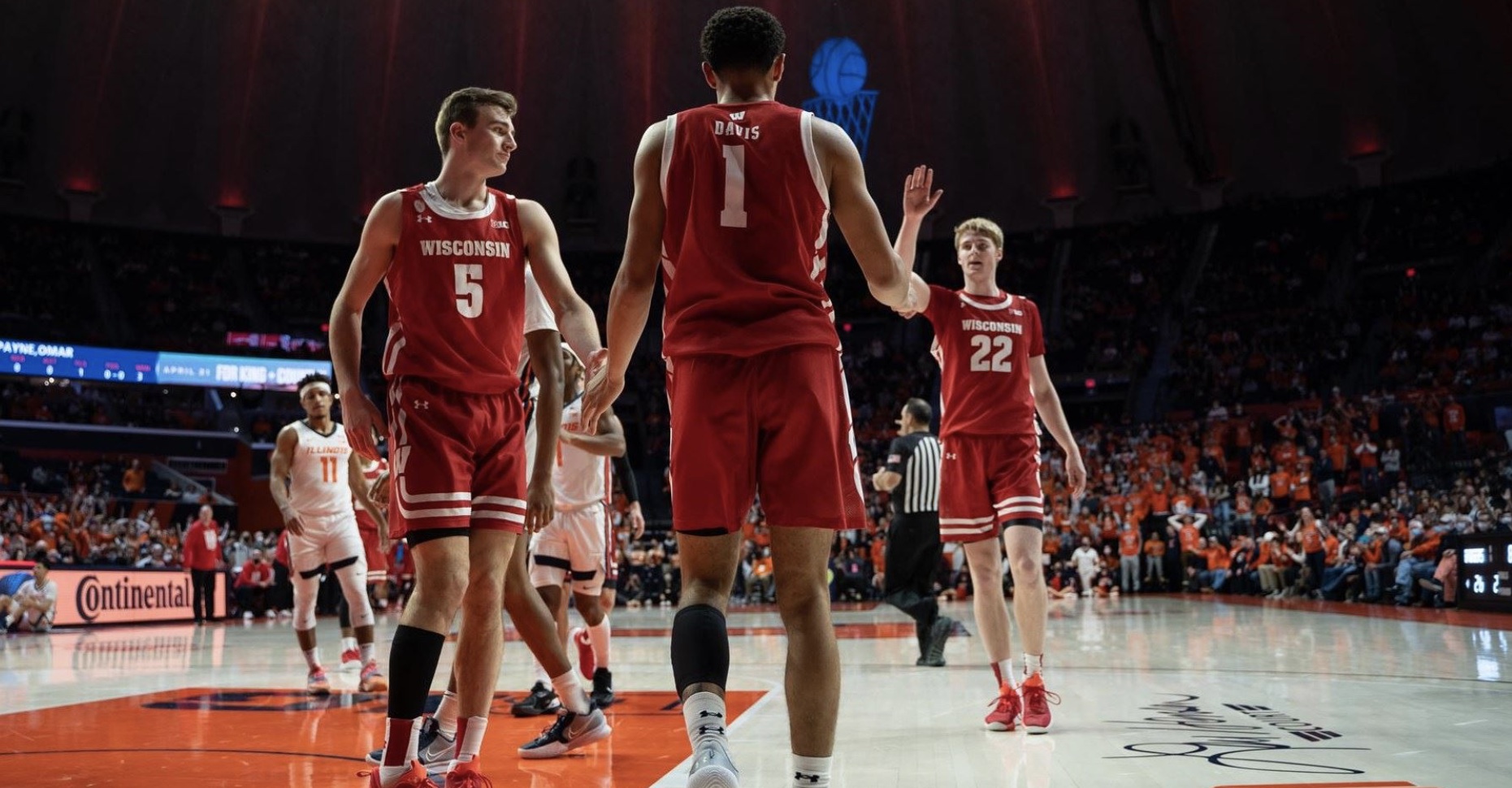
Wisconsin is ranked No. 11 in the AP poll and the Badgers are currently being projected as an NCAA tournament No. 3 seed by the bracket hive mind. Greg Gard’s team has achieved this lofty status in spite of the fact that this very same group barely cracks the top 30 at KenPom and, indeed, has outscored its Big Ten opponents by an average of just 0.6 points per game over the course of 11 outings.

What can account for this disparity? Start with the usual February suspects, such as Wisconsin’s almost Providence-like wizardry in close games. The Badgers are 12-1 in contests decided by single digits, with the only close loss coming at the hands of the aforementioned clutch Friars.

It is also the case, however, that Johnny Davis and his mates are actively and wantonly deceiving our eyes. When you watch a Wisconsin game or when a studio analyst breaks down some UW half-court sequences at the intermission, it’s possible that neither of you will remark upon the fact that Gard’s charges recorded hardly any turnovers. Yet that very fact is a significant ingredient in how the sausage gets made in Madison. The Badgers own the lowest turnover rate of any major-conference team in league play, and that allows them to attempt an exceptionally high number of shots.

Continue reading