Category Archives: in many ways the work of a critic is easy

Replace the WAB-pilled committee with WAB

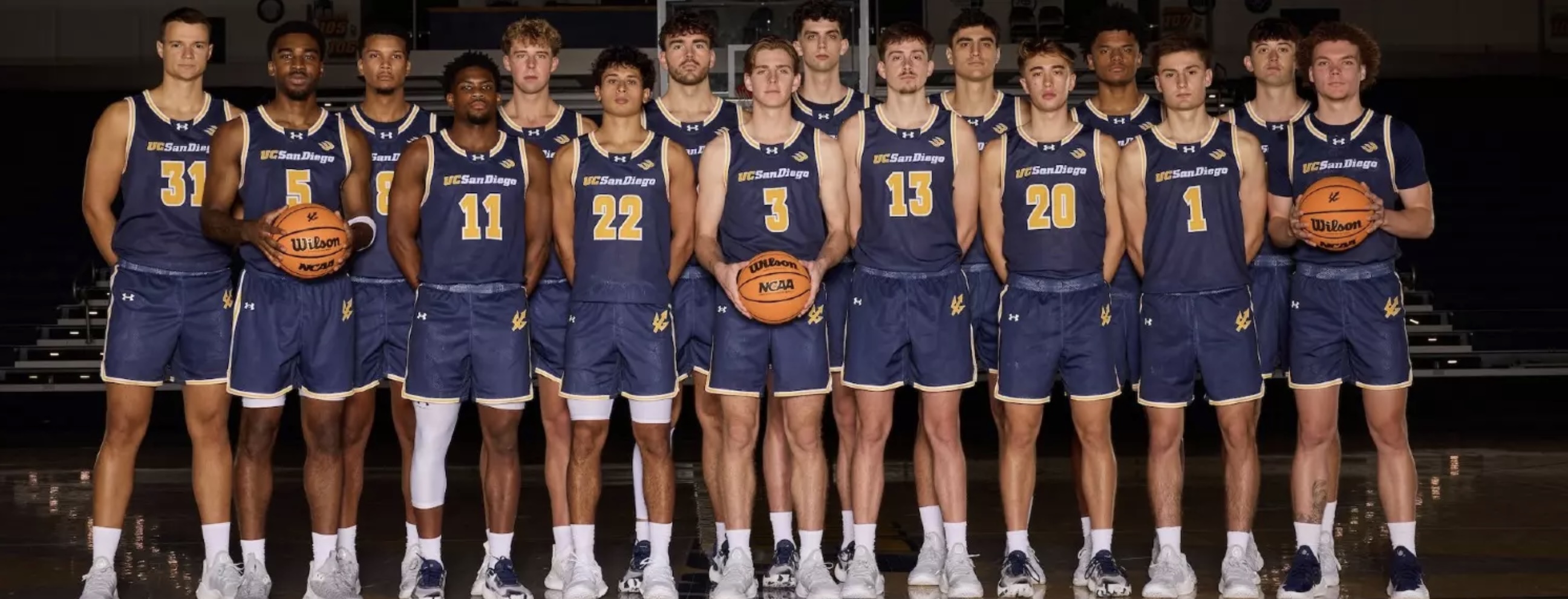
Congratulations to the Tritons on their first-ever NCAA tournament. Best wishes as well to fellow first-timers High Point, Omaha and SIUE. Special note of welcome to Saint Francis, which unlike all of the above has been a Division I member this whole time and is making its first appearance in 34 years.

The good news on Selection Monday 2025 is that when it comes to building a tournament field the NCAA men’s basketball committee is much sounder in its workings than it was previously. The process has become so rational and predictable that we are all bracketologists now. You or I or someone who hasn’t seen a single game can identify 36 of 37 at-large teams in advance with wins above bubble.

As one who in the past devoted thousands of words to what I found to be the unsound workings of previous committees, I don’t wish to minimize this good news. In fact within the narrow confines of a foundational premise to the effect that “the committee still exists in 2025,” I’m here to applaud.

WAB is the way. It tells us how well you did at winning the games you played. At one stroke it nullifies entirely that malicious contagion of evaluative mayhem known as quadrants. (The NCAA should put quadrants out of their misery this morning with an official “never mind, our bad” statement.) If we are to have a committee, that group should absolutely be doing what this group just did.

Continue reading

Why expanding would improve the odds for mid-majors

Indiana State could have used an expanded bracket last year. (Mitchell Layton/Getty Images)

Expanding the men’s NCAA tournament field has been discussed each February for the past three years. One common objection to expansion is that the new spots in a larger bracket will go mostly if not entirely to so-called mediocre teams from major conferences at the expense of mid-major programs.

If the NCAA does adopt a larger bracket and the NCAA men’s basketball committee does start favoring major-conference teams at the expense of mid-majors, those who want to keep the field at 68 will have been proven correct. Both halves of this scenario could come to pass. Stranger things have happened.

The key words in this scenario, however, are “does start favoring.” Since the field expanded to 68 teams in 2011, the selection committee has in fact compiled a notably even-handed track record in awarding at-large bids to both major-conference programs and mid-major teams when controlling for KenPom rank.

Continue reading

Historical comparisons in an extreme age

The game is always changing.

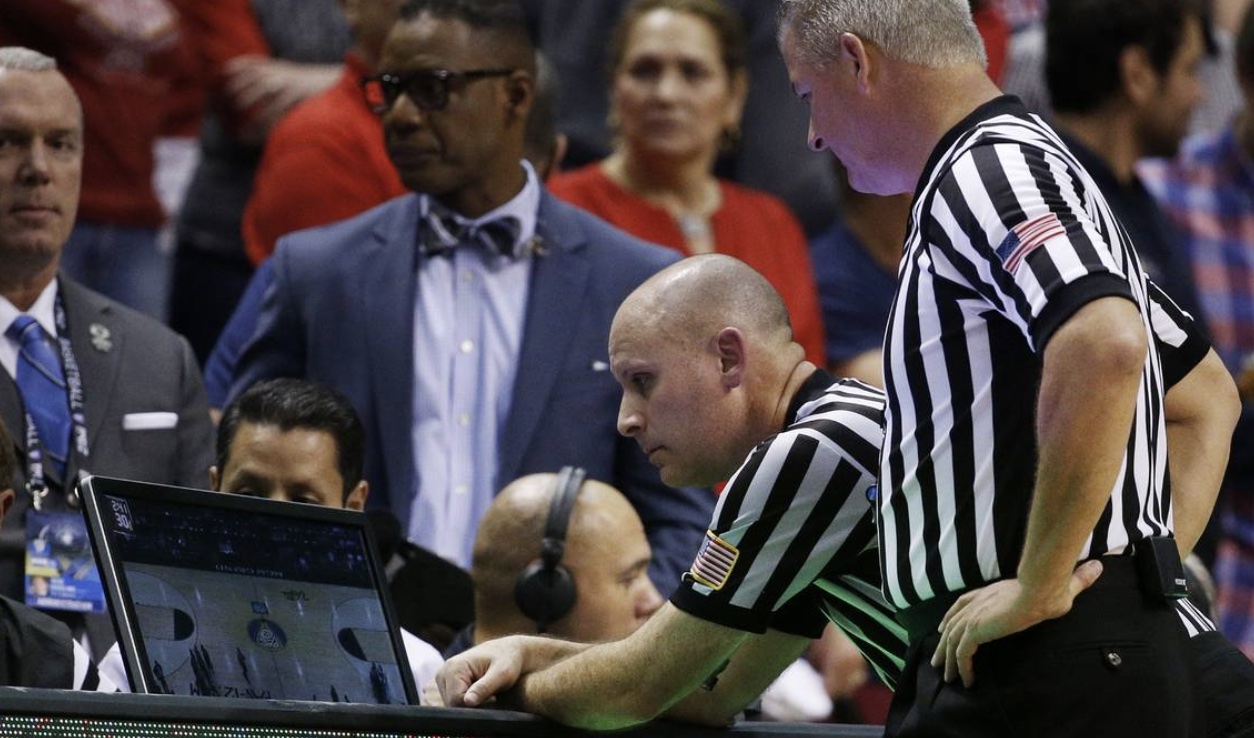
Division I men’s basketball in 2025 is marked by superlatives. Scoring has never been more efficient. Shooting from the line has never been more accurate. Shot volume has never been higher. And, yes, official reviews have never been more numerous, lengthy, or maddening. The final minute of a close NBA game can offer a fitting crescendo of drama and action. The same portion of a D-I contest is far more likely to feature inaction.

Happily we have every reason to believe this era of endless trips to the monitor will soon end. On balance — and with the totemic and potentially existential exception of the manner in which teams qualify for the championship event — the NCAA over the last decade has been on an incredible run of precision meliorism. Decisions made over that span by the men and women in Indianapolis have made the game much better.

Continue reading

Basketball’s most important factor feels eclipsed

Brynn Anderson/AP

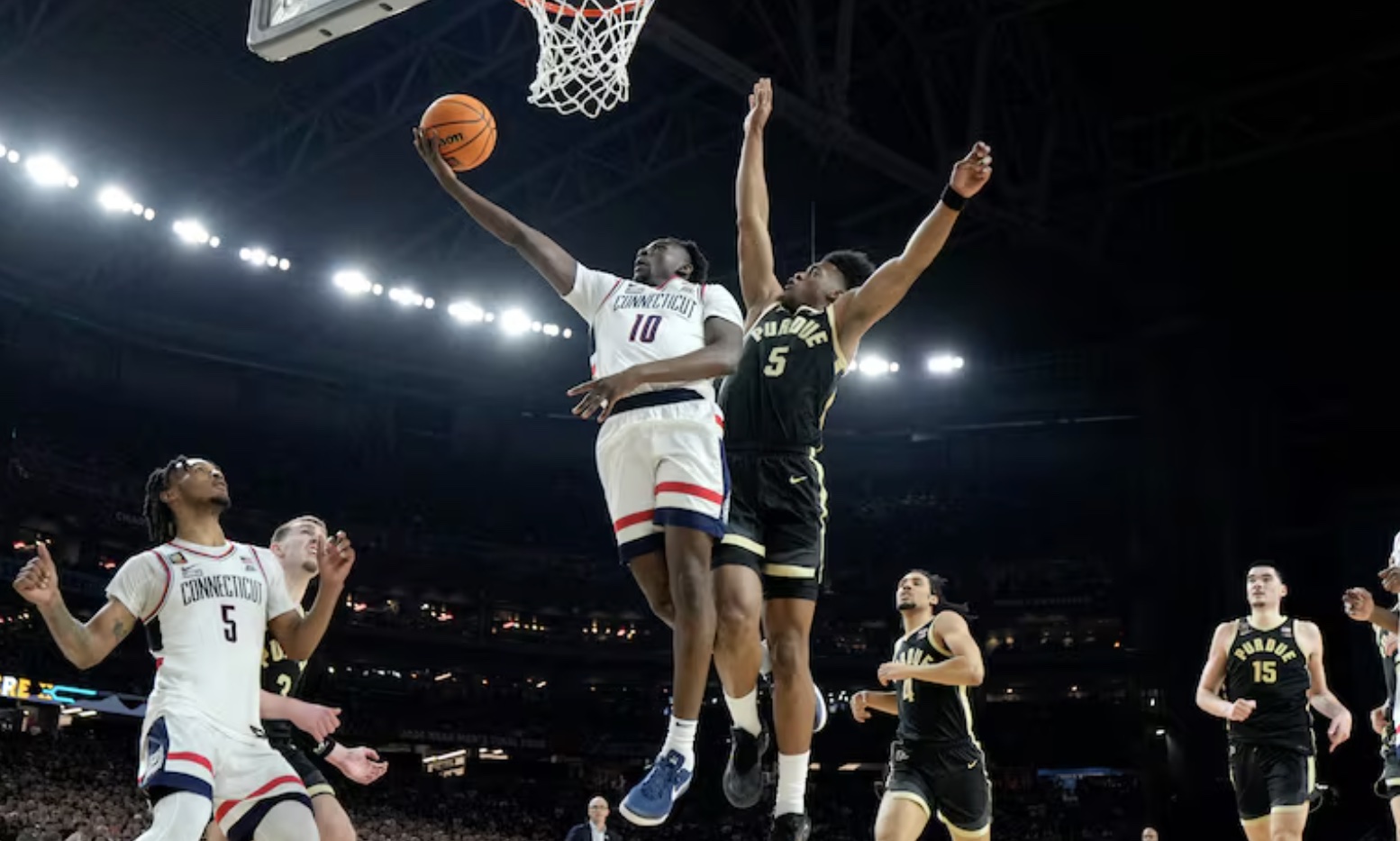
During the men’s national championship game this week, TBS showed a graphic stating that UConn was shooting 48 percent and Purdue was connecting at a 46 percent rate. I winced as I always do when I see straight field goal percentages. Upon further reflection, however, my winces possess varying basketball connotations.

At this late date when an announcer still mentions rebound margin, for example, I wince on three separate yet uniformly unimpeachable grounds. Not only is the metric in question a perfect storm of statistical noise that can yield up-is-down, left-is-right results. Not only was there never a time when this was a useful statistic.

As if these reasons weren’t sufficient by themselves, there’s a perfectly good alternative that other announcers use all the time. This season I heard Bill Raftery, Jay Bilas, Dan Shulman and who knows how many others repeatedly and correctly offer variations on: Purdue rebounds almost 40 percent of its misses. Boom, you’re done. It’s easy!

Field goal percentage is different. It’s prohibitively noisy in the three-point era, of course, but the sport didn’t always have a three-point era. There was a time, 50 years ago in the NBA and 40 in the college game, when field goal percentage was a commendably sound stat. You can see why there was a desire to hang on to something similarly handy with the introduction of the three-point line.

Continue reading

Why “selection”?

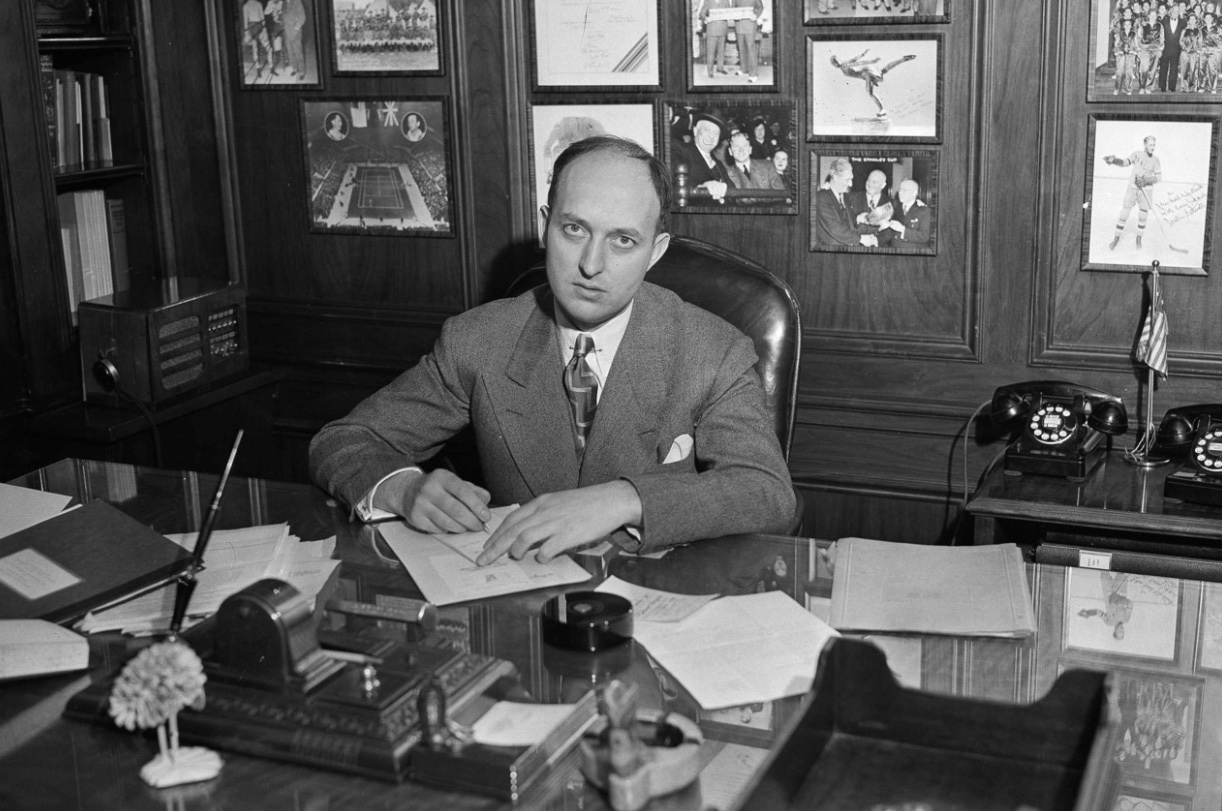
The first selection committee: Ned Irish, pictured in 1943. (Associated Press)

I said this:

Naturally, this begs the question of what we should do instead.

The problem’s in the very term “selection,” isn’t it? True, the NCAA’s decision making body doesn’t really carry that name. It’s not the selection committee, it’s the NCAA Division I Men’s Basketball Committee. But we say Selection Sunday and “the selection show,” and we’ve done so for years.

No one bats an eye when we say “selection” because we’re using the term accurately with regard to the NCAA tournament. Selection’s precisely what is happening. Selection is exactly what should not occur, however, in anything rightly understood as sports. Selection renders that which is being selected a passive vessel.

In other sports, teams make the playoffs or qualify for the Champions League. We even talk like this in college basketball when we see teams win their conference tournaments. What we call an “automatic bid” is a euphemism for mere sports normalcy.

Instead of selecting teams in March we should choose criteria in May.

Continue reading

Reduce the number of timeouts

Anyone with the effrontery to suggest improvements for Division I men’s college basketball in 2024 should begin with the welcome elephant in the room. The game is flourishing. Arguably it’s never been better.

Scoring is up because efficiency has increased markedly. Back in the aughts when “points per possession” first started to be bandied about online, it was a notable occurrence to run across an offense clocking in at 1.07. Now the major conferences collectively score points at that rate in league play.

The change to the block/charge rule this season has been a spectacular success. Offensive fouls per game have declined from 3.7 in 2021-22 to 2.2 this year. Turnovers are down significantly across D-I. Scarcity in giveaways means abundance in points. Ours is truly a golden age of shot volume.

Many fans of the game clamored for reform on this front, often in anguished posts on social media. Then the NCAA stepped in, made the change, and suddenly the issue has subsided drastically. Now everyone can promptly set about finding other things to complain about, like for instance there being too many timeouts. Be that as it may, the new block/charge rule has been a triumph. Take a bow, NCAA.

Continue reading

Preserving madness

Mark Norris/Houston Public Media

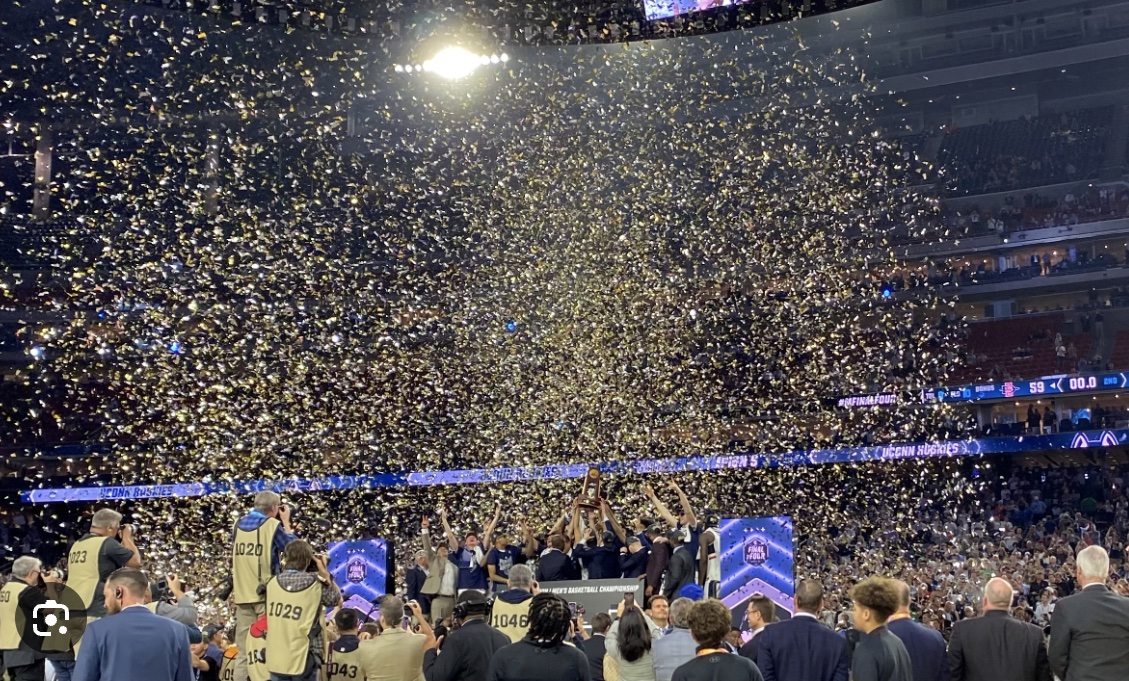
One of the many joys of the NCAA tournament is that it can be savored as two distinct events. There is of course the desire to see the strongest teams with the best records settle this question head-to-head. This dynamic emerges over the second weekend and can on occasion shine forth to brilliant effect at the Final Four.

The first weekend’s radically different. The last five brackets in particular have shown how fully the round of 64 embraces the term March Madness.

Over that time we’ve seen two No. 1 seeds fall in the round of 64. We’re on a three-year streak of a No. 2 seed losing to a No. 15 each March. These are upheavals that “should” occur just one and seven percent of the time, respectively. We’ve been awash in rarity since 2018.

The round of 64 holds two qualities that are scarce if not wholly absent anywhere else in team sports as media properties. First there’s the sheer volume of the knockout round: 32 games in 36 hours, give or take. Often there are four games happening at once and every one constitutes the most important 40 minutes of the season to the teams and their entire fan bases.

Continue reading

Major conferences as evaluative labor-savers

We hardly knew ye. (Photo: Shelly Hanks)

Recently at ESPN.com I offered some forecasting on what shape college basketball may take next year when the term “power five” is, at last, accurate in basketball. In summary, the Big 12 might continue to swagger smugly around the top of the KenPom leader board, the ACC may again bring up the rear, and in between these poles the already fast-improving SEC could be strengthened further still by virtue of expansion alone.

Whenever pieces concerning the major conferences are posted, it is customary to field responses saying this or that additional league should also be regarded as meriting the label in question. Fair enough. Here is one working definition:

Over a five-year period the mean of a major conference’s performance will be equivalent to outscoring an average Division I opponent by at least 10 points over 100 possessions.

Scoring margin over 100 possessions is of course a nod to what’s shown as AdjEM (adjusted efficiency margin) at KenPom. Tracking this over five-year windows prevents one-season outliers from wagging the dog, and for that the ACC is thankful. Otherwise the unsightly +8.58 the league coughed up last year would have resulted in the ACC’s major-conference membership card being revoked.

Continue reading

Loving an always changing game

The NCAA tournament is shockingly close to perfect because fairness is sacrificed so ruthlessly and deliberately at the altar of drama. Every March without fail we learn again that literally any team can lose in a single-elimination bracket that requires six or seven wins for a championship. Possibly this isn’t the fairest method for determining a national title. Well, sports aren’t fair. The tournament’s a national treasure.

Incrementally and miraculously, the NCAA tournament evolved over the years into an iconic event worthy of Naismith’s game. The defining features of the tournament are access and single elimination. Limiting access to the top 68 teams in any given rating system would effectively kill the magic. You would still have a compelling win-or-go-home bracket populated by the top teams, it just wouldn’t be March Madness.

If hoops had been around in Talleyrand’s day he would have said smoothing out the randomness by eliminating single elimination would be worse than a crime, it would be a mistake. The randomness that governs which teams lose one time is the point. Then, in the compensatory fashion of any trustworthy dialectic, the teams that emerge without losing even once turn out to be not quite so random after all.

Access and single elimination are the unchanging sinews of a championship event for a changing game. This tournament is irreplaceable, no less so because the evolution of the sport itself has completely changed the content of its championship event.

Continue reading

On the size, strength, and selection of the field

Where have you gone, Harold Olsen?

Tonight the 2023 NCAA tournament will open with a matchup ranked No. 10 for KenPom Thrill Score on an evening when there are just 10 Division I men’s basketball games being played nationally. March Madness is tipping off with what projects to be the worst game in the country.

Partly this is what transpires (or at least what we expect to transpire) whenever a No. 16 seed’s in action. Actually, the Thrill Scores for Thursday’s 16-vs-1 games are even lower than what we have on tap tonight. But we’re happy to tolerate 16-vs-1 matchups when we have three other simultaneous games from which to choose. Conversely tonight’s opener has the Madness floor to itself.

The number 68 is to blame for this. The number is not especially compatible with a single-elimination format. We can and likely should advance automatic qualifiers straight past Dayton to the round of 64, as is often proposed. Then again the AQ leagues currently recording what are strictly speaking NCAA tournament wins in Dayton aren’t necessarily enamored of that proposal.

Nevertheless, assume for the sake of discussion that Dayton is retrofitted to host nothing but at-larges. Then we would be opening the 2023 NCAA tournament with Mississippi State vs. Pitt, tonight’s No. 1 game in the nation for Thrill Score. This nominal “best” game, however, has earned that distinction by a numerical hair over a virtually identical score posted by Yale vs. Vanderbilt in the NIT.

We can do better. The start of the NCAA tournament can be just as good as Thursday has always been. All we need is a better number than 68. Happily, most even numbers are better than 68.

Continue reading