Author Archives: johngasaway

Leaderboard for men’s tournament wins: 1985-2025

Bob Donnan, Imagn Images

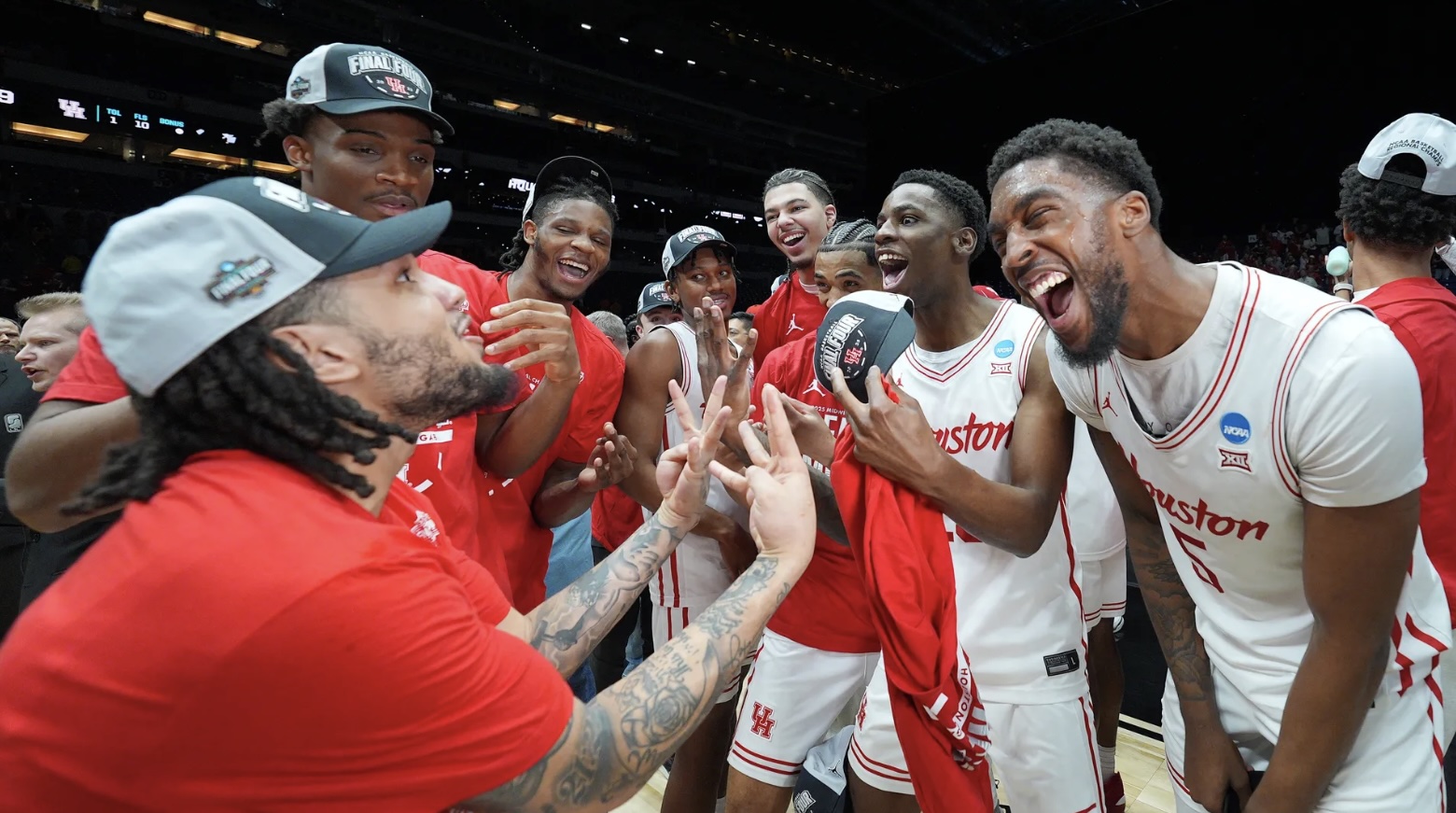
Congratulations, Florida, on a third men’s national title. Your six-game run to the championship not only included multiple stirring comebacks from second-half deficits, it also lifted you into the top 10 for tournament wins since the field expanded to 64 teams in 1985.

Well done, Gators. Tough luck, former top-10 member Michigan.

Expanding the field 40 years ago did away with byes, giving us a trusty measuring stick when teams accumulate tournament victories over the years. Yes, the NCAA muddied that up a bit by expanding past 64 teams starting in 2001, but we can adjust with a well-placed asterisk here and there.

Top 25 for NCAA men’s tournament wins, 1985-2025

                          Wins
1.   Duke                 109    
2.   North Carolina        99* 2025 
3.   Kansas                94
4.   Kentucky              86
5.   UConn                 68
6.   Michigan State        66
7.   Arizona               60
8.   Syracuse              57* 2018
9.   UCLA                  56* 2021
10.  Florida               54 (Congrats!)
11.  Michigan              53* 2016
12.  Louisville            49
13.  Villanova             47
     Gonzaga               47
15.  Purdue                42
16.  Arkansas              40
17.  Maryland              37
     Oklahoma              37
     Wisconsin             37
     Indiana               37* 2022
21.  Ohio State            35
22.  Illinois              34
     Texas                 34
24.  Georgetown            33
25.  Xavier                31* 2025

* Round of 68 victory

In other news I think we can all agree that the big story coming out of the 2025 bracket is Kansas and its shocking performance against seed expectation in years when it does not win it all.

First, some background….

Continue reading
Sudden death and three-point defense

Joe Robbins/NCAA Photos via Getty Images

On the evening of March 15, 2011, Alex Garcia-Mendoza drained a three for Little Rock with 18:47 remaining in the first half of the Trojans’ First Four game against UNC Asheville in Dayton. It was the first three-pointer in the opening game of the 2011 NCAA tournament.

Garcia-Mendoza’s trey marks a convenient boundary line. The field had just expanded to 68 teams that year. As of this writing we are three games shy of having played 15 full brackets in this current configuration.

In the 68-team era NCAA tournament teams have made nearly 13,000 threes on about 38,000 attempts. The 15-tournament figure for accuracy from behind the arc thus stands at 33.6 percent, but keep in mind the line was moved back prior to the tipoff of the 2021 bracket. A more accurate rendering of March Madness accuracy might note instead that with the current line teams are 4,816-of-14,557 (33.1 percent) across the last five tournaments.

Recurring 2020s-era exposés on bad three-point shooting in the tournament and on any potential culpability of the ball itself are therefore eminently understandable if not historically predetermined. Such pieces give voice to the disillusion and bafflement of we oldsters who proudly carry sentient memories of the 2010s.

We old-timers recall a pre-pandemic idyll when Twitter was “Twitter,” coaches wore suits instead of officially licensed pajamas, and teams made 34 percent of their tournament threes. Alas, that statistical gravity is now centered at 33 percent. Today’s variable but still tethered all-day, all-round, or all-bracket highs for accuracy won’t be as high as we (correctly!) remember them being in the Before Times. The lows will be lower.

Continue reading

Now updated! Greatest games of tournament offense “ever”

Last year at this time I presented the 25 best games of NCAA men’s tournament offense in the KenPom era. Alas, that list is already outdated. This past weekend of 2025 tournament action brought us two new entries to add.

Here’s the updated version of what I have for the top 25 games of tournament offense ever. As usual, “best ever” is understood to encompass just the most recent 34 percent of tournaments as archived faithfully by my friend Ken.

Tough luck, old times! You should have tracked offensive boards and turnovers sooner and more frequently.

But before anyone asks: Villanova’s “Perfect Game” against Georgetown in 1985 comes in at 1.16 points per possession. Perfect shooting, yes, but turnovers were committed.

This is a very unofficial curation. Corrections and additions are welcome.

Still, it’s likely that four of the best seven tournament games on offense ever came from just two individual tournament runs. And one of those teams didn’t even reach the national title game. March Madness is beautiful, truly.

Continue reading

Replace the WAB-pilled committee with WAB

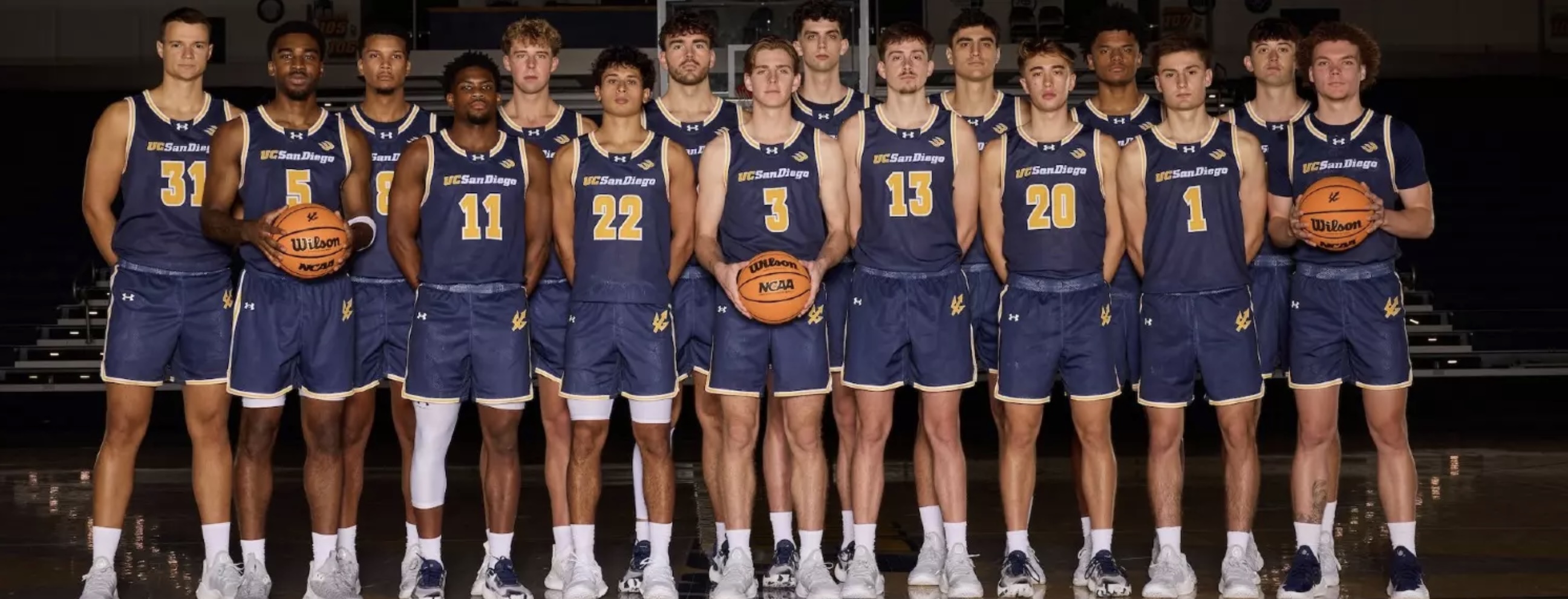
Congratulations to the Tritons on their first-ever NCAA tournament. Best wishes as well to fellow first-timers High Point, Omaha and SIUE. Special note of welcome to Saint Francis, which unlike all of the above has been a Division I member this whole time and is making its first appearance in 34 years.

The good news on Selection Monday 2025 is that when it comes to building a tournament field the NCAA men’s basketball committee is much sounder in its workings than it was previously. The process has become so rational and predictable that we are all bracketologists now. You or I or someone who hasn’t seen a single game can identify 36 of 37 at-large teams in advance with wins above bubble.

As one who in the past devoted thousands of words to what I found to be the unsound workings of previous committees, I don’t wish to minimize this good news. In fact within the narrow confines of a foundational premise to the effect that “the committee still exists in 2025,” I’m here to applaud.

WAB is the way. It tells us how well you did at winning the games you played. At one stroke it nullifies entirely that malicious contagion of evaluative mayhem known as quadrants. (The NCAA should put quadrants out of their misery this morning with an official “never mind, our bad” statement.) If we are to have a committee, that group should absolutely be doing what this group just did.

Continue reading

Duke’s No. 1 for shot volume too

AP Photo/Ben McKeown

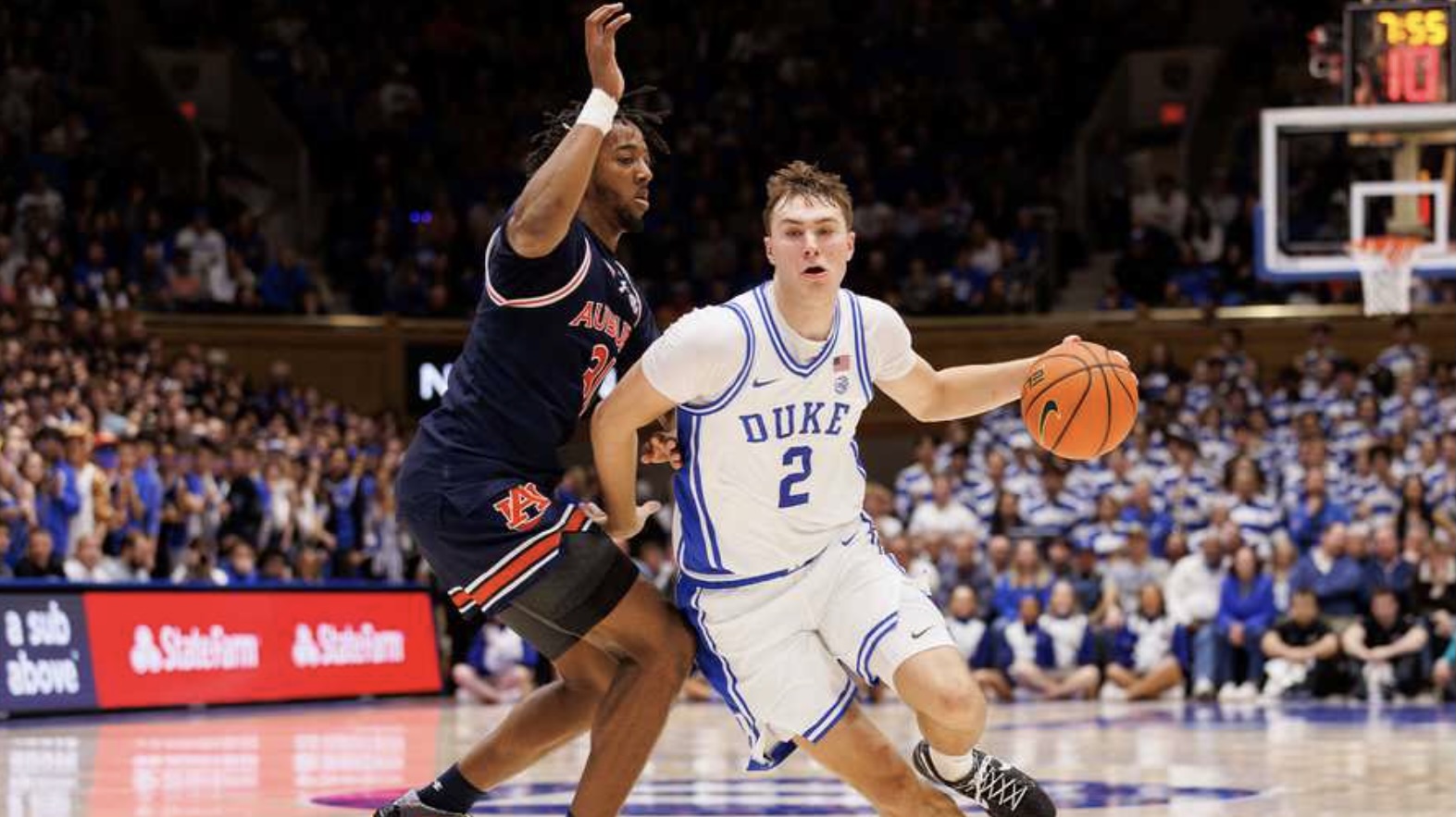
Duke is testing our ability to mint new superlatives. You’ve already heard that the Blue Devils posted far and away the best conference season on offense of any team “ever.” (KenPom ever.) They also recorded the best effective FG percentage I’ve come across in major-conference play (59.3). Cooper Flagg is Cooper Flagg.

Here’s one more example of extreme performance from Jon Scheyer’s bunch. Duke came closer than any team I’ve seen to being three standard deviations better than its conference on offense. Part of that’s an anemic ACC, sure, but most of it’s the Blue Devils. They’re just really good at scoring.

Then again it’s Auburn that continues to carry the title of best overall KenPom offense ever (defined as adjusted offensive efficiency in all games). If the Tigers make it to the far side of the NCAA tournament with this distinction still intact, the oft-praised SEC will appear even more mighty. The Best Offense Ever was merely the fourth-best offense in league play behind Alabama, Florida, and Missouri.

Yes, the Gators and Mizzou eclipsed Bruce Pearl’s group on offense by the tiniest of margins. Still, Bama was alone at No. 1 and Auburn really did have itself one magical non-conference season.

(Hot take coming soon to Now and Again! Treat non-conference games as true friendlies. Stop sweating those box scores. Hide the results from the archaic and unnecessary 1960s-era committee. Who knows, maybe we’ll get much better games at campus sites.)

Continue reading

Why expanding would improve the odds for mid-majors

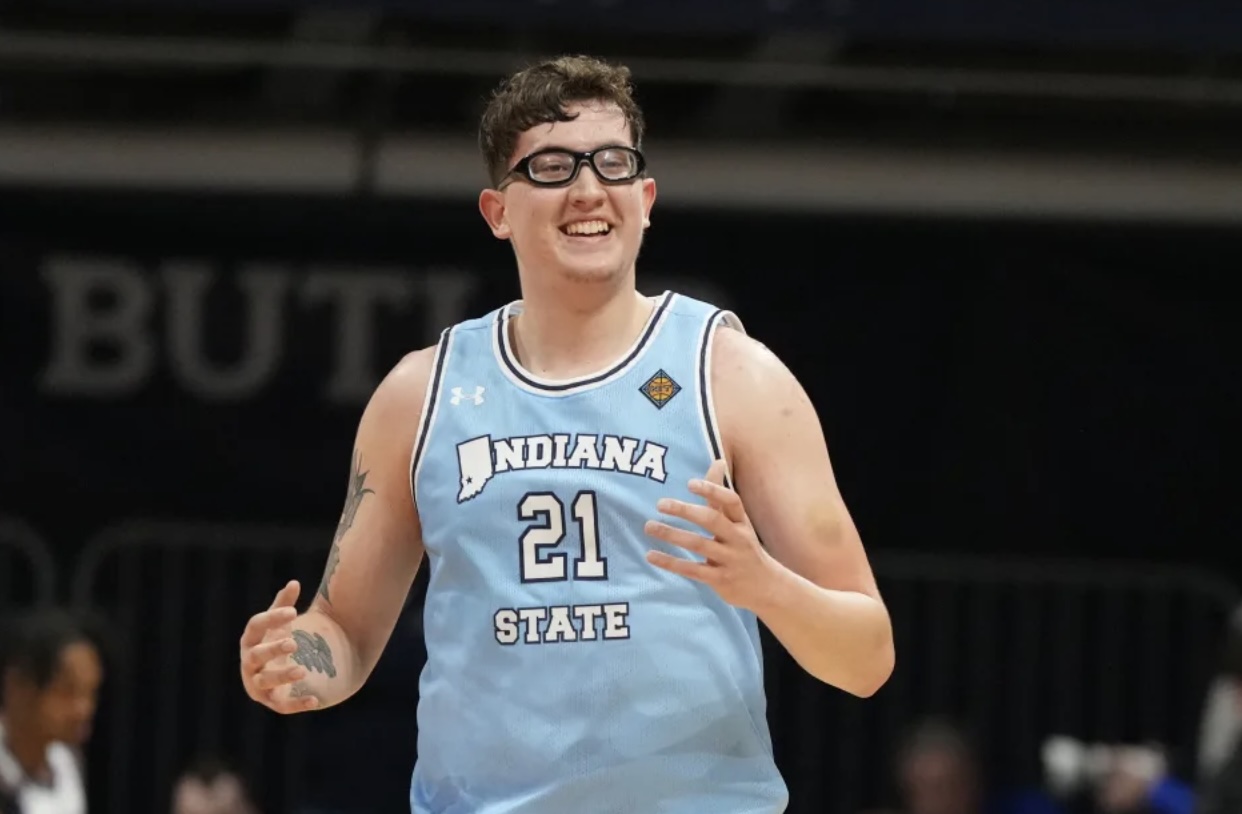
Indiana State could have used an expanded bracket last year. (Mitchell Layton/Getty Images)

Expanding the men’s NCAA tournament field has been discussed each February for the past three years. One common objection to expansion is that the new spots in a larger bracket will go mostly if not entirely to so-called mediocre teams from major conferences at the expense of mid-major programs.

If the NCAA does adopt a larger bracket and the NCAA men’s basketball committee does start favoring major-conference teams at the expense of mid-majors, those who want to keep the field at 68 will have been proven correct. Both halves of this scenario could come to pass. Stranger things have happened.

The key words in this scenario, however, are “does start favoring.” Since the field expanded to 68 teams in 2011, the selection committee has in fact compiled a notably even-handed track record in awarding at-large bids to both major-conference programs and mid-major teams when controlling for KenPom rank.

Continue reading

Historical comparisons in an extreme age

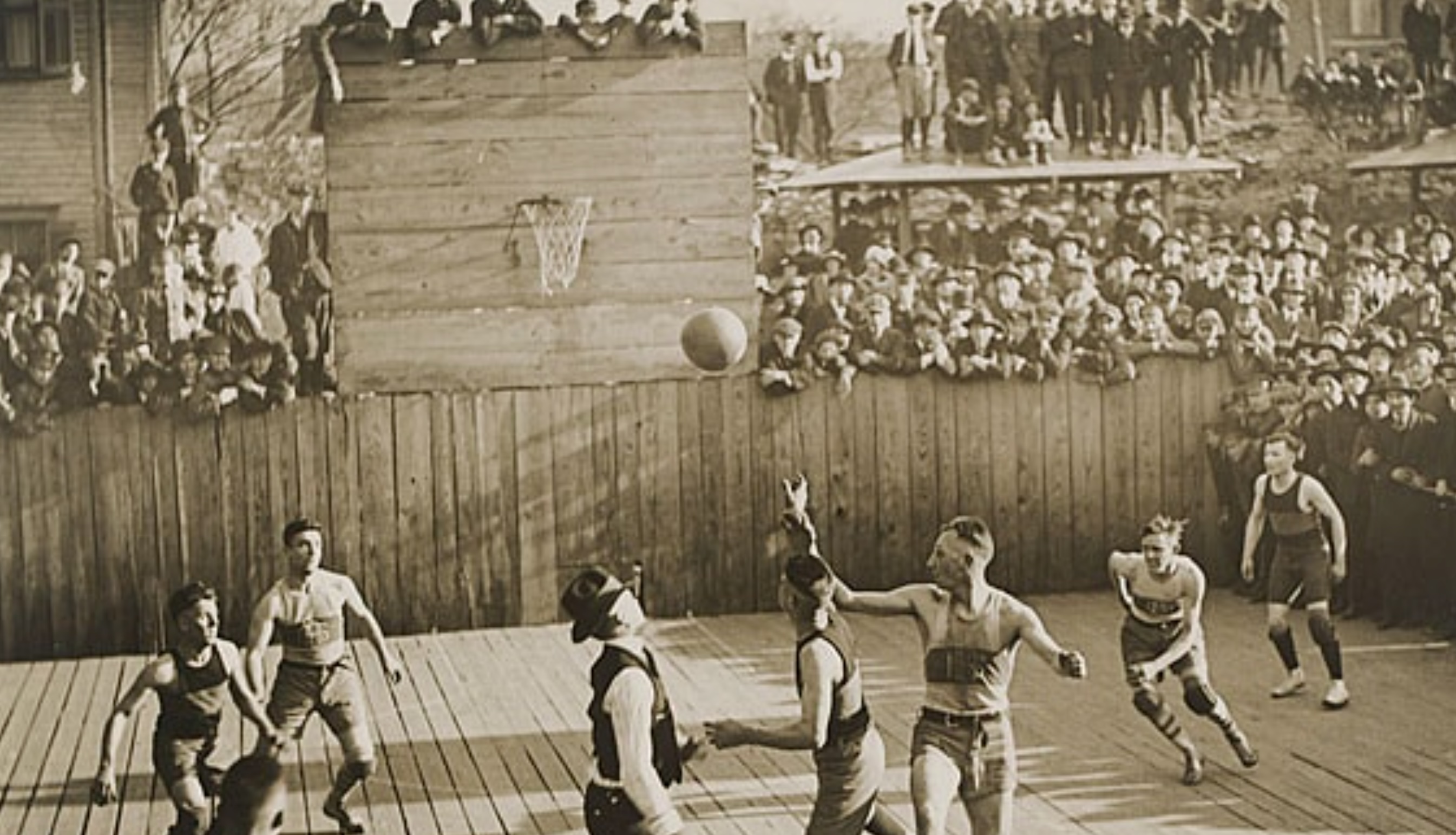
The game is always changing.

Division I men’s basketball in 2025 is marked by superlatives. Scoring has never been more efficient. Shooting from the line has never been more accurate. Shot volume has never been higher. And, yes, official reviews have never been more numerous, lengthy, or maddening. The final minute of a close NBA game can offer a fitting crescendo of drama and action. The same portion of a D-I contest is far more likely to feature inaction.

Happily we have every reason to believe this era of endless trips to the monitor will soon end. On balance — and with the totemic and potentially existential exception of the manner in which teams qualify for the championship event — the NCAA over the last decade has been on an incredible run of precision meliorism. Decisions made over that span by the men and women in Indianapolis have made the game much better.

Continue reading

Ways to calculate what is called shot volume

Instead of paying homage to Svi Mykhailiuk, the next backronym for a shot volume stat will be something like Weighted Effective Margin of Basketball Yield. (NBA.com)

A while back I trotted out a measure called a shot volume index (SVI) for men’s Division I basketball. At the time I said the index could be viewed as the number of FGAs a team would record in 100 possessions marked by average shooting accuracy and zero free throws. This quite naturally elicited responses stating that the metric ignores free throws.

Maybe it’s a Kinsley gaffe to say this, but the stat in question actually ignores both FTAs and FGAs. Rendering the output as FGAs over 100 possessions was a suggestion for the scale on a new thermometer.

The shot volume index runs on turnovers and offensive rebounds.

Continue reading

Basketball’s most important factor feels eclipsed

Brynn Anderson/AP

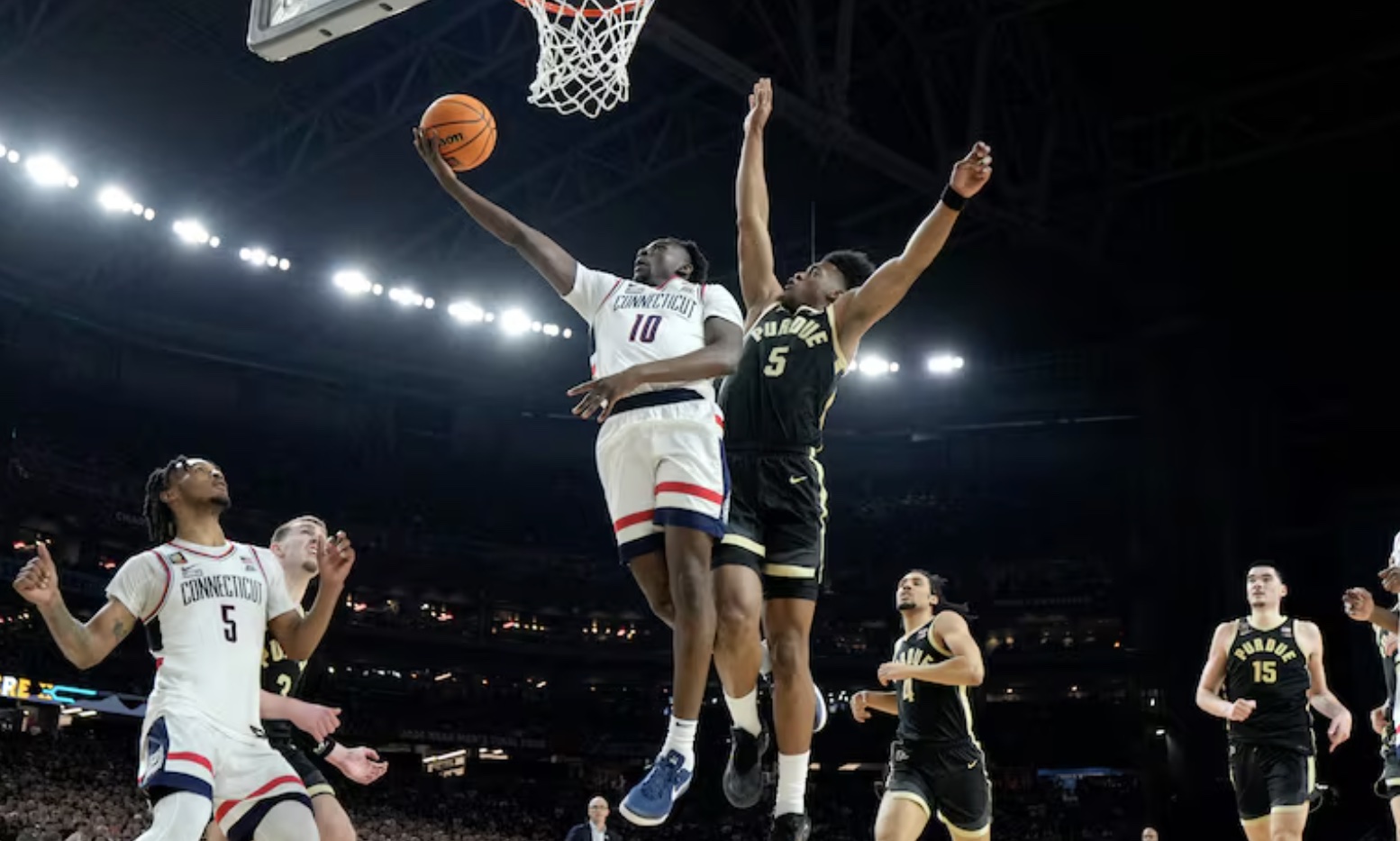
During the men’s national championship game this week, TBS showed a graphic stating that UConn was shooting 48 percent and Purdue was connecting at a 46 percent rate. I winced as I always do when I see straight field goal percentages. Upon further reflection, however, my winces possess varying basketball connotations.

At this late date when an announcer still mentions rebound margin, for example, I wince on three separate yet uniformly unimpeachable grounds. Not only is the metric in question a perfect storm of statistical noise that can yield up-is-down, left-is-right results. Not only was there never a time when this was a useful statistic.

As if these reasons weren’t sufficient by themselves, there’s a perfectly good alternative that other announcers use all the time. This season I heard Bill Raftery, Jay Bilas, Dan Shulman and who knows how many others repeatedly and correctly offer variations on: Purdue rebounds almost 40 percent of its misses. Boom, you’re done. It’s easy!

Field goal percentage is different. It’s prohibitively noisy in the three-point era, of course, but the sport didn’t always have a three-point era. There was a time, 50 years ago in the NBA and 40 in the college game, when field goal percentage was a commendably sound stat. You can see why there was a desire to hang on to something similarly handy with the introduction of the three-point line.

Continue reading

Leaderboard for modern tournament wins

Tyler Schank/NCAA Photos via Getty

The men’s NCAA tournament field expanded to 64 teams in 1985 only after years of opposition. Then Villanova upset Georgetown in an iconic final and pretty much everyone loved the new format after all.

We call this the modern tournament era, which is perhaps a bit presumptuous. Even at this late date, there were more tournaments played before 1985 than have been contested since.

Still, “modern” makes descriptive sense. These brackets have shot clocks and three-point lines (starting in 1986 and 1987, respectively).

Expanding the field did away with byes, giving us a trusty measuring stick when teams accumulate tournament victories over the years. Yes, the NCAA muddied that up a bit by expanding past 64 teams starting in 2001, but we can adjust with a well-placed asterisk here and there.

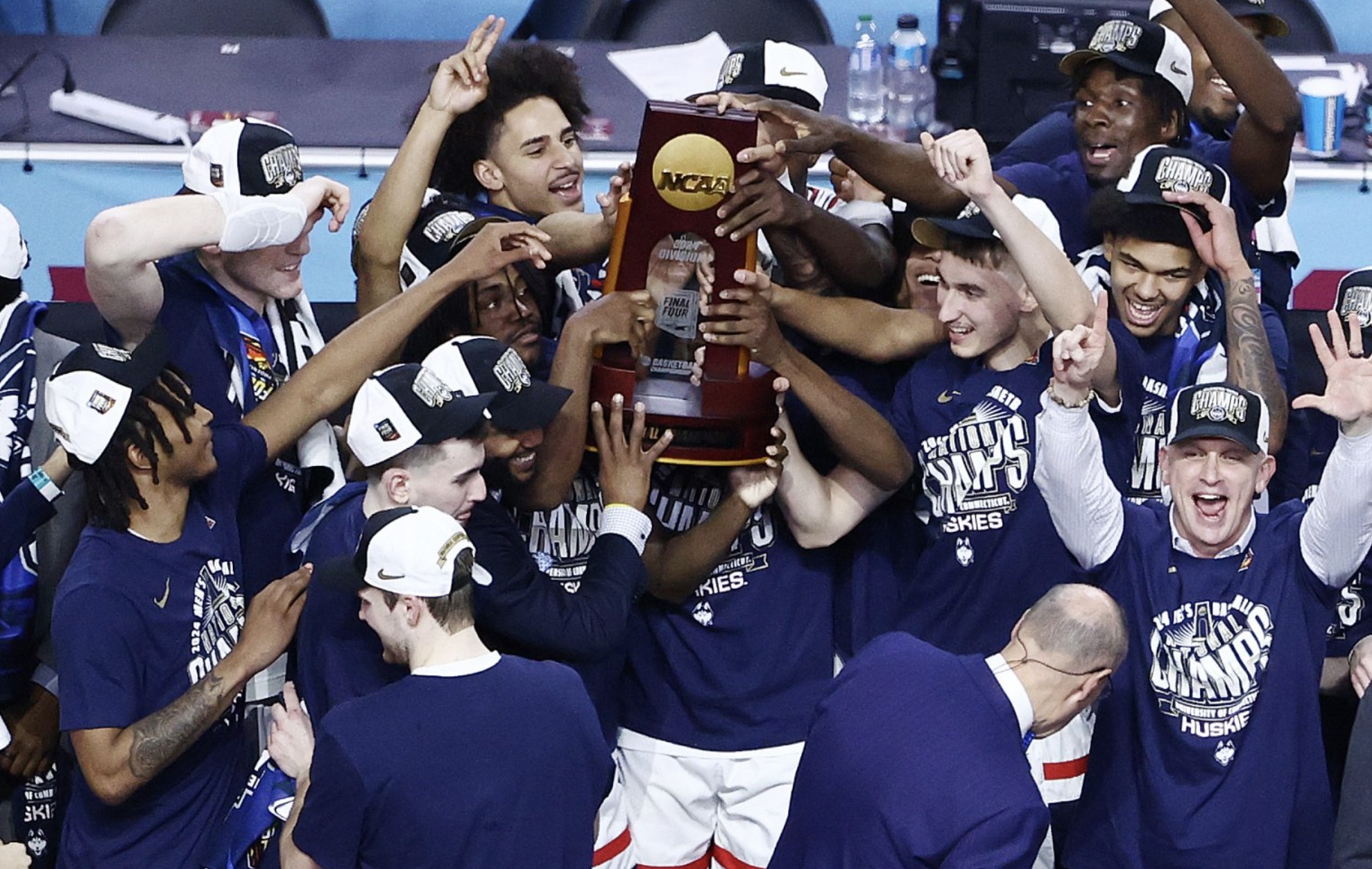
UConn is moving up fast on the leaderboard for modern-era tournament victories. Winning two titles in the span of about 390 days vaulted the Huskies past Michigan State, Arizona, and Syracuse.

Winningest NCAA tournament teams, 1985-2024

                         Wins
1.  Duke                 105    
2.  North Carolina        98 
3.  Kansas                94
4.  Kentucky              84
5.  UConn                 67
6.  Michigan State        63
7.  Arizona               58
8.  Syracuse              57* 2018
9.  UCLA                  55* 2021
10. Michigan              51* 2016
11. Louisville            49
12. Florida               48
13. Villanova             47
14. Gonzaga               46
15. Purdue                40
16. Arkansas              38
17. Oklahoma              37
    Indiana               37* 2022
19. Wisconsin             36
20. Ohio State            35
    Maryland              35

* Round of 68 wins
Continue reading